
Legionella Testing — ISO 11731 & CDC Culture Lab, Houston TX
Legionella pneumophila occurs naturally in fresh water and multiplies in the warm, stagnant parts of building water systems — cooling towers, hot water tanks, dead legs, decorative fountains, spas, and safety showers that sit unused between drills. Infection comes from inhaling aerosol, not from drinking, so the risk concentrates wherever a system atomises water. There is no OSHA permissible exposure limit and no universal safe count, which is precisely why the sampling record itself becomes the compliance evidence — ASHRAE Standard 188 and CMS QSO-17-30 both assume one exists.
A waterborne pathogen with no exposure limit, no visible warning, and a documented paper trail requirement
Your Building Water System Is the Hazard
Legionella grows inside the building — in cooling towers, water heaters, low-flow deadlegs and fixture biofilm. OSHA notes optimal growth between 95°F and 115°F, which is exactly where much domestic hot water sits. The utility does not manage this risk for you.
There Is No OSHA PEL — and That Cuts Both Ways
OSHA states plainly that "there currently is no specific OSHA standard for Legionellosis." Enforcement runs through the General Duty Clause, 29 USC 654(a)(1). No number to comply with means the defence rests entirely on whether you can show a managed, documented programme.
Sample Before You Remediate
OSHA is explicit: "Before flushing or disinfecting water in these suspected sources, ensure water system samples are collected for analysis." Shock-chlorinating first destroys the only evidence of what the system actually contained — and with it, your ability to prove the remediation worked.
Documentation Is the Deliverable
CMS expects certified healthcare facilities to "specify testing protocols and acceptable ranges for control measures, and document the results of testing." Dated, chain-of-custody culture reports are what turns a written water management plan into something a surveyor will accept.
What Is Legionella Testing?
Environmental Legionella testing is the laboratory culture of water and biofilm samples collected from a building water system, to determine whether viable Legionella bacteria are present and at what concentration. It is distinct from clinical testing — it analyses the building, not the patient.
Culture remains the reference method because it detects living, culturable organisms — the ones capable of causing disease — and yields a countable concentration that can be trended against your control limits. Samples are concentrated where necessary, selectively treated to suppress competing flora, plated on buffered charcoal yeast extract (BCYE) agar, and incubated. Presumptive colonies are confirmed by demonstrating the organism's characteristic requirement for L-cysteine.
AGT Labs performs this work under a current CDC ELITE Certificate of Proficiency — the CDC-run programme that evaluates a laboratory's demonstrated ability to isolate Legionella from water by culture. Samples are collected by you or your consultant and shipped or couriered to the lab; all culture is performed in-house with no send-outs.
- Cooling towers, evaporative condensers and fluid coolers
- Potable and domestic hot water systems, including deadlegs and low-use outlets
- Decorative fountains, misters, spas, whirlpools and hot tubs
- Healthcare, senior living and hospitality building water systems
- Paired biofilm swab + bulk water sampling at each fixture
- Post-remediation clearance and verification sampling
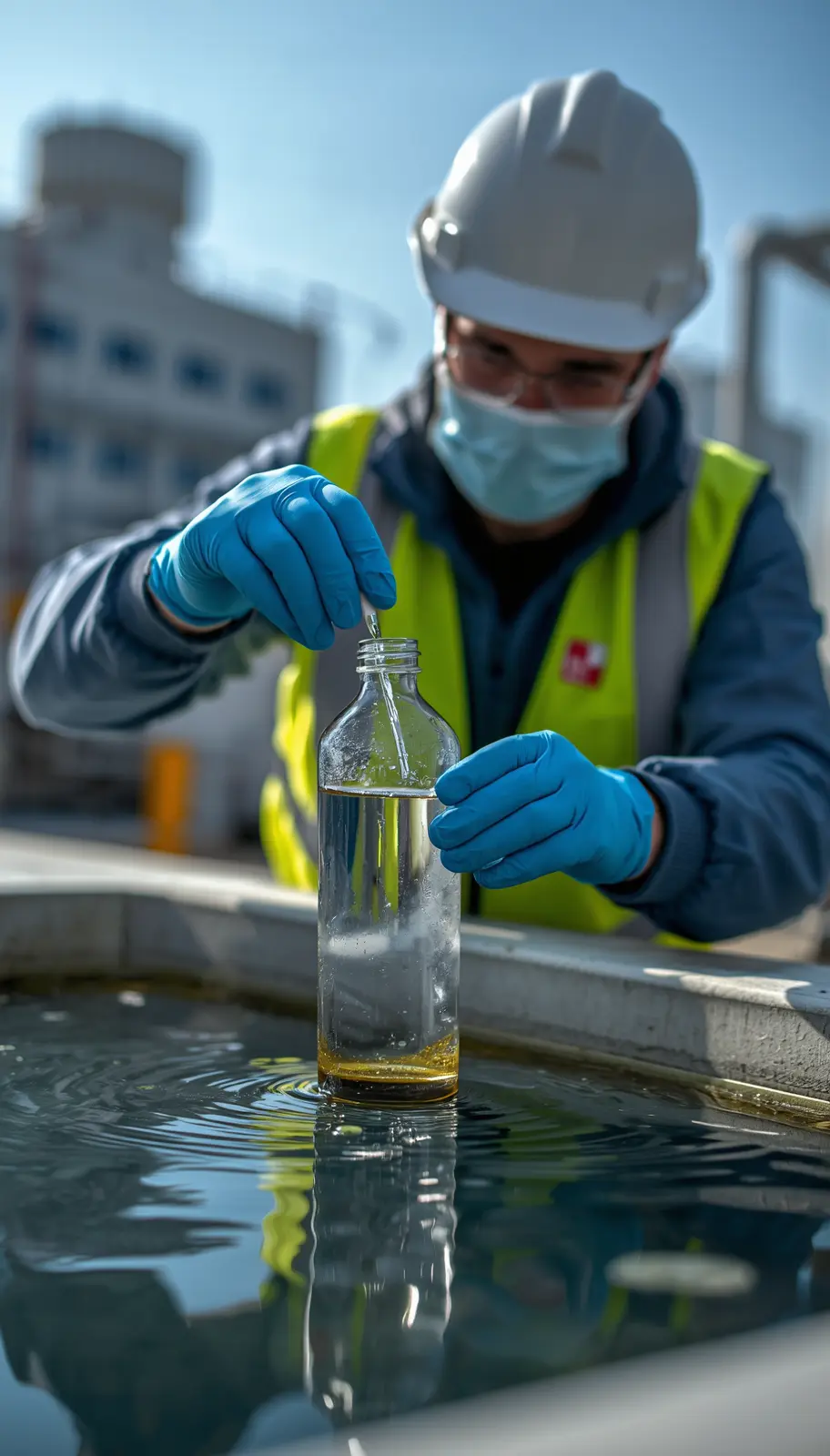
Legionella Testing Methods — ISO 11731:2017 and the CDC Environmental Procedure
Two culture methods dominate environmental Legionella testing in the United States. They share the same principle and differ in pre-treatment, incubation and reporting. We will tell you which one your project needs before you sample.
ISO 11731:2017 — Enumeration of Legionella
The international consensus standard, second edition, confirmed in 2022. It specifies culture methods for isolating Legionella and estimating numbers in all kinds of water — potable, industrial, waste and natural — and can be applied to related matrices such as biofilms and sediments. It is the method against which ISO/IEC 17025 scopes are normally written, and it includes formal clauses for expression of results and quality assurance.
CDC — Procedures for the Recovery of Legionella from the Environment
CDC's public-health procedures manual, the reference used in outbreak investigation and the method underlying the ELITE proficiency panels. One litre is filtered through a 0.2 µm polycarbonate membrane and resuspended in 5 mL, giving a nominal 200× concentration for low-count potable samples; high-load waters are plated directly. Acid treatment suppresses competing flora before plating on BCYE and selective agars.
Identification & Serogrouping
Confirmed isolates are differentiated into Legionella pneumophila serogroup 1, L. pneumophila serogroups 2–14, and Legionella species other than pneumophila. This distinction matters clinically: CDC states that the majority of disease is caused by L. pneumophila, particularly serogroup 1 — the only group detected by the routine urinary antigen test used to diagnose most patients.
Why we do not offer PCR as a stand-alone answer
PCR detects Legionella DNA — including DNA from organisms already killed by your biocide programme. It is fast, and it can be useful as a screening tool, but a positive PCR does not establish that viable organisms are present and a PCR count cannot be trended against culture-based control limits. The CDC ELITE programme evaluates culture only, and culture is what regulators, insurers and litigation review expect to see. We report culture results.
Where to Take Legionella Samples — Building Water Systems & Cooling Towers
Whether you are planning cooling tower Legionella testing or Legionella water testing across a potable system, start from CDC's published site list. These are the sampling points and sample types set out in CDC's Sampling Procedure and Potential Sampling Sites. Use them as the starting skeleton for a building survey — then add points specific to your system.
Legionella water testing — building potable water system sampling points
| Sampling Location | Number of Samples | Sample Types |
|---|---|---|
| Incoming water main | 1 | 1 L bulk water |
| Every well and water tower | 1 per well / tower | 1 L bulk water |
| Every holding tank or cistern | 1 per tank / cistern | 1 L bulk water |
| Centralised water heater | 1 | 1 L bulk water, plus a biofilm swab if drained |
| Hot water expansion tank | 1 | 1 L bulk water |
| Hot and cold water returns | 1 each | 1 L bulk water |
| Softeners, filters, disinfection systems | Before and after each | 1 L bulk water |
| Showers | 2 per shower | 1 biofilm swab + 1 L bulk water |
| Faucets | 2–3 per faucet | 1 biofilm swab inside the faucet + 1 L bulk water |
| Whirlpool baths | 1 | 1 biofilm swab inside the jets |
Cooling tower Legionella testing — sampling points
| Sampling Location | Number of Samples | Sample Types |
|---|---|---|
| Make-up water | 1 | 1 L bulk water |
| Collection basin | 2 | 1 L bulk water + biofilm swab at the water line |
| Sump | 2 | 1 L bulk water + biofilm swab at the water line |
| Storage tank or reservoir | 1 | 1 L bulk water |
| Drift eliminators & surfaces that stay moist | 1 | 1 biofilm swab |
| Heat sources (e.g. chillers) | 1 | 1 L bulk water |
Source: CDC, Sampling Procedure and Potential Sampling Sites. Sample counts are CDC's baseline recommendation, not a regulatory minimum — your water management programme may specify more. Send us your plan and we will review it against this list before you sample.
How to Collect a Valid Legionella Water Sample
More Legionella water samples are invalidated in the field than in the laboratory. Four things account for almost all of it: the wrong bottle, no dechlorination, swabbing after running the water, and slow transit.
The mistake that costs the most: bulk water only
Legionella lives in biofilm on the inside of fixtures, tanks and basins — not freely suspended in the water. A bulk water sample alone routinely misses a colonised outlet, and a building can return a clean set of water results while a showerhead is seeding the system. The paired swab-plus-water design is what makes the result interpretable. If your budget only stretches to one sample per fixture, take the swab.
Reading Legionella Testing Results — Units, Limits & What They Mean
Legionella testing reports carry one recurring trap and one recurring misunderstanding. Both are worth five minutes before your first round of sampling.
| Item | Value | Source | What It Actually Means |
|---|---|---|---|
| US reporting unit | CFU/mL | CDC, US convention | Colony forming units per millilitre — the prevailing convention in US reports and regulations |
| ISO reporting unit | cfu/L | ISO 11731:2017 | 1 CFU/mL = 1,000 cfu/L. The single most common source of client confusion — always check which unit a report uses before comparing labs or years |
| Culture limit of detection | ~10 CFU/mL | CDC toolkit | CDC's stated typical figure for culture. Actual reporting limits depend on the volume processed and the matrix — ask for ours in writing |
| Time to result | 7–14 days | CDC toolkit | Culture cannot be rushed — the organism grows at its own pace. Preliminary positives are reported as soon as colonies appear |
| OSHA outbreak-response figure | ≥10 CFU/mL | OSHA, outbreak response | OSHA advises taking "immediate steps to clean the system" at or above this level. This is response guidance, not a legal limit |
| OSHA outbreak association | ≥1,000 CFU/mL | OSHA, outbreak response | Most cooling tower outbreaks are associated with concentrations at or above this level in the implicated source |
| OSHA PEL | None | OSHA | There is no OSHA permissible exposure limit for Legionella. Enforcement is via the General Duty Clause |
There is no universal "safe" number — and that is the official position
OSHA declines to set a general threshold, stating that what counts as acceptably low "may differ from system to system, worksite to worksite, or by other factors." Your action levels come from your own water management programme, informed by ASHRAE Standard 188 and your risk assessment — not from a number on a lab report.
CDC also cautions that "sample volumes processed, plate types, resuspension procedures, and result reporting vary by lab even when using standard operating procedures such as CDC methods or ISO 11731." That is a strong argument for keeping the same laboratory and the same method across a monitoring programme — switching mid-programme can produce a step change in results that reflects the lab, not your building.
What Actually Requires Legionella Testing — and What Does Not
Requirements for Legionella testing are widely misquoted by vendors. Here is the accurate position on each of the standards and rules you are likely to be told about.
| Standard / Rule | Applies To | What It Actually Requires | Does It Mandate Testing? |
|---|---|---|---|
| ANSI/ASHRAE Standard 188-2021 Legionellosis: Risk Management for Building Water Systems |
Human-occupied commercial, institutional, multi-unit residential and industrial buildings — not single-family homes | "Minimum legionellosis risk management requirements for building water systems" — building surveys, water management programme development, preventive measures, design and commissioning requirements | It is a risk-management standard, not a testing mandate. Testing is how most programmes verify control |
| ASHRAE Guideline 12-2023 Managing the Risk of Legionellosis |
Same building types — owners, designers, operators, service providers | Informative guidance and practical compliance assistance for Standard 188, covering potable systems, cooling towers, hot tubs and humidifiers | Guidance only — not enforceable in itself |
| CMS QSO-17-30 Issued 2 Jun 2017, revised 6 Jul 2018 |
Medicare/Medicaid certified hospitals (42 CFR §482.42), long-term care (§483.80) and critical access hospitals (§485.635) | A facility risk assessment; a water management programme that "considers the ASHRAE industry standard and the CDC toolkit"; and to "specify testing protocols and acceptable ranges for control measures, and document the results of testing" | No — CMS states plainly that it "does not require water cultures for Legionella." But facilities unable to demonstrate risk-reduction measures "are at risk of citation" |
| OSHA — General Duty Clause 29 USC 654(a)(1) |
All employers with a recognised serious hazard | A workplace "free from recognized hazards". OSHA may enforce the clause where there is "occupational exposure to Legionella in water systems" | No specific standard and no PEL — but OSHA directs owners to use an ELITE laboratory when they do sample |
| 10 NYCRR Part 4 New York State only |
Cooling towers statewide; general hospitals and residential healthcare facilities | Routine Legionella culture within 14 days of seasonal start-up and thereafter at intervals not exceeding 90 days while in use, plus immediate sampling on defined triggers | Yes — and analysis must be by a NY ELAP-approved laboratory. Contact us before NY work |
| EPA drinking water | Public water systems | A non-enforceable Maximum Contaminant Level Goal of zero organisms; addressed through treatment technique rules | No enforceable federal limit at the tap |
This table summarises publicly available regulatory text and is provided for general information. It is not legal advice — confirm current requirements with your regulator or counsel before relying on them.
Legionella Testing Turnaround Times & Sampling Kits
Legionella testing is a culture test. The organism sets the timetable, and no laboratory can compress it — but you should not have to wait ten days to learn you have a problem.
Legionella Sampling Kits — Free
- Sterile 1 L wide-mouth polypropylene bottles, pre-dosed with sodium thiosulfate
- Sterile Dacron / polypropylene biofilm swabs in 15 mL transport tubes
- Pre-printed labels matched to your sampling plan and point IDs
- Insulated shipper with cold packs for >72-hour transit
- Field data sheet — location, temperature, residual disinfectant, time
- Legionella Chain of Custody form
- Pre-paid return shipping, anywhere in the U.S.
Allow 5 business days for kit dispatch. Houston courier drop-off: (713) 453-6090.
CDC ELITE — What It Is, and What It Is Not
Choosing a Legionella laboratory turns almost entirely on this one credential. It is also the credential most often described incorrectly — so here is the precise position.
 Click the certificate to open the full PDF
The certificate itself — read it rather than take our word for it
This is the document, unedited. It is headed Certificate of Proficiency and issued by the CDC Respiratory Diseases Branch for Environmental Legionella Isolation Techniques Evaluation. Note the wording: the certificate does not use "accreditation" or "certification" anywhere, which is precisely why we do not either. It is issued to our laboratory entity, AGT IH Labs, at our Houston facility.
View Certificate (PDF)Working in New York State? Read this first.
New York is the one state with its own hard laboratory gate. Under 10 NYCRR §4-1.5, "all Legionella culture analyses must be performed by a laboratory that is approved to perform such analysis by the New York State Environmental Laboratory Approval Program (ELAP)." CDC ELITE does not satisfy that requirement — it is a separate, voluntary programme. If your cooling tower or covered healthcare facility is in New York State, contact us before sampling and we will tell you plainly whether we can take the work.
From Sampling Plan to Finished Report
AGT Labs is an analytical laboratory — samples are collected by you or your consultant and sent to us. Here is exactly who does what, so there is no ambiguity when you scope the round.
Plan the Round
Send us your building or tower list. We review your sampling plan against the CDC site list and your water management programme, and tell you how many points and sample types the round needs.
Kit Arrives
Pre-dosed sterile bottles, biofilm swabs, labels matched to your point IDs, field data sheet, chain of custody and prepaid return — free, anywhere in the U.S. Allow 5 business days.
Sample & Ship
Your team or your consultant collects — swab first, then bulk water, per the field protocol above. Refrigerate if transit will exceed 72 hours, then ship or arrange Houston courier drop-off.
Culture & Confirmation
ISO 11731:2017 or the CDC procedure, under our CDC ELITE proficiency documentation. All culture in-house, no send-outs. Presumptive positives are called through the moment colonies appear.
Report & Retest
Results by sampling point, with the unit stated explicitly and trended against previous rounds. We advise what to re-sample and when — and we do not sell remediation, so that advice carries no conflict.
If you need someone to collect for you
We do not perform field sampling or site visits — we are the laboratory. If your team is not set up to collect, your water treatment provider or an industrial hygiene consultant can run the round and send the samples to us; we will supply the kit and review the plan either way. Call (713) 453-6090 and we will talk it through, including which sampling points matter most for your system.
What Legionella Testing Costs
Almost no laboratory explains this, which is why it is the first question on every call. The sample count drives the invoice far more than the unit price does — here is what actually moves it.
Send the list, not the sample count
Give us the building or tower list and what the round is for — routine programme verification, post-remediation clearance, or a suspected case — and we will price the round rather than just the sample, and tell you if we think you are sampling more points than you need. Call (713) 453-6090 or email info@agtlabs.com.
Legionella Is a Worker Hazard, Not Only an Occupant Hazard
Most Legionella marketing is written for building occupants. For an industrial hygienist the question is different: which employees stand in the aerosol, and which of your own safety equipment is generating it?
The one most industrial hygienists have never sampled: safety showers and eyewash stations
Emergency showers and eyewash units sit on dead-leg branches, are used almost never, are typically fed with tepid or blended water, and are flow-tested straight into a worker's face and eyes. NIOSH lists them explicitly as a Legionella source. If your plant runs weekly activation tests as an IH control, that test is also a scheduled aerosol event — and it is almost never included in a water sampling plan. Ask us to add them to yours.
Industries That Need Legionella Testing
Legionella testing spans our whole industries footprint. Two distinct groups commission this work: industrial sites where process equipment aerosolises warm water over employees, and facility operators whose building water systems serve a susceptible population. Both sit inside an industrial hygiene programme.
Industrial & occupational sectors
Where the exposure is to workers, and the driver is the OSHA General Duty Clause.
Refineries & Petrochemical
Process cooling towers, evaporative condensers, fluid coolers and wet scrubbers. Cooling towers at a petrochemical plant were the confirmed source of an outbreak producing 86 laboratory-confirmed cases and 18 deaths, with aerosol spread of at least 6 km. Turnarounds add a second problem — units idled, drained and restarted are exactly the stagnation-then-restart cycle that drives colonisation.
Metal Fabrication & Machine Shops
OSHA names "water-based fluids used as coolants during cutting and fabrication processes" as a Legionella source. A CDC investigation of a sheet-metal fabrication plant found 34 legionellosis cases, 15 hospitalisations and 2 deaths, with L. pneumophila isolated from two water jet cutters and a floor scrubber — reservoirs running at 35–40 °C. Parts washers, tunnel washers and sump jet-washing carry the same profile.
Construction, Renovation & Commissioning
CDC-authored research across 39 US jurisdictions found construction workers carry an incidence rate ratio of 1.82 for Legionnaires' disease versus other workers — the second-highest occupational burden measured, with labourers almost half the group. OSHA separately warns that "construction material residue can contribute to Legionella growth in new systems." Commissioning water systems is a sampling point, not a formality.
Shipyards, Marine & Offshore
The most directly occupational case on record: two mechanics repairing a cargo ship's water system died of Legionnaires' disease, with illness statistically confined to those who had worked on the ship's water pump. Vessels, rigs and accommodation barges combine small potable systems, long layups and confined spaces. CDC warns that "a prolonged no-sail period or reduced operation... can result in stagnant water in ship water systems."
Industrial Wastewater & Water Treatment
Warm industrial effluent is a genuine amplifier. Published surveys have recovered culturable Legionella from 15 of 85 industrial wastewater plants, with concentrations reaching 10⁹ cfu/L in active sludge basins, and identified biological treatment at 30–38 °C handling food-processing, rendering and petrochemical effluent as the high-risk case. Occupational cases have been documented in workers splashed while servicing clarification basins. See our dedicated food & beverage manufacturing testing program for the full scope.
Power Generation & Process Cooling
Judge this one by equipment class rather than industry label. Evaporative cooling equipment — towers, condensers and fluid coolers — is the single most frequently implicated Legionella source in outbreak investigations, and OSHA names it first among workplace sources. Any plant rejecting heat by evaporation carries that equipment risk regardless of what it generates or produces.
Oilfield, Midstream & Remote Operations
Gas processing and compression sites run evaporative cooling; remote camps, man-camps and field offices run small potable and hot water systems with intermittent occupancy and long stagnation between crew rotations. Both are recognised risk conditions. Sampling is normally folded into an existing site IH round rather than mobilised separately.
Water Treatment Providers & IH Consultants
Treatment companies and industrial hygiene consultancies needing an ELITE-proficient laboratory behind their programmes — consistent method, consistent units, results reported to you rather than to your client, and a lab that will not approach your account. Standing accounts with reserved capacity for scheduled multi-site rounds.
Facility & building-water sectors
Where the exposure reaches occupants as well as staff, and the driver is a documented water management programme.
Hospitals & Healthcare
CMS-certified hospitals, critical access hospitals and long-term care facilities documenting water management programmes under QSO-17-30. Culture reports are the evidence a surveyor asks to see — particularly for transplant, oncology and intensive care areas where patient susceptibility is highest. Healthcare support staff also carry one of the highest measured occupational incidence rates.
Senior Living & Assisted Care
NIOSH names nursing homes among workplaces associated with outbreaks. Residents concentrate every CDC risk factor at once — age over 50, current or former smoking, chronic lung disease, diabetes and immunosuppression. Long-term care facilities certified by CMS fall directly within QSO-17-30.
Hotels, Resorts & Hospitality
Guest hot water, spas, whirlpools, decorative fountains and misting systems — all recognised amplifiers, and hotels head NIOSH's list of outbreak-associated workplaces. Intermittent occupancy and seasonal closures create the stagnation that drives colonisation, so post-reopening sampling matters as much as routine rounds. See our dedicated hospitality & multifamily housing testing program for the full scope.
Commercial Real Estate & Facilities
Office towers, mixed-use and campus properties with centralised cooling towers and domestic hot water. Routine culture rounds support ASHRAE Standard 188 programmes and give property managers a dated, defensible record for insurers, tenants and lenders — the record that matters most on the day someone asks for it.
Education & Government Facilities
Universities, school districts, courthouses and public buildings with large distributed water systems and predictable low-occupancy periods. CDC warns that stagnation risk builds over "weeks or months" — which describes a summer break precisely. Research has shown that flushing alone, without sustained use, allows concentrations to rebound. See our dedicated education and government & municipal facilities testing programs for the full scope.
Outbreak & Incident Response
When a case is suspected or a health department makes contact, sampling must happen before remediation — OSHA is explicit that samples should be collected before flushing or disinfection. We prioritise incident work, and report presumptive positives by phone the moment colonies appear rather than holding them for the final report.
Facilities running a Legionella programme frequently pair it with mold analysis and indoor air quality testing — water intrusion and building water problems usually surface in the same survey. Restoration and remediation contractors closing out a flood, extended shutdown or plumbing failure should see our dedicated restoration & remediation contractor testing program. Outbreak and case figures cited above are drawn from published outbreak investigations and peer-reviewed occupational studies; they describe documented incidents elsewhere, not AGT Labs client sites.
Legionella Testing — Frequently Asked Questions
What is Legionella testing?
When is Legionella testing required?
Is AGT Labs certified for Legionella testing?
How long does Legionella testing take?
Do you offer PCR testing for Legionella?
How much water do you need, and what container should I use?
Why does the bottle contain sodium thiosulfate?
Should I take a swab, a water sample, or both?
How quickly do samples need to reach the laboratory?
Where should I take samples in my building?
What units are results reported in, and what is CFU/mL vs CFU/L?
What is a safe Legionella level?
Does CMS require hospitals to test for Legionella?
Does ASHRAE Standard 188 require Legionella testing?
Can you analyse samples from a cooling tower in New York State?
Do you collect the samples, or do we?
Is Legionella an occupational hazard, or only a building-occupant issue?
Do safety showers and eyewash stations need Legionella testing?
Is Legionella a risk in metalworking fluids and machining coolant?
How much does Legionella testing cost?
My Legionella test came back positive — what happens now?
Do you test water, or do you test people?
Legionella Testing for Houston & the Gulf Coast
AGT Labs provides Legionella testing from 10200 East Freeway, Suite 101, Houston TX 77029 — inside the Ship Channel industrial corridor. All culture work is performed in-house. Samples received before 2:00 PM CST are logged the same day. We ship kits and receive samples nationwide, and offer courier pickup across our wider service area, including Louisiana, the Permian Basin, Oklahoma and Arkansas.
Through Dec 2027
Result
One Chain of Custody
10200 E. Freeway
Need an ELITE-Proficient Lab for Legionella Testing?
CDC ELITE Certificate of Proficiency · ISO 11731:2017 & CDC procedure · ISO/IEC 17025:2017 quality system · preliminary result in 3–5 days · free pre-dosed sampling kits shipped nationwide with prepaid return. Ask about scheduled monitoring programmes and volume pricing.