
Total & Respirable Dust Testing Lab Houston, TX
Gravimetric dust analysis via NIOSH 0500 (total) and NIOSH 0600 (respirable) from our AIHA IHLAP-accredited industrial hygiene testing laboratory at 10200 East Freeway, Houston TX 77029. Personal exposure monitoring, substance-specific PEL compliance, and combined dust + silica co-analysis. AIHA IHLAP LAP-101470 and ISO/IEC 17025:2017 accredited. NIST-traceable analytical microbalances with 0.001 mg readability — OSHA and NIOSH standards accepted nationwide.
Airborne dust is invisible at dangerous concentrations — monitoring is the only proof controls work
OSHA PNOR Enforcement
OSHA's PNOR limits — 15 mg/m³ total, 5 mg/m³ respirable — apply when no substance-specific PEL exists. Dozens of specific substances (wood dust, grain, coal, cotton) carry their own lower PELs. Citations follow failure to monitor and control.
Chronic Lung Disease
Long-term inhalation of fine respirable particles causes irreversible conditions — occupational asthma, COPD, hypersensitivity pneumonitis, and chronic bronchitis. Gravimetric monitoring is the baseline tool for quantifying risk and justifying engineering controls.
Legal & Insurance Defense
Documented air monitoring history from an ISO/IEC 17025 accredited IH lab is the primary legal defense against occupational lung disease claims. No monitoring history = no defense. OSHA requires records retained for at least 30 years.
Control Verification
LEV systems, water suppression, enclosures, and process changes reduce dust generation — but only air sampling confirms the reduction meets regulatory limits. Pre- and post-control monitoring is required documentation for engineering change records.
What Is Total & Respirable Dust Testing?
Professional dust testing is the process of collecting airborne particulate matter from a worker's breathing zone or a work area using a calibrated sampling pump and filter media, then precisely weighing the collected dust in our laboratory using analytical microbalances accurate to 0.001 mg (1 µg).
The result — reported in milligrams per cubic meter of air (mg/m³) — is compared to applicable OSHA Permissible Exposure Limits (PELs) or NIOSH Recommended Exposure Limits (RELs). For respirable dust in silica-generating environments, the same filter can proceed directly to XRD analysis (NIOSH 7500) for crystalline silica quantification without re-sampling. When gravimetric dust results indicate elevated respirable particulate, the next step is often substance-specific testing — our IH lab's crystalline silica testing using XRD (NIOSH 7500) identifies the regulated silica polymorph responsible for the exposure. Gravimetric dust analysis is the foundational service in any IH testing program — it establishes whether a workplace exceeds OSHA's Particulates Not Otherwise Regulated (PNOR) limits before more specialized testing is warranted.
- Total airborne particulate monitoring — NIOSH 0500 (all particle sizes)
- Respirable fraction monitoring — NIOSH 0600 with cyclone size selector
- Combined dust + crystalline silica from one filter (NIOSH 0600 + 7500)
- Wood dust, grain dust, coal dust, and cotton dust monitoring
- Area, task-specific, and engineering control validation sampling
- Personal breathing-zone exposure assessments for OSHA PEL compliance
- Federal, DoD & BRAC project support — AIHA IHLAP (LAP-101470) + ISO/IEC 17025:2017
Total Dust vs. Respirable Dust — Key Differences
Choosing the wrong fraction for your dust testing scenario can result in invalid data. Here's exactly when OSHA and NIOSH require each fraction, what media they use, and what limits apply. Welding and thermal cutting operations generate respirable fume that registers as elevated dust on gravimetric analysis — for metal-specific composition, pair dust testing with a dedicated welding fume analysis.
Four Dust Analysis Methods
Every dust testing method at AGT Labs uses precision microbalances traceable to NIST standards with 0.001 mg readability. Filter pairs are conditioned in a desiccator before and after sampling to eliminate humidity effects on mass readings.
Total Airborne Particulate
Gravimetric analysis of all airborne particles collected by open-face cassette. Appropriate for nuisance dust, wood dust, grain dust, and any substance where OSHA specifies a total dust PEL. Reports total mass collected and mg/m³ concentration.
Respirable Dust Gravimetric
Cyclone-separated respirable fraction weighing. Used in all environments where fine particle penetration to the pulmonary region is the primary concern — silica, coal, hard metals, mineral dusts. Can proceed directly to silica XRD analysis.
Combined Dust + Silica (XRD)
Our most requested analysis for construction, mining, and foundry and metal fabrication environments. A single PVC filter is gravimetrically weighed for total respirable dust (NIOSH 0600), then subjected to XRD analysis (NIOSH 7500) for quartz, cristobalite, and tridymite. Two compliance datasets from one sample, one pump, one shift. In foundry and coke oven settings where PAH exposure co-occurs, pair with our PAH testing for comprehensive hazard documentation.
Substance-Specific Dust Testing
When the dust contains a substance with its own OSHA PEL (wood, grain, coal, cotton, flour), we report against that specific limit. Includes coal mine dust analysis per OSHA ID-125G, wood dust analysis for OSHA 1910.1000 Table Z-1, and grain dust per 29 CFR 1910.272.
Which Cyclone Should You Use for Respirable Dust Sampling?
Four cyclone types are NIOSH-validated for respirable dust sampling under NIOSH 0600. Each has a specific required flow rate that defines its particle-size cut-point — substituting flow rates between cyclones invalidates the sample.
| Cyclone Type | Required Flow Rate | Convention | Best For | 8-hr Volume | Notes |
|---|---|---|---|---|---|
| 10mm Dorr-Oliver Nylon | 1.7 L/min exactly | ACGIH/ISO 7708 respirable | Construction, general industry, US silica monitoring | 816 L | Most widely used in US; basis for OSHA silica PEL of 50 µg/m³ |
| SKC Aluminum (GS-1 / GS-3) | 2.5 L/min exactly | ACGIH/ISO 7708 respirable | Higher sample volumes for trace silica below AL | 1,200 L | Larger volumes provide lower LOD — preferred when AL confirmation needed |
| Higgins-Dewell (HD) | 2.2 L/min exactly | ISO/CEN respirable convention | Mining, European-influenced standards, MSHA | 1,056 L | Closer match to ISO/CEN respirable convention than Dorr-Oliver |
| BGI GK2.69 | 4.2 L/min exactly | ACGIH/ISO 7708 respirable | Short-duration tasks, peak-exposure documentation | 2,016 L | Highest volume for shortest sample times — useful for STEL sampling |
| BGI GK4.162 | 9 L/min exactly | ACGIH/ISO 7708 thoracic | Wood dust, organic dust thoracic monitoring | 4,320 L | Specialty cyclone for thoracic fraction (TF50 ≈10 µm) sampling |
When to Use Which Cyclone
For routine US construction and general industry compliance work, the 10mm nylon Dorr-Oliver at 1.7 L/min remains the default — it's what OSHA had in mind when setting silica and PNOR PELs, and proficiency testing programs assume Dorr-Oliver data. For trace-level monitoring near the OSHA action level (e.g., silica AL 25 µg/m³), the higher-volume SKC Aluminum at 2.5 L/min or BGI GK2.69 at 4.2 L/min provides better statistical confidence below the AL.
Critical: never substitute flow rates between cyclones — running a Dorr-Oliver at 2.5 L/min or an SKC at 1.7 L/min produces invalid particle-size cut-points. Document the exact cyclone make, model, and flow rate on the COC. AGT Labs cannot validate samples without this information.
Detection Limits & Sample Volume Planning
Gravimetric analysis on AGT Labs' 0.001 mg microbalance achieves a method LOD of approximately 0.05 mg per filter. Here's the resulting concentration headroom across different sampling scenarios.
| Sampling Scenario | Cyclone / Cassette | Volume | LOD (mg/m³) | vs PNOR PEL | vs Substance-Specific PEL |
|---|---|---|---|---|---|
| Total Dust 8-hr Full Shift | Open-face @ 2.0 L/min | 960 L | ~ 0.05 mg/m³ | ~300× below 15 mg/m³ | ~100× below wood dust 5 mg/m³ |
| Respirable Dust — Dorr-Oliver | 10mm DO @ 1.7 L/min | 816 L | ~ 0.06 mg/m³ | ~80× below 5 mg/m³ | ~30× below coal dust 2 mg/m³ |
| Respirable Dust — SKC Aluminum | SKC AL @ 2.5 L/min | 1,200 L | ~ 0.04 mg/m³ | ~125× below 5 mg/m³ | ~50× below coal dust 2 mg/m³ |
| Respirable Dust — BGI GK2.69 | BGI @ 4.2 L/min | 2,016 L | ~ 0.025 mg/m³ | ~200× below 5 mg/m³ | ~80× below coal dust 2 mg/m³ |
| Cotton Dust 8-hr Full Shift | Vertical Elutriator | ~360 L | ~ 0.14 mg/m³ | n/a | ~7× below cotton 1 mg/m³ |
| Flour Dust 8-hr Full Shift | Open-face @ 2.0 L/min | 960 L | ~ 0.05 mg/m³ | ~300× below 15 mg/m³ | ~10× below NIOSH REL 0.5 |
| Western Red Cedar 8-hr | Open-face @ 2.0 L/min | 960 L | ~ 0.05 mg/m³ | n/a | ~10× below NIOSH 0.5 mg/m³ |
Why Substance-Specific Limits Drive Sample Strategy
For PNOR (15 mg/m³ total / 5 mg/m³ respirable) compliance, an 8-hour full-shift sample at any standard flow rate provides ample headroom. The challenge arises with stricter substance-specific limits: NIOSH RELs for flour dust (0.5 mg/m³) and western red cedar (0.5 mg/m³) sit only ~10× above the gravimetric LOD at 960 L. For these scenarios, full-shift sampling is essential — partial-shift samples can produce non-detect results that are inconclusive for compliance against the lower limit.
For respirable silica co-analysis, the SKC Aluminum or BGI GK2.69 cyclones provide better sensitivity at the OSHA AL (25 µg/m³) than the standard Dorr-Oliver — at 1,200 L volume, the silica XRD LOD reaches ~4 µg/m³ (6× below the AL).
Dust-Specific OSHA PELs & NIOSH RELs
When a substance-specific PEL exists, it replaces the PNOR general limit — and is almost always lower. AGT Labs reports against the applicable specific standard in your sample report.
| Dust Type | Fraction | OSHA PEL | NIOSH REL | Standard |
|---|---|---|---|---|
| PNOR (Nuisance Dust) | Total | 15 mg/m³ | 10 mg/m³ | OSHA Z-1 |
| PNOR (Nuisance Dust) | Respirable | 5 mg/m³ | 3 mg/m³ | OSHA Z-1 |
| Wood Dust (all species) | Total | 5 mg/m³ | 1 mg/m³ | OSHA Z-1 / NIOSH |
| Wood Dust (western red cedar) | Total | 5 mg/m³ | 0.5 mg/m³ | NIOSH REL (sensitizer) |
| Grain Dust (wheat, corn, barley) | Total | 10 mg/m³ | 4 mg/m³ | 29 CFR 1910.272 |
| Cotton Dust (raw) | Total (lint-free) | 1 mg/m³ | 0.2 mg/m³ | 29 CFR 1910.1043 |
| Coal Mine Dust | Respirable | 2.0 mg/m³ | 1.0 mg/m³ | OSHA ID-125G / MSHA |
| Flour Dust | Total | 15 mg/m³ (PNOR) | 0.5 mg/m³ | NIOSH REL |
| Crystalline Silica (Quartz) | Respirable | 50 µg/m³ | 50 µg/m³ | OSHA 1910.1053 |
* Silica results in µg/m³, all other dust limits in mg/m³. OSHA PELs as 8-hour TWA. Contact AGT Labs for substance-specific limit guidance before sampling. Ask our scientists →
Turnaround Times & Free Sampling Media
Dust Monitoring Isn't One-and-Done
OSHA's respirable crystalline silica standard (29 CFR 1926.1153 / 1910.1053) requires periodic re-assessment, and PNOR and substance-specific dust exposures must be re-monitored whenever a process, material, or engineering control changes. Set up a recurring program and we'll schedule your re-sampling, hold your media, and apply standing-account volume pricing.
Sampling Media & Equipment
- Pre-weighed 37mm PVC filters (5.0 µm pore) — gravimetric & XRD compatible
- Matched tare-weight filter pairs for precision gravimetry
- Open-face cassettes for total dust (NIOSH 0500)
- Closed-face cassettes + cyclones for respirable dust (NIOSH 0600)
- Dorr-Oliver nylon (1.7 L/min), SKC aluminum (2.5 L/min), Higgins-Dewell (2.2 L/min), BGI GK2.69 (4.2 L/min)
- Calibrated personal air sampling pumps — loaner program
- Field blank filters (pre-labeled)
- Industrial Hygiene Chain of Custody form + pre-paid return shipping
Kits ship via UPS Ground with 5 business days notice. Houston metro courier pickup available: (713) 453-6090.
Dust Sampling Field Requirements
Gravimetric accuracy depends entirely on correct field technique. Filter moisture, pump flow drift, and cassette handling errors can invalidate results even when the laboratory work is perfect.
From Sample Collection to Certified Dust Report
Request Media & Pumps
Contact AGT Labs for pre-weighed PVC filters, cassettes, cyclones, and loaner pumps. Allow 5 business days. Houston pickup available.
Deploy & Sample
Place pump in breathing zone. Match flow rate to sampler. Record pre/post calibration flows and total volume on IH COC form.
Ship to IH Lab
Keep cassettes upright. Ship via UPS with pre-paid label to our Houston IH testing lab. Received before 2:00 PM CST = same-day log-in and weigh-in.
Gravimetric Analysis
Filters desiccated and precision-weighed on NIST-traceable microbalances. Combined orders proceed to XRD silica analysis on the same filter.
Compliance Report
Results on secure portal — mg/m³ concentration, TWA, OSHA PEL comparison, LOD, analyst signature, accreditation number.
Who Relies on AGT Labs for Dust Testing
Mining and quarrying operations that monitor nuisance dust should also evaluate metal fume and particulate hazards through our metals in air testing program — a single filter can yield both gravimetric and ICP data.
Construction & Demolition
Concrete cutting, drywall sanding, demolition, and masonry work — respirable dust testing (NIOSH 0600) paired with silica XRD for comprehensive OSHA 1926.1153 Table 1 alternative documentation. Demolition of pre-1979 structures may also require PCB testing for caulking and building materials.
Woodworking & Lumber
Sawmills, cabinet shops, flooring manufacturers, and millwork operations — total dust monitoring (NIOSH 0500) against the OSHA wood dust PEL of 5 mg/m³ and NIOSH REL of 1 mg/m³ for all wood species. Composite wood products (MDF, plywood) — pair with formaldehyde testing.
Grain Handling & Food Processing
Grain elevators, flour mills, food ingredient processors — total dust monitoring (NIOSH 0500) against OSHA grain dust PEL (10 mg/m³) and NIOSH REL (4 mg/m³). Grain dust is also explosible — monitoring supports dual safety and hygiene programs.
Mining & Aggregate
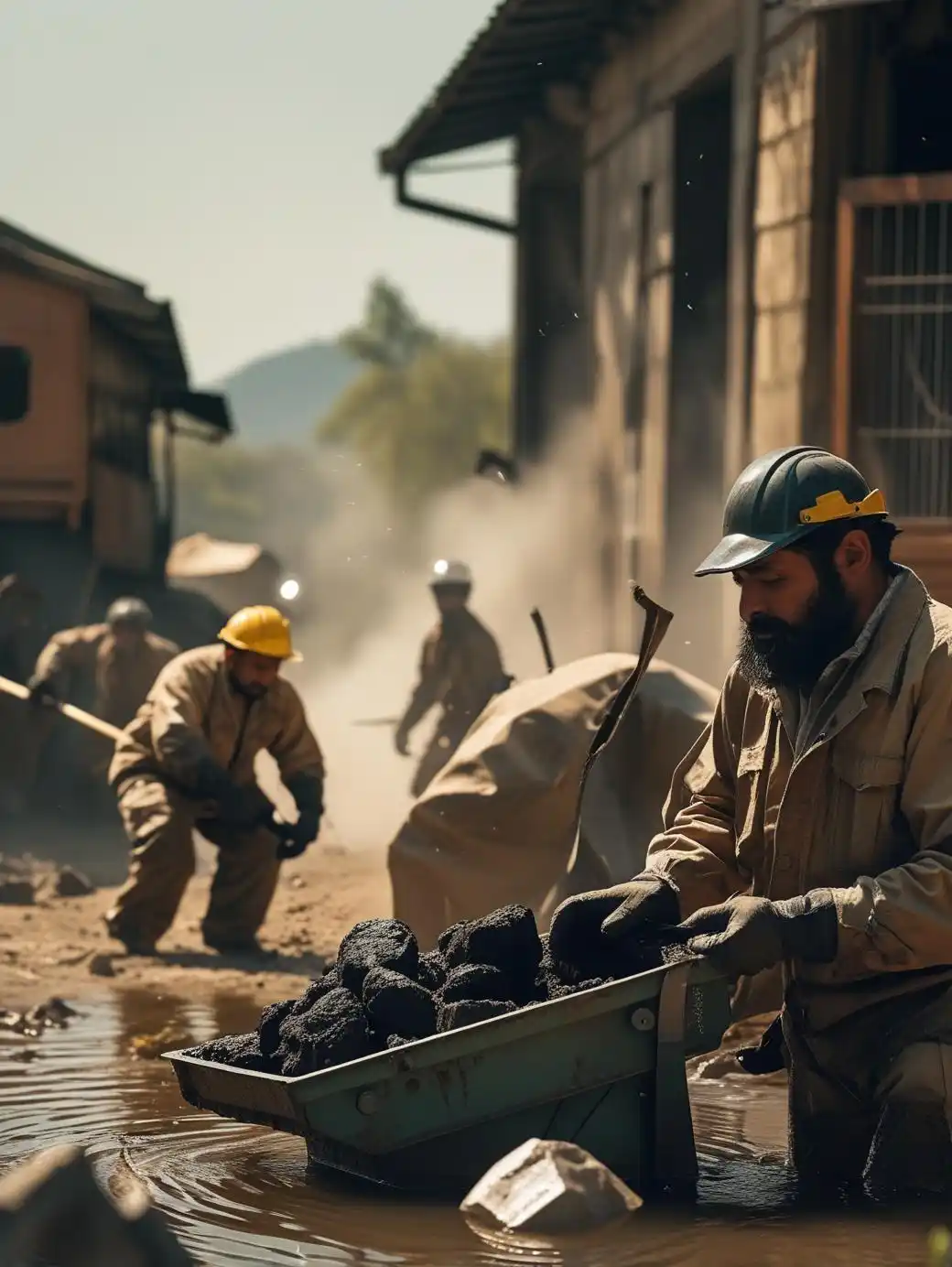
Surface and underground mining — coal mine dust (OSHA ID-125G / MSHA), respirable mineral dust, and combined silica co-analysis. AGT Labs XRD results are accepted for MSHA compliance documentation. Coal and coke facilities may require PAH testing for combustion byproduct exposure.
IH Consultants & EH&S
Industrial hygiene consulting firms, environmental health & safety departments, and third-party monitoring contractors — accredited gravimetric results formatted for client reports, OSHA response packages, and engineering control ROI documentation.
Chemical & Pharmaceutical
Active pharmaceutical ingredient (API) powder handling, chemical manufacturing, and pigment production — substance-specific dust monitoring with reporting against OSHA PELs, NIOSH RELs, and OELs for proprietary compounds. Polyurethane and foam manufacturing — pair with isocyanate testing.
Federal & DoD Facilities
BRAC remediation, federal building demolition, military airfield concrete work, navy shipyard maintenance, ammunition plant operations, and DoD environmental cleanup require accredited gravimetric data. Our AIHA IHLAP (LAP-101470) and ISO/IEC 17025:2017 accreditation supports federal facility dust testing under TSCA, CERCLA, and federal environmental data-quality requirements.
Total & Respirable Dust Testing — Frequently Asked Questions
What is the difference between total dust and respirable dust?
What are the OSHA PELs for total and respirable dust?
Do I need a cyclone for dust testing and sampling?
Can you analyze dust and silica from the same filter?
What is the OSHA PEL for wood dust?
What is the OSHA PEL for grain dust?
What turnaround times do you offer for dust testing and gravimetric analysis?
What media do I need for combined dust + silica sampling?
Do you provide sampling pumps and equipment?
Which cyclone should I use for respirable dust sampling?
What are the detection limits for NIOSH 0500 and 0600 gravimetric dust analysis?
How long are dust samples stable in shipping?
Does AGT Labs perform dust testing for federal projects and DoD facilities?
Dust Testing Lab Serving Houston's Industrial Base
AGT Labs is located at 10200 East Freeway, Suite 101, Houston TX 77029 — within the Houston Ship Channel industrial corridor. All gravimetric weighing is performed in-house on NIST-traceable microbalances. No send-outs. Samples received before 2:00 PM CST logged same day.
Total Dust
Readability
Available
10200 E. Freeway
Ready to Submit Samples to an Accredited IH Dust Testing Lab?
AIHA IHLAP (LAP-101470) · ISO/IEC 17025:2017 · NIOSH 0500 · NIOSH 0600 · 0.001 mg Microbalance · Dust + Silica Co-Analysis · Rush 1-Day TAT · Houston TX 77029. Ask about recurring monitoring programs and volume pricing for ongoing OSHA compliance sampling.