
Industrial Hygiene Testing Blog
In-depth technical guides on air sampling methods, OSHA compliance, NIOSH protocols, and occupational health hazards
Latest Articles
Expert industrial hygiene insights

Mold Testing After a Hurricane or Flood in Houston
When to test for mold after water damage, which sample answers which question, Texas assessor rules, and clearance testing before you rebuild.
Read the Flood Mold Testing Guide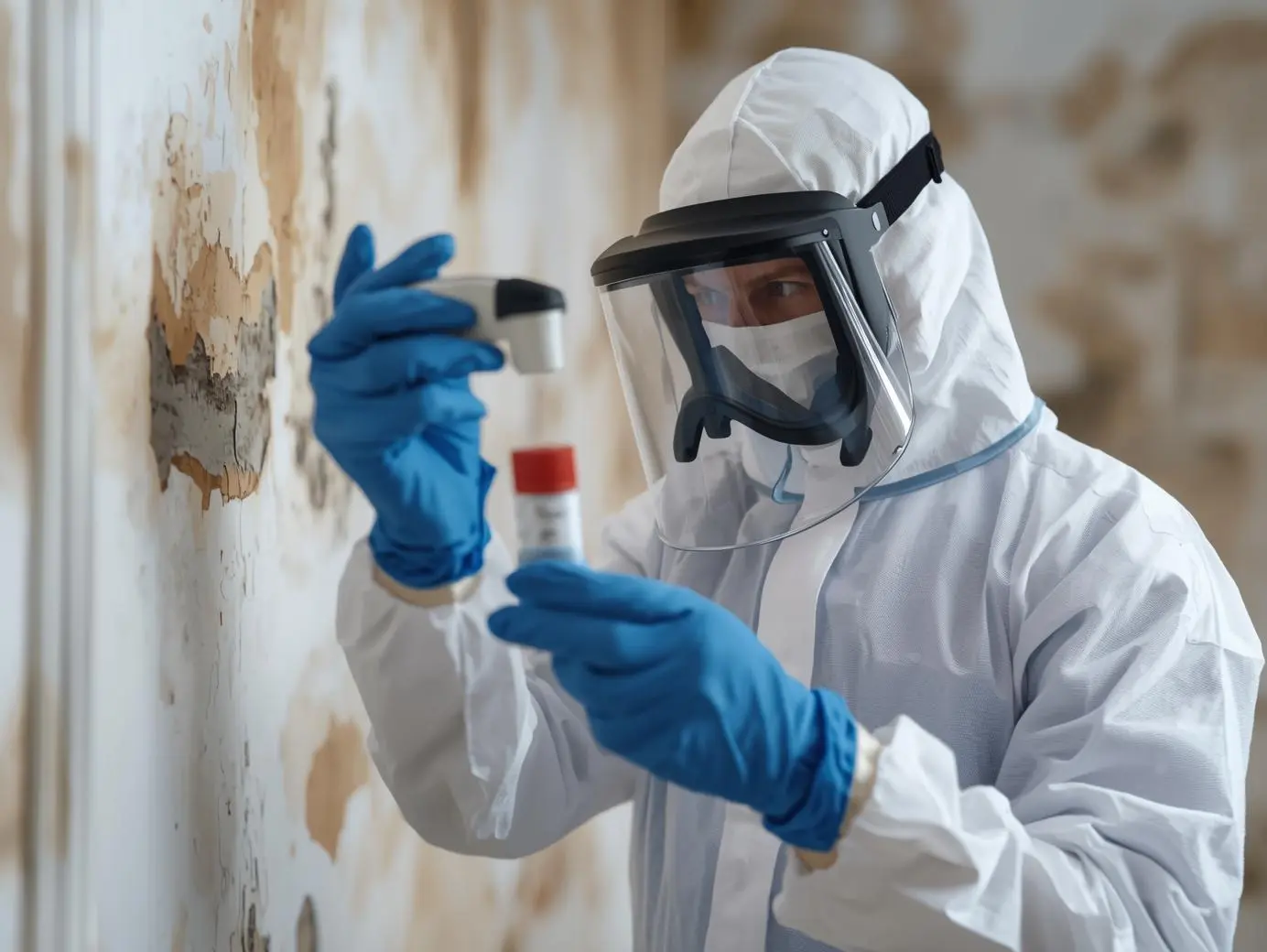
Spore Trap vs Tape Lift vs Bulk: Which Mold Test Do You Need?
Compare spore trap, tape-lift, swab and bulk mold samples — what each measures, when to use it, and how an accredited lab reports results.
Compare Mold Sampling Methods
How to Collect Asbestos Air Samples for PCM Analysis
A field guide to PCM asbestos air sampling — MCE cassettes, pump calibration, flow rates, filter loading, breathing-zone placement and field blanks.
Read the PCM Air Sampling Guide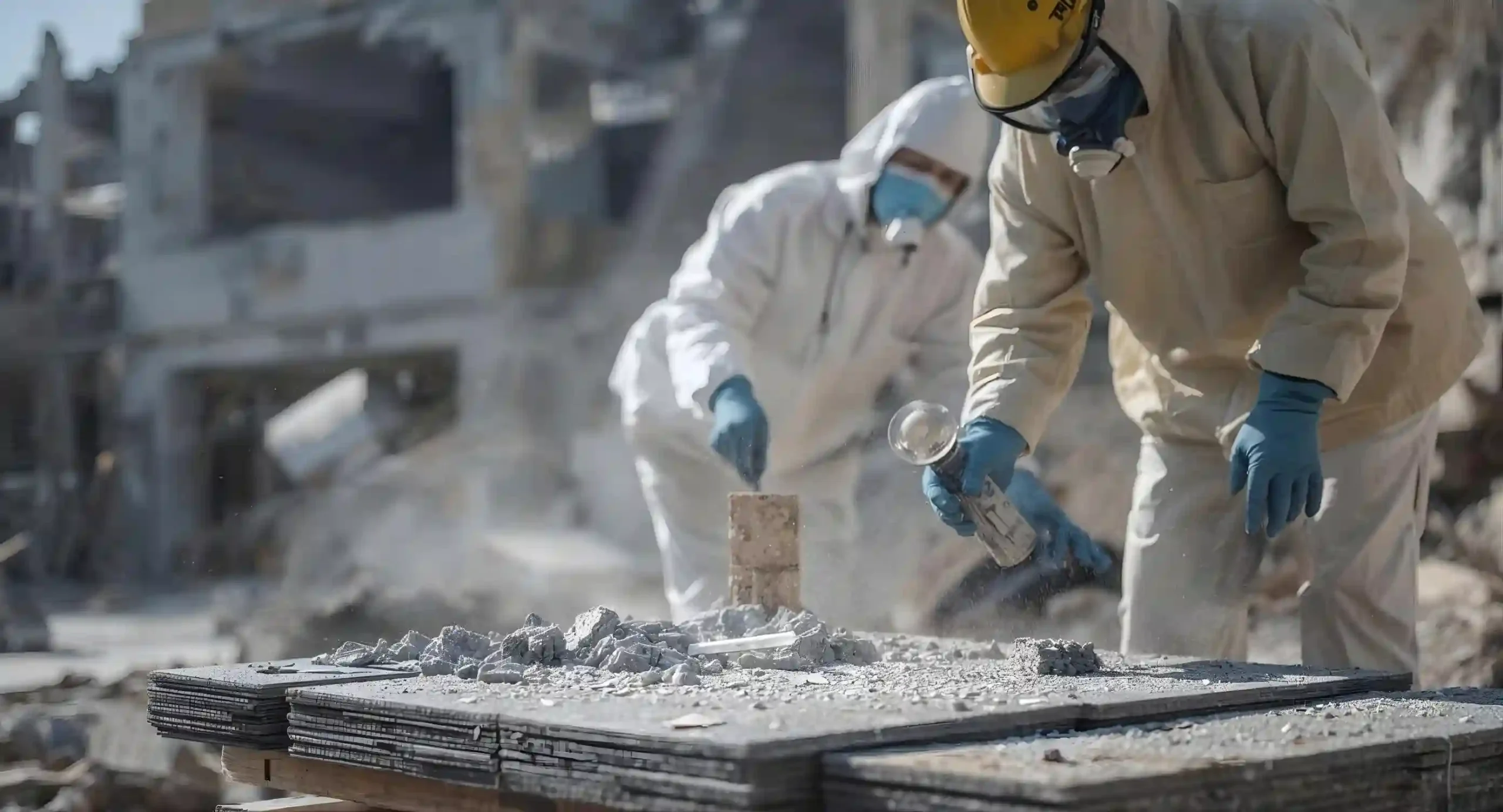
Asbestos Bulk Sampling: A Complete Guide to PLM and PCM Analysis
Asbestos bulk sampling is the physical collection of material specimens from a building for PLM laboratory analysis — the foundational step in every pre-renovation and pre-demolition asbestos investigation.
View PLM & PCM Asbestos Sampling Guide
Hexavalent Chromium Exposure: A Complete Guide to Cr(VI) Air Monitoring and OSHA Compliance
Hexavalent chromium Cr(VI) is an IARC Group 1 carcinogen with an OSHA PEL of 5 µg/m³ — one of the most strictly regulated occupational air contaminants in welding, plating, and surface coating operations.
View Cr(VI) Air Monitoring & OSHA Compliance Guide
Occupational Noise and Heat Stress Exposure
Learn how to evaluate and manage occupational noise and heat stress exposure to protect workers in demanding industrial environments.
View Occupational Noise & Heat Stress Monitoring Guide
Respirable Crystalline Silica: Quartz, Cristobalite, Tridymite & XRD Analysis
Respirable crystalline silica causes silicosis, lung cancer, and kidney disease — NIOSH 7500 XRD and NIOSH 7602 FTIR analysis methods, OSHA PEL 50 µg/m³, and 1910.1053 compliance explained.
View Silica XRD Air Sampling & OSHA PEL Guide
Respirable Dust Monitoring: A Complete Guide to NIOSH 0500, 0600 and OSHA PEL Compliance
Respirable dust monitoring is the baseline industrial hygiene measurement — covering NIOSH 0500 total and 0600 respirable gravimetric methods, cyclone sampling, OSHA PELs, and substance-specific limits for wood, grain, and coal dust.
View NIOSH 0500/0600 Dust Monitoring & PEL Guide
Metals in Air Monitoring: A Complete Guide to ICP Scan, NIOSH 7300 (modified) and OSHA Compliance
A single MCE filter ICP scan simultaneously identifies 30+ metallic elements — lead, cadmium, beryllium, arsenic, and nickel — each compared against its individual OSHA PEL, ACGIH TLV, and NIOSH REL.
View ICP Metals Air Sampling & NIOSH 7300 (modified) Guide
Lead Exposure Monitoring: Air Sampling, Paint Analysis & Wipe Clearance Under OSHA 1910.1025
Lead exposure monitoring covers three distinct pathways — airborne lead (NIOSH 7303), paint chip analysis (EPA 3050B), lead dust wipe clearance (NIOSH 9100), and TCLP waste classification for demolition debris.
View Lead Air, Paint & Wipe Clearance Testing Guide
BTEX Exposure Monitoring: Benzene, Toluene, Ethylbenzene, Xylene & Total Hydrocarbons
Benzene is an IARC Group 1 carcinogen with an OSHA action level of 0.5 ppm — NIOSH 1501 GC-FID simultaneously quantifies all four BTEX compounds from one charcoal tube for 1910.1028 compliance.
View BTEX Benzene VOC Exposure Monitoring Guide