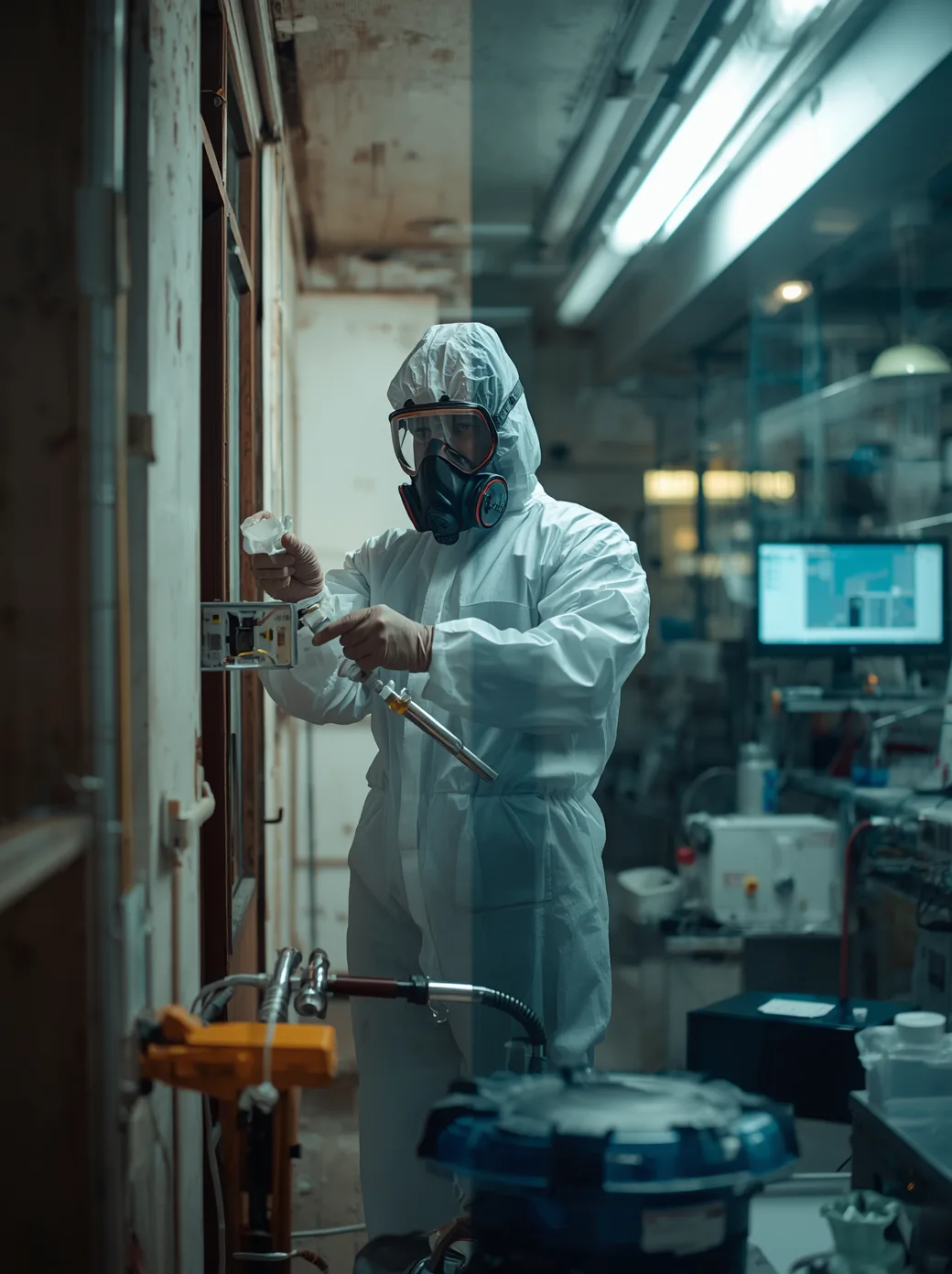
PCB Testing Lab Houston, TX — Polychlorinated Biphenyls · Air & Wipe · NIOSH 5503

Houston's AIHA IHLAP-accredited PCB testing lab and industrial hygiene testing laboratory at 10200 East Freeway, Suite 101, Houston TX 77029. NIOSH 5503 analysis for polychlorinated biphenyls (PCBs) by GC/ECD — Aroclor pattern matching for 1016, 1242, 1248, 1254, and 1260. Air monitoring, surface wipe testing, building caulk analysis, and TSCA compliance. All performed in-house with no outsourcing. AIHA LAP-101470 accredited under the IHLAP program. Samples received before 2:00 PM CST logged same day.

Last Updated: April 2026 Reviewed by: AGT Labs Analytical Chemistry Team — IHLAP-accredited analysts
AIHA IHLAP · LAP-101470 NIOSH 5503 · GC/ECD IARC Group 1 Carcinogen Rush Same-Day Available In-House GC Analysis
Why PCB Testing Matters

Why accredited PCB analysis protects your workers and building occupants

IARC Group 1 — Confirmed Carcinogen

PCBs are classified by IARC as Group 1 confirmed human carcinogens. Even decades after their 1979 ban, PCBs persist in building materials, transformers, and industrial equipment — releasing into indoor air and contaminating surfaces.

TSCA Federal Regulation

EPA regulates PCBs under the Toxic Substances Control Act (TSCA) with strict thresholds: materials containing ≥50 ppm PCBs are regulated for handling, removal, and disposal. IH lab testing confirms PCB concentrations for TSCA compliance.

Building Renovation Risk

Pre-1979 building caulk, sealants, and fluorescent light ballasts frequently contain PCBs. Renovation that disturbs these materials releases PCBs into indoor air and onto surfaces — creating exposure risks for workers and future building occupants.

EPA Surface Cleanup Standards

EPA defines PCB surface cleanup levels: 10 µg/100 cm² for high-contact surfaces and 100 µg/100 cm² for low-contact surfaces. Surface wipe testing from an accredited IH lab confirms compliance with EPA 40 CFR 761 cleanup requirements.

IH Testing Laboratory

What Is PCB Testing?

PCB testing — formally known as polychlorinated biphenyls testing — is an industrial hygiene (IH) air monitoring service that measures the concentration of polychlorinated biphenyls in workplace air, surface wipes, and bulk building materials using Gas Chromatography with Electron Capture Detection (GC/ECD). PCBs are a class of 209 synthetic chlorinated organic compounds manufactured primarily as Aroclor mixtures from the 1920s through 1979, widely used in transformers, capacitors, hydraulic fluids, and building materials (caulk, sealants, fluorescent ballasts) before their US ban.

As Houston's AIHA IHLAP-accredited PCB testing lab and trusted IH testing lab, AGT Labs performs all NIOSH 5503 analyses in-house by GC/ECD at our Houston facility (LAP-101470). We provide Aroclor pattern matching for the five most common commercial mixtures (1016, 1242, 1248, 1254, 1260) plus total PCB calculations. No outsourcing, no subcontracting.

  • Personal breathing zone PCB air monitoring — NIOSH 5503 GC/ECD
  • Area air monitoring for PCB indoor air contamination assessment
  • Surface wipe testing for EPA 40 CFR 761 cleanup verification (Ghost Wipe)
  • Aroclor pattern matching: 1016, 1242, 1248, 1254, 1260
  • Total PCB calculation from individual Aroclor contributions
  • Building caulk and sealant PCB screening (pre-renovation)
  • TSCA compliance documentation for ≥50 ppm threshold determination
Sampling & Analysis Methods

PCB Testing Method — NIOSH 5503

NIOSH 5503 is the validated analytical method for polychlorinated biphenyls in workplace air. Here's exactly what this method measures.

AIHA IHLAP Accreditation LAP-101470 · GC/ECD PCB
ISO/IEC 17025 Quality System Accredited Testing Laboratory
IH Lab Location 10200 E. Freeway · Houston TX
PCB Analysis NIOSH 5503 · Aroclor · Wipe
TSCA PCB Compliance

TSCA PCB Regulations — Compliance Guide

The Toxic Substances Control Act (TSCA), 40 CFR Part 761, is the primary federal regulation governing the manufacture, processing, distribution, use, cleanup, storage, and disposal of polychlorinated biphenyls (PCBs) in the United States. Understanding TSCA PCB thresholds is essential for building owners, environmental consultants, and renovation contractors.

AGT Labs provides the accredited GC/ECD analytical data needed for TSCA compliance determination, including bulk material PCB concentration (ppm), surface wipe contamination levels, and air monitoring during PCB-related work activities.

  • ≥50 ppm = Regulated PCB material: Materials at or above 50 ppm total PCBs are regulated under TSCA for handling, removal, and disposal
  • <50 ppm = Generally non-regulated: Materials below 50 ppm are exempt from most TSCA PCB requirements (exceptions apply)
  • Disposal requirements: Regulated PCB waste must be disposed of at EPA-approved facilities — incineration or chemical waste landfill
  • Use authorization: PCBs in intact electrical equipment may continue in service under TSCA use authorizations until end of useful life
  • Cleanup levels: Self-implementing cleanup under 40 CFR 761.61 with surface standards of 10/100 µg/100 cm²
  • Notification: EPA must be notified of PCB spills exceeding certain thresholds and of activities involving PCB-containing building materials
Surface Wipe Methodology

Surface Wipe Testing for PCB Contamination

PCB surface wipe testing is the standard method for assessing surface contamination in buildings, on equipment, and for post-cleanup verification. The methodology follows ASTM D6966 for sample collection and NIOSH 5503 (modified) for GC/ECD analysis.

Surface wipe results are compared to EPA 40 CFR 761 cleanup standards to determine whether surfaces are safe for continued occupancy or whether additional decontamination is required.

  • Collection method: 10 cm × 10 cm area (100 cm²) wiped with hexane-wetted gauze pad in S-pattern
  • Analysis: GC/ECD with Aroclor pattern matching — same accredited methodology as air samples
  • Pre-renovation assessment: Determine if building surfaces are contaminated before disturbing PCB-containing materials
  • Post-cleanup verification: Confirm that decontamination has reduced surface PCBs to EPA standards
  • Equipment decontamination: Verify PCB removal from transformer housings, capacitor racks, and electrical enclosures
  • EPA cleanup levels: 10 µg/100 cm² (high-occupancy surfaces) and 100 µg/100 cm² (low-occupancy surfaces)
PCB surface wipe testing Ghost Wipe EPA cleanup standards Houston TX
Aroclor Identification

Aroclor Pattern Identification by GC/ECD

PCBs were manufactured as commercial mixtures called Aroclors, each with a characteristic chlorine content indicated by the last two digits of the product number. GC/ECD produces unique chromatographic patterns for each Aroclor, allowing identification of which mixture(s) are present in a sample. Environmental weathering can alter patterns over time.

AroclorChlorine %Typical SourcesVolatilityCommon In
Aroclor 101641%Capacitors, small electrical devicesHigherElectrical manufacturing facilities
Aroclor 124242%Capacitors, hydraulic fluids, sealantsHigherIndustrial equipment, older buildings
Aroclor 124848%Transformers, heat transfer fluidsModerateUtility and industrial transformers
Aroclor 125454%Transformers, building caulk, paintLowerPre-1979 building materials, transformers
Aroclor 126060%Older transformers, building caulkLowestHeavily chlorinated applications, old caulk

Pattern Interpretation Notes

Environmental weathering alters Aroclor chromatographic patterns over time. Lighter (lower-chlorinated) congeners evaporate preferentially, leaving behind heavier congeners. A sample that originally contained Aroclor 1242 may appear more like 1254 or 1260 after decades of weathering in building caulk.

Mixed Aroclors are common in transformer oil and building materials. AGT Labs reports all Aroclor patterns detected plus total PCB concentration. When patterns are ambiguous due to weathering, our analysts note the interpretation and provide total PCB data for regulatory comparison.

PCB in Buildings

PCB in Building Materials — Caulk, Paint & Ballasts

Pre-1979 buildings are the most common source of ongoing PCB exposure in the United States. PCBs were added to building materials for flexibility, durability, and flame resistance. Testing before renovation or demolition is critical for worker safety and TSCA compliance.

Window Caulk & Sealants

Polysulfide and polyurethane caulk used in pre-1979 window glazing, curtain wall construction, and expansion joints frequently contains PCBs at concentrations of 1,000–300,000 ppm. This is the most common and highest-concentration PCB building material. Bulk sampling with GC/ECD analysis determines TSCA regulatory status.

Fluorescent Light Ballasts

Magnetic ballasts manufactured before 1979 contain PCB-filled capacitors and may contain PCB-contaminated potting material. Leaking ballasts release PCBs onto ceiling tiles, ductwork, and light fixtures. Ballast date codes determine PCB status — ballasts with a date code or marked "No PCBs" (post-1979) are generally exempt.

Paint & Coatings

Some pre-1979 paints and coatings, particularly marine, industrial, and floor coatings, contain PCBs as plasticizers. PCB concentrations in paint are typically lower than in caulk (10–5,000 ppm range) but can still exceed the TSCA 50 ppm threshold. Testing is recommended for pre-1979 painted surfaces before renovation.

Rubber Gaskets & Insulation

Rubber gaskets, door seals, and certain thermal insulation materials from the pre-1979 era may contain PCBs. These materials are less commonly tested but can be significant sources in industrial buildings, HVAC systems, and mechanical rooms.

Concrete & Masonry (Secondary)

PCBs from adjacent caulk migrate into porous concrete and masonry over decades. When caulk is removed, residual PCBs in substrate concrete may exceed cleanup levels. Surface wipe testing and core sampling determine contamination depth and extent.

Why Pre-Renovation Testing Is Critical

Disturbing PCB-containing building materials during renovation without proper controls violates TSCA and exposes workers and building occupants to a confirmed human carcinogen. EPA enforcement actions for improper PCB handling during renovation can result in penalties exceeding $50,000 per day per violation.

Report Deliverables

NIOSH 5503 — Deliverables & Report Format

No surprises in your PCB testing report. Here's exactly what NIOSH 5503 IH testing analysis returns.

Analysis TypeMethod / StandardSample MediaReport DeliverableRush?
NIOSH 5503 — PCB Air NIOSH 5503 · GC/ECD OVS tube or GFF cassette Individual Aroclor concentrations + total PCB (µg/m³) + OSHA PEL comparison Yes
PCB Surface Wipe NIOSH 5503 mod · GC/ECD Ghost Wipe (100 cm²) PCB surface loading (µg/100 cm²) + EPA cleanup standard comparison Yes
PCB Bulk/Caulk GC/ECD Bulk material sample Total PCB concentration (ppm) + TSCA 50 ppm threshold comparison Yes
Lab Logistics

Turnaround Times & Free Testing Kits

Every rush option and kit detail — clearly laid out before you submit your first sample to our IH testing lab.

Turnaround Options — PCB GC/ECD
Same-Day RushBefore 2:00 PM CSTCall for pricing
1-Day Rush1 business day+100%
2-Day Rush2 business days+75%
3-Day Rush3 business days+50%
4-Day Rush4 business days+25%
Standard5-7 business daysNo Surcharge
Samples received before 2:00 PM CST logged same day. Call (713) 453-6090 to confirm rush availability.

Free PCB Testing Kit Includes

  • OVS tubes (GFF + XAD-2) for PCB air sampling — lot-certified
  • Ghost Wipes for PCB surface wipe sampling (100 cm² template)
  • Bulk sample containers for caulk and sealant PCB screening
  • Field blanks (10% QA compliance)
  • Pre-paid UPS return shipping label (domestic)
  • PCB Chain of Custody (COC) form — pre-numbered
  • Calibrated personal sampling pump (rental available)
Request PCB Testing Kit

Kits ship via UPS Ground — order with 5 business days notice. Houston metro courier pickup available: (713) 453-6090.

Field Protocol Reference

Sampling Field Requirements

Incorrect sampling invalidates results and wastes project time. Follow these parameters to ensure every sample produces valid, defensible data.

PCB Air Sampling (NIOSH 5503)
Media
OVS tube (glass fiber filter front section + XAD-2 sorbent backup) or 37mm GFF cassette. OVS captures both particulate and vapor-phase PCBs.
Flow rate
1–2 L/min. Calibrate pump with sampling media in-line before and after sampling. Record exact flow rate on COC.
Volume
Full-shift (8-hour): 480–960 L. Minimum volume depends on expected PCB concentration. Higher volumes improve detection limits for low-level indoor air assessment.
Field blanks
Minimum 10% of sample count. Open OVS tube 30 seconds at sampling location, re-seal immediately. Label as "field blank" on COC.
PCB Surface Wipe Sampling
Media
Ghost Wipe (moistened gauze pad) — 100 cm² template area. Use the 10×10 cm stainless steel template included in sampling kit.
Technique
Wipe entire 100 cm² area in S-pattern, flip wipe, repeat. Fold wipe inward and place in labeled glass jar or vial. One wipe per sample location.
Locations
Sample high-contact surfaces (desktops, windowsills, door handles) and low-contact surfaces (walls, above-door areas). Minimum 5 samples per room/zone.
Comparison
Results compared to EPA 40 CFR 761 cleanup standards: 10 µg/100 cm² (high-contact) and 100 µg/100 cm² (low-contact).
PCB Bulk Material Sampling (Caulk/Sealant)
Method
Collect representative bulk sample of caulk, sealant, or suspect material. Minimum 5 grams recommended.
Locations
Pre-1979 window glazing compound, expansion joint sealant, masonry caulk, and exterior caulk are most common PCB-containing building materials.
TSCA threshold
≥50 ppm total PCBs = regulated PCB material under TSCA. Requires special handling, removal, and disposal procedures.
Documentation
Photograph each sampling location. Record material type, location, condition, and approximate quantity on COC.
Shipping & Log-In
Ship to
10200 East Freeway Suite 101, Houston TX 77029. PCB samples received before 2:00 PM CST logged same day.
Packaging
OVS tubes: cap sealed, in original tube box. Ghost Wipes: in glass jars, sealed. Bulk samples: in labeled glass or HDPE containers. All in tamper-evident bag.
COC
Complete COC fully. Note sample type (air/wipe/bulk), Aroclors requested, and sampling parameters. Indicate rush TAT.
Contact
(713) 453-6090 for Houston metro same-day courier pickup. Rush PCB GC/ECD results available.
Submission Workflow

From Sample Collection to Certified Report

1

Request Kit or COC

Call, email, or request PCB testing COC. OVS tubes, Ghost Wipes, and bulk containers ship free with 5 days notice.

2

Collect Samples

Follow NIOSH 5503 parameters for air, or wipe/bulk protocols. Record locations, flow rates, and material descriptions on COC.

3

Ship to IH Lab

Ship via UPS. PCB samples logged same day if received before 2:00 PM CST.

4

GC/ECD Analysis at IH Lab

Gas chromatography with electron capture detection at our Houston IH testing facility. Aroclor pattern matching and total PCB calculation. No outsourcing.

5

Certified PCB Report

Results delivered with individual Aroclor concentrations, total PCB, OSHA PEL or EPA cleanup standard comparison, analyst signature, QA sign-off, and AIHA LAP-101470 accreditation.

Regulatory Compliance

Standards That Require Accredited Testing

Every AGT Labs report from our IH lab is structured to satisfy all applicable federal and Texas state regulatory requirements.

OSHA PEL — PCBs
OSHA PEL for PCBs: 1.0 mg/m³ (42% chlorine, e.g. Aroclor 1242) and 0.5 mg/m³ (54% chlorine, e.g. Aroclor 1254), both with skin absorption notation. IH testing with NIOSH 5503 confirms compliance for workers handling PCB-containing materials.
ACGIH TLV — 0.003 mg/m³ (Aroclor 1254)
The ACGIH TLV for PCBs (54% chlorine) is 0.003 mg/m³ with a skin notation — over 150× more protective than the OSHA PEL. This extremely low limit reflects the confirmed carcinogenicity, bioaccumulation, and endocrine disruption potential of PCBs.
IARC Group 1 — Confirmed Human Carcinogen
PCBs are classified by IARC as Group 1 confirmed human carcinogens. PCB exposure is associated with malignant melanoma, non-Hodgkin lymphoma, and liver cancer. IARC's 2013 reclassification from Group 2A to Group 1 reflects strong epidemiological evidence.
EPA TSCA — 40 CFR 761
EPA regulates PCBs under TSCA with a 50 ppm threshold for regulated PCB materials. Building materials containing ≥50 ppm require special handling, removal, and disposal. Self-implementing cleanup and disposal rules under 40 CFR 761 govern PCB waste management.
EPA Surface Cleanup Standards
EPA 40 CFR 761.61 defines PCB surface cleanup standards: 10 µg/100 cm² for high-contact surfaces (desks, windowsills) and 100 µg/100 cm² for low-contact surfaces (walls, ceilings). Surface wipe testing from an accredited IH lab verifies cleanup effectiveness.
NIOSH REL — 0.001 mg/m³ TWA
NIOSH recommends a REL of 0.001 mg/m³ as a 10-hour TWA with a skin notation. NIOSH also recommends that PCBs be treated as occupational carcinogens and that exposure be reduced to the lowest feasible concentration. Biological monitoring (serum PCB) may complement air monitoring.
Industries & Clients

Who Relies on Our IH Testing Lab

Electrical Utilities

PCB transformer decommissioning, capacitor replacement, and switchgear maintenance expose workers to Aroclor-containing dielectric fluid. NIOSH 5503 personal monitoring during transformer draining, tank cutting, and PCB waste handling is essential for OSHA compliance.

Building Renovation

Pre-1979 building caulk, window glazing, expansion joint sealant, and fluorescent light ballasts frequently contain PCBs at concentrations exceeding the TSCA 50 ppm threshold. PCB bulk screening before renovation prevents worker exposure and TSCA violations.

Manufacturing

Legacy capacitor production facilities, hydraulic equipment manufacturing, and industrial sites with historical PCB use face ongoing contamination. Air monitoring and surface wipe testing document current exposure levels and cleanup effectiveness.

Environmental Remediation

PCB-contaminated soil, sediment, and groundwater remediation projects require worker air monitoring plus surface wipe clearance testing. NIOSH 5503 personal and area monitoring during excavation, dredging, and material handling.

Schools & Public Buildings

EPA has identified PCB-containing caulk in many pre-1979 schools and public buildings. Indoor air testing and surface wipe sampling document occupant exposure and verify compliance with EPA cleanup guidance for schools.

Shipbuilding & Marine

Legacy PCB-containing paints, sealants, and electrical equipment on vessels built before 1979 create exposure risks during ship repair, drydock maintenance, and decommissioning. IH monitoring per NIOSH 5503 required.

Waste Management & RCRA

Facilities handling PCB waste, PCB-contaminated materials, and TSCA-regulated equipment require worker air monitoring. PCB waste classification depends on total PCB concentration — GC/ECD analysis provides definitive ppm data for TSCA and RCRA compliance.

Client Questions

Frequently Asked Questions

Questions answered by our accredited IH lab team.

What is PCB testing and why is it important?
PCB testing measures the concentration of polychlorinated biphenyls — a class of 209 synthetic chlorinated compounds — in air, surface wipes, and bulk materials using GC/ECD (Gas Chromatography with Electron Capture Detection). PCBs are IARC Group 1 confirmed human carcinogens that persist in pre-1979 building materials, transformers, and industrial equipment. Testing is essential for TSCA compliance, worker safety, and occupant protection.
What is NIOSH 5503 and how does it work?
NIOSH 5503 is the validated method for PCBs in workplace air. Air is drawn through OVS tubes (glass fiber filter + XAD-2 sorbent) that capture both particulate and vapor-phase PCBs. The collected sample is extracted with hexane and analyzed by GC/ECD — a highly sensitive technique for chlorinated compounds. Results are reported as individual Aroclor patterns and total PCBs.
What is the OSHA PEL for PCBs?
OSHA PEL for PCBs: 1.0 mg/m³ for 42% chlorine (Aroclor 1242) and 0.5 mg/m³ for 54% chlorine (Aroclor 1254), both with skin absorption notation. The ACGIH TLV is far more protective at 0.003 mg/m³ — reflecting current understanding of PCB carcinogenicity and bioaccumulation.
What is the TSCA 50 ppm threshold for PCBs?
Under EPA's Toxic Substances Control Act (TSCA), 40 CFR 761, materials containing ≥50 ppm total PCBs are classified as regulated PCB materials. This triggers special requirements for handling, removal, transport, and disposal. Building caulk, transformer oil, and other suspect materials require GC/ECD analysis for TSCA threshold determination.
How do you test for PCBs in building caulk?
A representative bulk sample (minimum 5 grams) of caulk, sealant, or glazing compound is collected and analyzed by GC/ECD for total PCB concentration in ppm. Pre-1979 window glazing, expansion joint sealant, and exterior caulk are the most common PCB-containing building materials. Results are compared to the TSCA 50 ppm threshold.
What are PCB surface wipe cleanup standards?
EPA 40 CFR 761 defines PCB surface cleanup standards: 10 µg/100 cm² for high-contact surfaces (desktops, windowsills, door handles) and 100 µg/100 cm² for low-contact surfaces (walls, ceilings, structural members). Ghost Wipe sampling with GC/ECD analysis verifies compliance after PCB removal or cleanup.
What is Aroclor pattern matching?
Aroclors are commercial PCB mixtures manufactured by Monsanto, each with a specific chlorine content: 1016 (41%), 1242 (42%), 1248 (48%), 1254 (54%), 1260 (60%). GC/ECD analysis identifies which Aroclor(s) are present by matching the chromatographic pattern. Different Aroclors indicate different sources — 1254/1260 in transformers, 1242/1016 in capacitors and sealants.
What is the turnaround time for PCB testing?
Standard turnaround for NIOSH 5503 PCB GC/ECD analysis at AGT Labs is 5 to 7 business days. Rush turnaround (24 to 48 hours) is available for renovation schedule deadlines, TSCA compliance urgency, and regulatory responses. Contact our IH lab at (713) 453-6090.
Is AGT Labs accredited for PCB testing?
Yes. AGT Labs holds AIHA IHLAP accreditation under certificate LAP-101470. Our scope includes NIOSH 5503 for polychlorinated biphenyls by GC/ECD. IHLAP accreditation requires ISO/IEC 17025 quality standards, proficiency testing, and regular assessments.
How much does PCB testing cost?
PCB GC/ECD analysis pricing depends on sample type (air, wipe, or bulk), Aroclor analysis requested, sample count, and turnaround time. AGT Labs provides itemized quotes before any work begins. Call (713) 453-6090 or email info@agtlabs.com.
Can PCBs in building caulk contaminate indoor air?
Yes. PCB-containing caulk continuously off-gasses PCB vapors into indoor air and contaminates adjacent surfaces through direct contact and dust migration. Studies have documented elevated indoor air PCB concentrations in schools and office buildings with PCB caulk — even without active renovation. Indoor air monitoring can document ambient PCB levels for occupant risk assessment.
What is the difference between PCB air and wipe testing?
PCB air testing (NIOSH 5503) measures airborne PCB concentrations in µg/m³ — used for worker exposure monitoring and indoor air quality assessment. PCB wipe testing measures surface contamination in µg/100 cm² — used for EPA cleanup verification and surface contamination assessment. Both are often needed for comprehensive PCB building assessment.
Do I need PCB testing before building renovation?
If your building was constructed or renovated before 1979, PCB testing of caulk, sealants, fluorescent ballasts, and other suspect materials is strongly recommended — and may be required under EPA TSCA regulations. Disturbing PCB-containing materials during renovation without proper controls creates worker exposure and TSCA liability.
Houston TX IH Laboratory

IH Testing Lab Serving Houston's Industries

AGT Labs is located at 10200 East Freeway, Suite 101, Houston TX 77029 — inside the Houston Ship Channel industrial corridor. As a full-service industrial hygiene testing lab, all analyses are performed in-house. No outsourcing, no send-outs. Samples received before 2:00 PM CST logged same day.

Industrial
Electrical & Utilities
PCB testing for Houston-area electrical utilities during transformer decommissioning, switchgear maintenance, and capacitor replacement. NIOSH 5503 personal monitoring during PCB dielectric fluid handling and equipment demolition.
Construction
Building Renovation
Pre-renovation PCB caulk screening and TSCA compliance testing for Houston commercial buildings, schools, and public facilities built before 1979. Bulk material analysis plus indoor air and surface wipe assessment.
Environmental
Remediation & Cleanup
PCB exposure monitoring for environmental remediation workers at contaminated industrial sites across the Houston metro area. Personal air monitoring, surface wipe clearance testing, and PCB waste classification.
Petrochemical
Refineries & Chemical
Legacy PCB-containing equipment decommissioning at Houston Ship Channel refineries and chemical plants. Worker air monitoring during transformer removal, cable handling, and PCB-contaminated soil management.
5
Aroclor Patterns
Identified by GC/ECD
Group 1
IARC Confirmed
Human Carcinogen
Same-Day
Rush GC/ECD
TAT Available
77029
Houston TX
10200 E. Freeway

Need an Accredited IH Lab for PCB Testing?

AIHA IHLAP-accredited PCB testing lab · LAP-101470 · NIOSH 5503 · GC/ECD · Aroclor pattern matching · Air & wipe testing · TSCA compliance · Rush same-day available · 10200 East Freeway, Houston TX 77029