
Isocyanate Testing Lab Houston, TX — TDI, MDI & HDI — OSHA Method 42
Need isocyanate testing in Houston? AGT Labs analyzes samples collected by your industrial hygienist, EHS team or consultant — drop off at 10200 East Freeway, Suite 101, or ship from anywhere in the U.S. Houston's AIHA IHLAP-accredited isocyanate testing lab at 10200 East Freeway, Suite 101, Houston TX 77029 — continuously accredited since February 2000. OSHA Method 42 analysis for toluene diisocyanate (TDI), methylene diphenyl diisocyanate (MDI), and hexamethylene diisocyanate (HDI) by HPLC with both fluorescence (FL) and UV detection — all performed in-house. AIHA LAP-101470. Spray polyurethane foam (SPF) insulation, auto body painting, polyurethane manufacturing, aerospace coatings, and Houston Ship Channel chemical exposure monitoring. OSHA NEP enforcement support. Samples received before 2:00 PM CT logged same day. Rush 24-hour turnaround available.
Why accredited isocyanate analysis protects your workers
#1 Chemical Cause of Occupational Asthma
Diisocyanates are the leading chemical cause of occupational asthma worldwide. Once sensitized, workers react to trace exposures well below detection limits. OSHA Method 42 monitoring from an IHLAP-accredited IH lab is the only way to document safe exposure levels.
OSHA National Emphasis Program
OSHA maintains an active National Emphasis Program (NEP) specifically targeting isocyanate exposures — meaning increased inspection frequency and enforcement for spray foam, auto body, and polyurethane operations.
Irreversible Respiratory Sensitization
Isocyanate sensitization is irreversible. Once a worker becomes sensitized, even trace concentrations trigger severe asthmatic reactions, potentially ending their career in the industry. Proactive IH testing prevents sensitization events.
Workers' Comp & Legal Liability
Isocyanate-induced occupational asthma generates significant workers' compensation and legal liability. Documented exposure monitoring from an AIHA IHLAP-accredited laboratory (LAP-101470, accredited since 2000) provides the defensible records needed for claim defense.
What Is Isocyanate Exposure Testing?
Isocyanate testing — formally known as diisocyanate exposure testing — is an industrial hygiene (IH) air monitoring service that measures the concentration of diisocyanate monomers — toluene diisocyanate (TDI), methylene diphenyl diisocyanate (MDI), and hexamethylene diisocyanate (HDI) — in workplace air using High-Performance Liquid Chromatography (HPLC) with fluorescence and UV detection. Diisocyanates are reactive chemicals used in two-component polyurethane products including spray foam insulation, automotive paints, industrial coatings, marine and shipyard coatings, and adhesives.
As an AIHA IHLAP-accredited Houston lab, AGT Labs performs all OSHA Method 42 analyses in-house by HPLC (LAP-101470, continuously accredited since February 2000). Our accreditation covers OSHA 42 by both HPLC/FL (fluorescence) and HPLC/UV detection — providing dual-detector confirmation for OSHA NEP citation defense. No outsourcing, no subcontracting. When your spray foam contractor, auto body shop, or manufacturing facility needs defensible isocyanate exposure data during an OSHA NEP inspection, you get results from the accredited IH lab that actually ran the samples.
- Personal breathing zone isocyanate monitoring — OSHA Method 42 HPLC/FL + HPLC/UV
- TDI (2,4-TDI and 2,6-TDI isomers) — toluene diisocyanate analysis
- MDI — methylene diphenyl diisocyanate analysis
- HDI — hexamethylene diisocyanate analysis
- Short-term task-based monitoring for spray foam application and auto body painting
- Full-shift TWA monitoring for ACGIH TLV compliance
- Area monitoring inside and outside containment zones during spray foam operations
- Re-entry clearance monitoring after SPF application
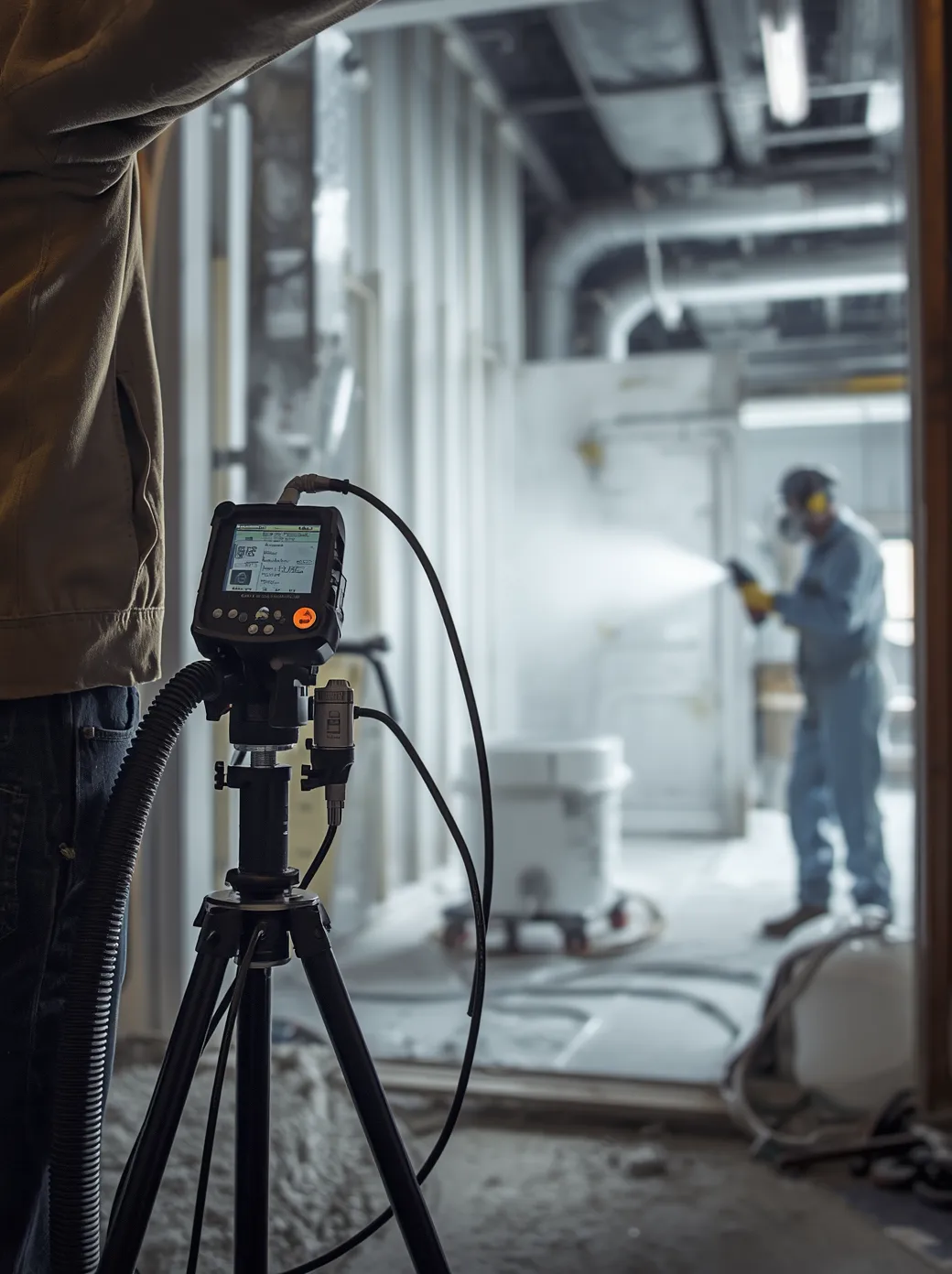
OSHA National Emphasis Program (NEP) — Isocyanate Enforcement
OSHA maintains an active National Emphasis Program (NEP) specifically targeting isocyanate exposures. This means OSHA inspectors are actively seeking out and inspecting workplaces where diisocyanate-containing products are used — with a focus on spray polyurethane foam (SPF) insulation, auto body refinishing, and polyurethane manufacturing.
During an NEP inspection, OSHA compliance officers evaluate multiple elements of an employer’s isocyanate exposure control program. Having documented air monitoring data from an AIHA IHLAP-accredited laboratory like AGT Labs (LAP-101470) is the foundation of a defensible compliance program.
What OSHA NEP Inspectors Evaluate:
- Air Monitoring Data: Personal breathing zone exposure monitoring per OSHA Method 42 — both task-based and full-shift TWA results
- Medical Surveillance Records: Pre-placement and periodic medical evaluations for isocyanate-exposed workers, including pulmonary function testing
- Respiratory Protection Program: Written program, fit testing records, and evidence that respirators match documented exposure levels
- Training Documentation: Employee training on isocyanate hazards, proper handling, and emergency procedures
- Engineering Controls: Ventilation systems, spray booth specifications, containment measures, and maintenance records
- Product Inventory & SDS: Complete inventory of isocyanate-containing products with current Safety Data Sheets
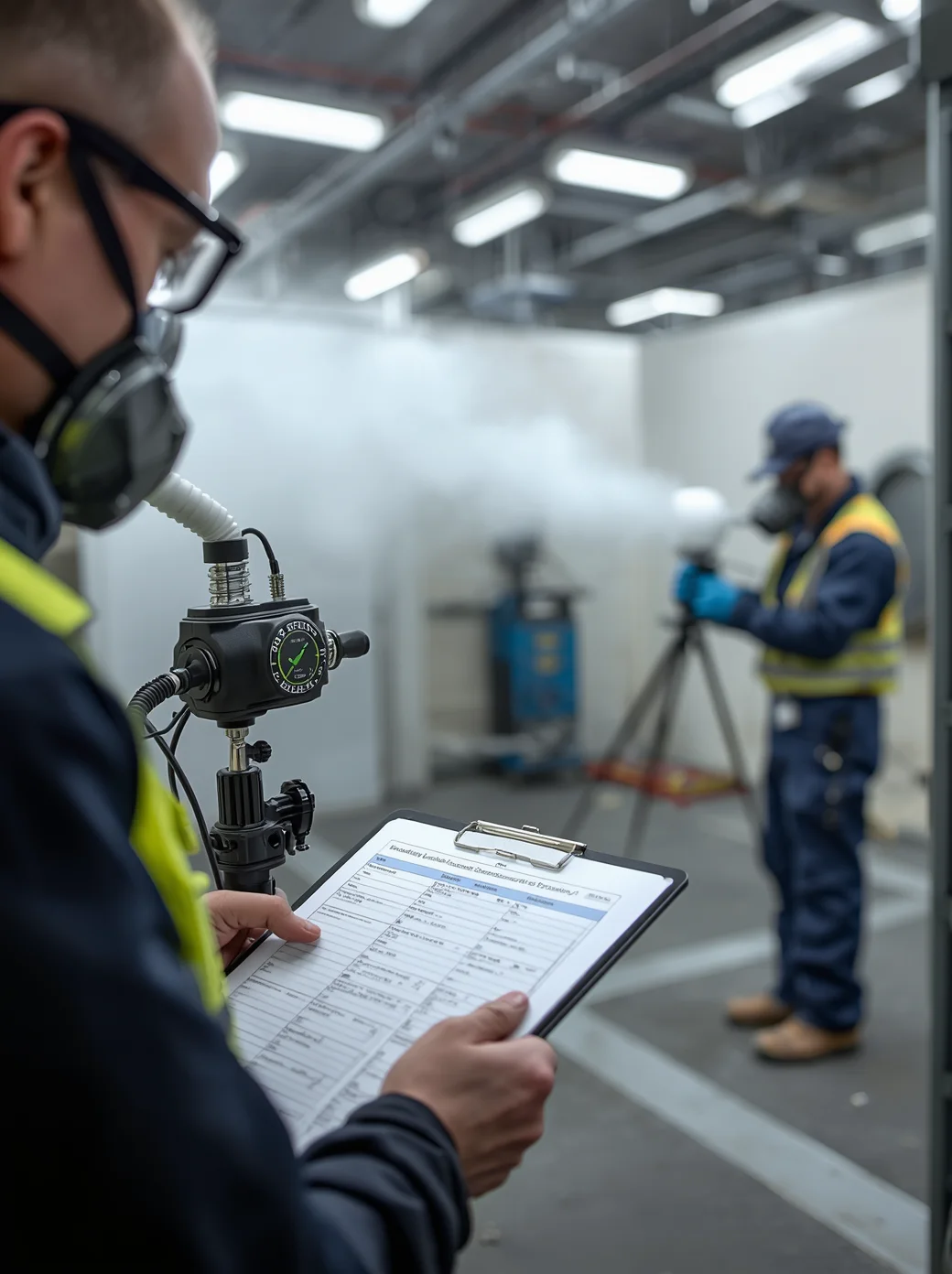
Isocyanate Testing Method — OSHA Method 42
OSHA Method 42 is the validated analytical method for diisocyanate monomers in workplace air. AGT Labs is AIHA IHLAP-accredited for OSHA 42 by both fluorescence (FL) and UV detection — providing dual-detector confirmation.
OSHA Method 42 — TDI, MDI, HDI by HPLC/FL + HPLC/UV
Air is drawn through 1-(2-pyridyl)piperazine (1-2PP) reagent-coated 37mm glass fiber filters that derivatize reactive isocyanate groups on contact. The stable derivatives are extracted and analyzed by HPLC with fluorescence detection (primary, lower detection limit) and UV detection (confirmatory). Simultaneously quantifies TDI (both 2,4- and 2,6-isomers), MDI, and HDI monomers. Both detectors are accredited under AGT Labs' AIHA IHLAP scope (LAP-101470).
Detection Limits, Sample Volumes & Quantification
Sample volume drives detection capability. The longer you sample, the lower the air concentration you can quantify. Design your sampling plan around the limit that actually governs: the ACGIH TLV for TDI is 0.001 ppm TWA with a 0.005 ppm STEL (revised 2016), MDI and HDI are 0.005 ppm TWA, and the OSHA ceiling for TDI and MDI is 0.02 ppm.
| Sampling Scenario | Flow / Time | Total Volume | Reportable Range — TDI (HPLC/FL) | Best for |
|---|---|---|---|---|
| STEL sample (15-min) | 1.5 L/min × 15 min | 22.5 L | ~0.0027 – 0.05 ppm | ACGIH TDI STEL (0.005 ppm) and OSHA ceiling (0.02 ppm), peak spray events |
| Spray task sample (1-hr) | 1.5 L/min × 60 min | 90 L | ~0.00067 – 0.025 ppm | SPF application, auto body spraying, brief tasks |
| Half-shift TWA | 1.5 L/min × 4 hr | 360 L | ~0.00017 – 0.006 ppm | Half-shift personal monitoring |
| Full-shift TWA (8-hr) | 1.5 L/min × 8 hr | 720 L | ~0.00008 – 0.003 ppm | ACGIH TLV TWA compliance — 0.001 ppm TDI, 0.005 ppm MDI/HDI |
| Re-entry clearance | 2.0 L/min × 8 hr | 960 L | down to ~0.00006 ppm | Post-SPF clearance for occupant re-entry |
Reading the math: Reportable range = LOQ (0.05 µg) ÷ sample volume (L), converted to ppm at 25 °C and 1 atm. A 720-L full-shift sample at the OSHA 42 LOQ resolves to ~0.00008 ppm for TDI — more than a factor of ten below the current ACGIH TLV of 0.001 ppm. That headroom matters: ACGIH lowered the TDI TWA from 0.005 ppm to 0.001 ppm in 2016, so plans written against the older value are now five times too permissive. The HPLC/FL detector provides the analytical sensitivity needed at these limits, and HPLC/UV provides confirmatory backup. MDI LOQ is slightly higher (~0.15 µg/sample) due to its lower fluorescence yield. Talk to our IHLAP-accredited analysts at (713) 453-6090 if you need to push the detection limit lower than the table shows.
Respiratory Sensitization — Why Isocyanates Are Different
Isocyanates are fundamentally different from most chemical hazards because they are respiratory sensitizers. With most chemicals, the dose-response relationship is straightforward — lower exposure means lower risk. With isocyanates, once a worker becomes sensitized, the rules change completely.
After sensitization, any exposure — even concentrations far below the ACGIH TLV — can trigger severe asthma-like reactions including bronchospasm, chest tightness, wheezing, and respiratory distress. Sensitization is irreversible. Sensitized workers typically cannot continue working with or near isocyanate-containing products, effectively ending their career in that industry.
Risk Factors & Symptoms:
- High-risk exposure events: Spills, spray operations without proper PPE, confined space application, and equipment malfunction
- Atopic individuals: Workers with pre-existing allergies or asthma may be at higher risk for sensitization
- Dermal exposure: Skin contact with liquid isocyanates can contribute to respiratory sensitization — not just inhalation. ACGIH carries skin, DSEN and RSEN notations for TDI
- Symptoms of sensitization: Wheezing, chest tightness, shortness of breath, cough — often worsening during or after work shifts
- Latency period: Sensitization can develop after weeks, months, or years of exposure — making ongoing monitoring critical
- Medical surveillance: OSHA requires pre-placement and periodic medical evaluations including spirometry for isocyanate-exposed workers
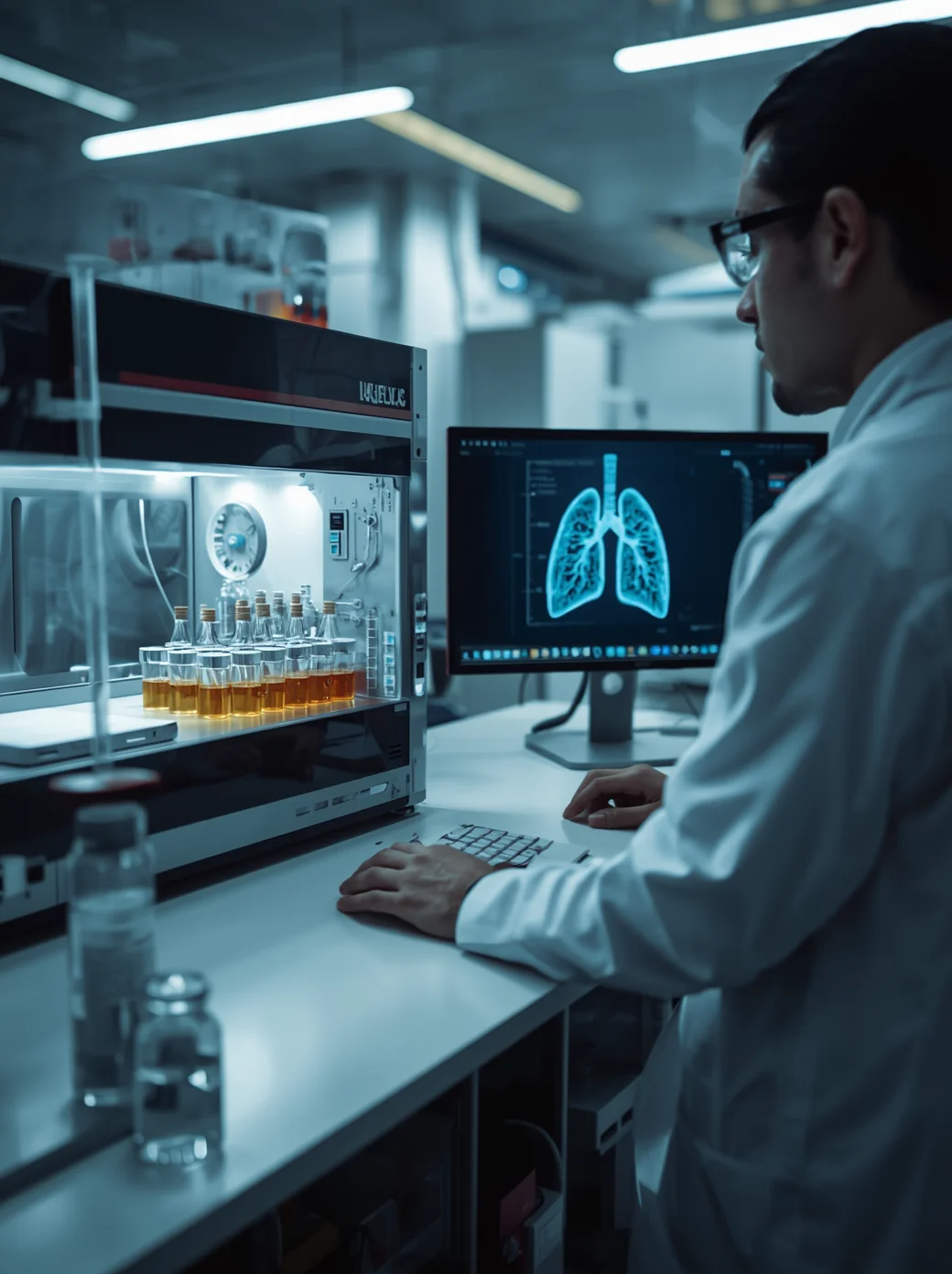
TDI vs MDI vs HDI — Know Your Isocyanate
The three primary diisocyanates have different physical properties, exposure routes, and industrial applications. Understanding which isocyanate is present in your workplace determines sampling strategy and risk assessment.
| Property | TDI (Toluene Diisocyanate) | MDI (Methylene Diphenyl Diisocyanate) | HDI (Hexamethylene Diisocyanate) |
|---|---|---|---|
| Primary Use | Flexible foam, coatings, elastomers | Rigid foam, SPF insulation, adhesives | Auto refinish, aerospace coatings |
| OSHA PEL | 0.02 ppm (ceiling) | 0.02 ppm (ceiling) | None (General Duty Clause) |
| ACGIH TLV | 0.001 ppm TWA / 0.005 ppm STEL (skin, DSEN, RSEN, A3) | 0.005 ppm TWA | 0.005 ppm TWA |
| NIOSH REL | Ca — no numeric REL (see Appendix A) | 0.005 ppm TWA / 0.02 ppm ceiling | 0.005 ppm TWA / 0.02 ppm ceiling |
| Vapor Pressure | Moderate — significant vapor at room temp | Very low — primarily aerosol risk during spraying | Moderate — significant vapor at room temp |
| Main Hazard Route | Inhalation (vapor) | Inhalation (aerosol/spray mist) | Inhalation (vapor + aerosol) |
| Key Industries | Foam manufacturing, coatings, foundry cores | Spray foam insulation, rigid foam, construction | Auto body shops, aircraft painting, industrial coatings |
| Sampling Note | Vapor readily captured on 1-2PP filter | Must capture aerosol droplets — 1-2PP filter at 1–2 L/min | Both vapor and aerosol present — adequate flow rate critical |
Which isocyanate is in your workplace?
OSHA Method 42 — Deliverables & Report Format
No surprises in your isocyanate testing report. Here's exactly what OSHA Method 42 IH testing analysis returns.
| Analysis Type | Method / Standard | Sample Media | Report Deliverable | Rush? |
|---|---|---|---|---|
| OSHA 42 — TDI (2,4-) | OSHA Method 42 · HPLC/FL + UV | 1-2PP coated GFF (37mm) | 2,4-TDI concentration (µg/m³ & ppm) + TLV comparison | Yes |
| OSHA 42 — TDI (2,6-) | OSHA Method 42 · HPLC/FL + UV | 1-2PP coated GFF (37mm) | 2,6-TDI concentration (µg/m³ & ppm) + TLV comparison | Yes |
| OSHA 42 — MDI | OSHA Method 42 · HPLC/FL + UV | 1-2PP coated GFF (37mm) | MDI concentration (µg/m³ & ppm) + TLV comparison | Yes |
| OSHA 42 — HDI | OSHA Method 42 · HPLC/FL + UV | 1-2PP coated GFF (37mm) | HDI concentration (µg/m³ & ppm) + TLV comparison | Yes |
Turnaround Times & Free Testing Kits
Every rush option and kit detail — clearly laid out before you submit your first sample to our IH testing lab.
Isocyanate Monitoring Isn't One-and-Done
OSHA's isocyanate NEP expects ongoing exposure assessment, and every new product, spray booth, or SPF job changes the exposure profile — so monitoring repeats. Set up a recurring program and we'll set your recurring submission calendar, supply pre-loaded 1-2PP cassettes, and apply standing-account volume pricing.
Free Isocyanate Testing Kit Includes
- 1-2PP reagent-coated 37mm glass fiber filters (OSHA 42) — pre-loaded cassettes
- Calibrated personal sampling pumps (rental available)
- Field blank cassettes (10% QA compliance)
- Pre-paid UPS return shipping label (domestic)
- Isocyanate Chain of Custody (COC) form — pre-numbered
- Sampling instruction sheet with flow rate and volume guidelines
- Protective storage containers for loaded cassettes
Kits ship via UPS Ground — order with 5 business days notice. Houston metro courier pickup available: (713) 453-6090.
Sampling Field Requirements
Incorrect sampling invalidates results and wastes project time. Follow these parameters to ensure every sample produces valid, defensible data.
From Sample Collection to Certified Report
Request Kit or COC
Call, email, or request isocyanate testing COC. Pre-loaded 1-2PP cassettes and sampling pumps ship free with 5 days notice.
Collect Samples
Follow OSHA Method 42 field parameters. Personal and area sampling during spray foam, auto body, or manufacturing operations. Record flow rates on COC.
Ship to IH Lab
Ship via UPS. No refrigeration required for 1-2PP media. Isocyanate samples logged same day if received before 2:00 PM CT.
HPLC Analysis at IH Lab
HPLC with fluorescence and UV detection performed by IHLAP-accredited analysts at our Houston IH testing facility. No outsourcing.
Certified Isocyanate Report
Results delivered via secure portal with individual TDI/MDI/HDI concentrations, ACGIH TLV comparison, analyst signature, QA sign-off, and AIHA LAP-101470 accreditation.
Standards That Require Accredited Testing
Every AGT Labs report from our IH lab is structured to satisfy all applicable federal and Texas state regulatory requirements.
Who Relies on Our IH Testing Lab
Spray Polyurethane Foam (SPF)
SPF insulation contractors face the highest isocyanate exposure risk of any industry. Two-component spray systems release MDI and sometimes TDI during application. OSHA NEP specifically targets SPF operations. OSHA Method 42 personal monitoring during spraying, and post-application re-entry testing, are essential. SPFA PCP-certified contractor program support.
Automotive Refinishing
Auto body shops using polyurethane clearcoats, primers, and basecoats release HDI and occasionally TDI during spray application. Spray booth monitoring and personal isocyanate exposure testing per OSHA Method 42 are required for OSHA NEP compliance. AGT Labs serves Houston-area auto body shops.
Polyurethane Manufacturing
Foam production, casting, molding, and extrusion operations use MDI and TDI. Both monomer and prepolymer forms release isocyanate vapor, especially during heating and mixing. Continuous IH monitoring programs with OSHA Method 42 are standard for these facilities.
Aerospace Coatings
Aircraft painting and coating operations use HDI-based polyurethane systems for exterior and interior finishes. High-volume spray application in large hangars requires extensive personal and area monitoring. AGT Labs provides OSHA 42 IH testing for aerospace facilities.
Furniture & Foam Production
Flexible and rigid polyurethane foam production for furniture, mattresses, and automotive seating uses TDI and MDI. Foam cutting, trimming, and assembly operations also release residual isocyanate — monitoring required through the production chain.
Construction & Adhesives
Construction adhesive application, waterproofing membrane installation, and structural foam injection use isocyanate-based products. Workers applying these materials in enclosed spaces face concentrated isocyanate exposure requiring OSHA Method 42 monitoring.
Foundry & Core-Making
Polyurethane binder systems used in foundry sand cores release isocyanate vapor during mixing and during metal pour (thermal decomposition). OSHA Method 42 monitoring is required for foundry core room workers and pourers in metal fabrication and casting operations.
Government & Federal Facilities
Public building renovation, federal facility repainting, and large public-sector coating programs need defensible, independently accredited exposure data. AGT Labs' AIHA IHLAP accreditation (LAP-101470) and ISO/IEC 17025:2017 quality system support isocyanate monitoring for these projects. Note that environmental analysis on DoD and DOE installations is separately governed by DoD-ELAP requirements — contact us to confirm scope before bidding.
Frequently Asked Questions
Questions answered by our IHLAP-accredited IH lab analysts.
What diisocyanates does OSHA Method 42 analyze?
Does OSHA have a specific PEL for diisocyanates?
Why are diisocyanates considered high-priority for workplace monitoring?
What is the difference between monomer and oligomer isocyanate testing?
How are air samples collected for isocyanate testing?
What industries require isocyanate exposure monitoring?
What is the OSHA National Emphasis Program for isocyanates?
Can workers become permanently sensitized to isocyanates?
What is the detection limit for OSHA Method 42 isocyanate analysis?
How long do 1-2PP isocyanate samples remain stable after collection?
Does AGT Labs handle isocyanate testing for government and federal facility projects?
What is the turnaround time for isocyanate testing?
Is AGT Labs accredited for isocyanate testing?
How much does isocyanate testing cost?
Is isocyanate testing required for spray foam contractors?
What is thermal decomposition testing for isocyanates?
Can real-time isocyanate monitors replace lab analysis?
Isocyanate Testing Lab Serving Houston's Industries
AGT Labs is located at 10200 East Freeway, Suite 101, Houston TX 77029 — inside the Houston Ship Channel industrial corridor. As a full-service industrial hygiene testing lab, all OSHA Method 42 analyses are performed in-house. No outsourcing, no send-outs. Samples received before 2:00 PM CT logged same day.
Accredited (Since 2000)
Analyzed Per Sample
TAT Available
10200 E. Freeway
Need an Accredited IH Lab for Isocyanate Testing?
Houston's AIHA IHLAP-accredited isocyanate testing lab since 2000, running OSHA Method 42 for TDI, MDI, and HDI by HPLC (fluorescence and UV). accredited, with OSHA NEP compliance support and same-day rush available — 10200 East Freeway, Houston, TX 77029. Ask about recurring monitoring programs and volume pricing for ongoing OSHA NEP compliance sampling.