
Noise and Heat Stress Monitoring — OSHA 1910.95 Dosimetry & ACGIH WBGT
Noise and heat are the two hazards you cannot ship to a laboratory — they have to be measured where the work happens. AGT Labs rents the calibrated instruments that do it (noise dosimeters, Class 1 and 2 sound level meters, WBGT monitors), your team deploys them, and our AIHA LAP LLC accredited laboratory (LAP-101470) turns the returned logs into an OSHA 1910.95 and ACGIH TLV compliance report. We do not attend site.
📍 10200 East Freeway, Suite 101, Houston TX 77029 · Returned data logs received before 2:00 PM CST are processed same day.
Physical hazards like noise and heat cause permanent injuries and trigger strict OSHA compliance requirements
OSHA Enforcement
OSHA 1910.95 requires a Hearing Conservation Program if exposures reach 85 dBA. OSHA's National Emphasis Program (NEP) on heat targets workplaces with known heat stress risks. Documented monitoring records are your first line of defense during an inspection.
Irreversible Hearing Loss
Noise-Induced Hearing Loss (NIHL) is cumulative, painless, and 100% preventable, but completely irreversible. Accurately assessing personal noise dose ensures you are providing adequate hearing protection and protecting worker quality of life.
Heat-Related Illnesses
Heat exhaustion and heat stroke can be fatal. In high-temperature industrial or outdoor environments, standard thermometers are not enough. WBGT accounts for humidity and radiant heat, giving a true measure of physiological stress.
Workers' Compensation Defense
Hearing loss claims are among the most common occupational illness claims. Defensible dosimetry logs prove you accurately measured exposures and implemented necessary controls, protecting against fraudulent claims.
What Is Noise and Heat Stress Monitoring?
While chemical exposures are measured in parts per million or milligrams per cubic meter, physical hazards require entirely different equipment. Noise dosimetry involves a worker wearing a small, data-logging dosimeter on their shoulder for a full shift. It continuously records sound pressure levels to calculate an exact 8-hour Time-Weighted Average (TWA) and Noise Dose percentage.
Conversely, the heat side utilizes specialized Wet Bulb Globe Temperature (WBGT) equipment to measure the combined effect of ambient temperature, humidity, airflow, and radiant heat (from the sun or industrial equipment like furnaces). These metrics dictate safe work/rest cycles. While noise and heat are physical hazards, many of the same work environments generate chemical hazards that require laboratory analysis — explore our full range of industrial hygiene testing services to build a complete exposure assessment program. Noise dosimetry and WBGT heat stress monitoring round out a complete IH testing program by addressing the physical hazards that chemical sampling alone cannot capture.
Who does what: AGT Labs is a laboratory — we do not visit sites. We rent you calibrated instruments, your team deploys them for the shift, and we convert the returned logs into an OSHA-referenced compliance report.
- Personal noise dosimetry logging for full-shift TWA
- Area sound level mapping to identify noise sources, on a Class 1 meter we supply
- Octave band analysis for hearing protection (NRR) selection
- WBGT logging for indoor and outdoor environments, on rented monitors
- Evaluation of work/rest schedules based on metabolic load
- Equipment rental, with data interpretation and compliance reporting by our IH professionals

What We Measure
A comprehensive physical hazards survey evaluates these critical parameters to provide a complete picture of worker risk.
Personal Noise Dose (%)
The percentage of the allowable daily noise exposure accumulated over a shift. A 100% dose equates to the OSHA PEL of 90 dBA. Continuous dosimetry captures varying noise levels as a worker moves through the facility.
Area Sound Levels (dBA/dBC)
Instantaneous measurements used to map high-noise zones, identify specific loud machinery, and establish boundaries for "Hearing Protection Required" signage.
Octave Band Analysis
Breaks down noise into specific frequency bands (pitches). Essential for determining the true attenuation (NRR) required from earplugs or earmuffs, as high-frequency and low-frequency noise are blocked differently.
Wet Bulb Globe Temperature
The standard index for assessing heat stress. It calculates a single value taking into account air temperature, humidity, wind speed, and radiant heat, whether solar or industrial.
Relative Humidity & Airflow
High humidity prevents sweat evaporation, the body's primary cooling mechanism. Measured alongside air velocity (which aids cooling) to determine true environmental heat load.
Metabolic Workload
Heat stress thresholds vary based on how hard the worker is working (Light, Moderate, Heavy, Very Heavy). We categorize metabolic rates to apply the correct ACGIH work/rest schedule limits.
Noise Dosimetry — OSHA 1910.95 Hearing Conservation Compliance
Occupational noise monitoring determines whether worker exposure exceeds OSHA's permissible exposure limit (PEL) of 90 dBA as an 8-hour time-weighted average (TWA), or the action level of 85 dBA TWA that triggers hearing conservation program requirements.
How Personal Noise Dosimetry Works
AGT Labs supplies ANSI S1.25-compliant noise dosimeters pre-configured to log both OSHA HC (hearing conservation) and OSHA PEL criteria at once, so a single deployment satisfies both thresholds. To be clear about who does what: we do not attend site. Your safety staff or your consultant fits the dosimeters and runs the shift; we configure and calibrate the units, and process the logs that come back.
Each noise dosimetry report includes the 8-hour TWA, projected dose percentage, peak sound pressure level, and time history profile with minute-by-minute noise level data. For operations with variable noise sources, we provide octave band analysis that identifies the dominant frequency contributions — critical information for selecting effective hearing protection and engineering controls.
- 8-hour TWA and projected dose percentage per worker
- Peak sound pressure level (Lpeak) for impulse noise evaluation
- Minute-by-minute time history profile for task-specific analysis
- Simultaneous OSHA HC (85 dBA) and OSHA PEL (90 dBA) criteria logging
- Octave band data for hearing protection NRR selection
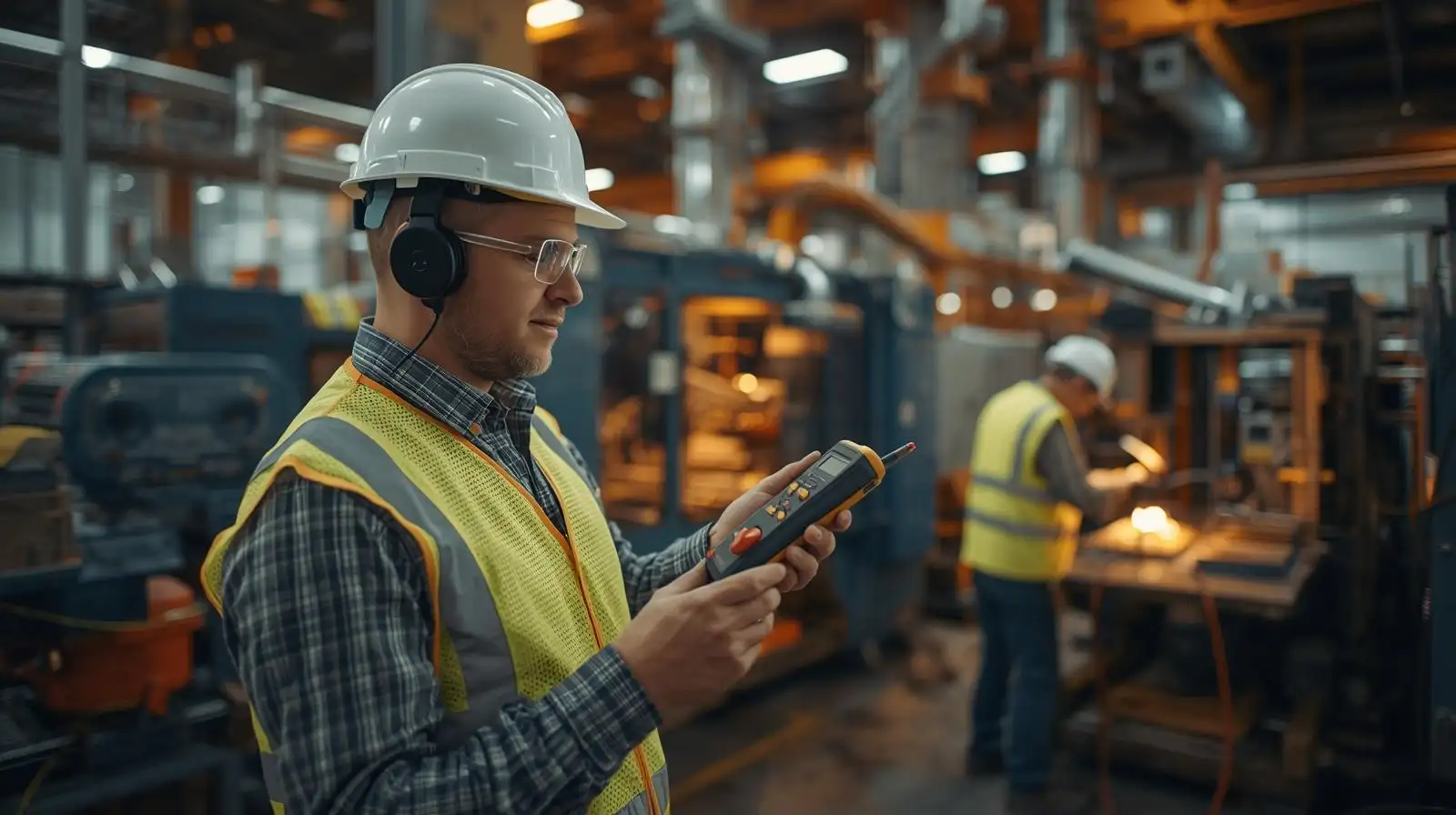
When OSHA Requires Noise Monitoring
Under 29 CFR 1910.95, employers must implement a noise monitoring program when any employee's noise exposure may equal or exceed an 8-hour TWA of 85 dBA. Initial monitoring must be repeated whenever a change in production, process, equipment, or controls increases noise exposure.
Stamping & Metal Forming
Hydraulic and mechanical presses generate impulse noise exceeding 110 dB peak. Personal dosimetry captures the cumulative exposure across full production shifts.
Pneumatic Tool Use
Impact wrenches, grinders, and needle scalers routinely produce noise above 100 dBA at the operator's ear. Dosimetry identifies which tasks drive the highest dose contribution.
Compressor Rooms & Generators
Continuous machinery noise in compressor rooms often exceeds 90 dBA. Area sound level mapping identifies zones requiring hearing protection signage and access control.
WBGT Heat Stress Monitoring — OSHA and NIOSH Criteria
Wet bulb globe temperature (WBGT) monitoring is the standard method for evaluating heat stress exposure in occupational settings. The WBGT index accounts for air temperature, humidity, radiant heat, and air movement — factors that a simple thermometer cannot capture.
NIOSH Heat Stress Thresholds
OSHA references NIOSH criteria for heat stress in enforcement actions, using WBGT thresholds adjusted for workload intensity and work-rest cycles. NIOSH recommends a Recommended Alert Limit (RAL) for unacclimatized workers and a Recommended Exposure Limit (REL) for acclimatized workers, both based on metabolic work rate categories.
For moderate work, the NIOSH REL is a WBGT of approximately 28°C (82°F) for continuous work with no rest breaks. Exceeding these limits requires administrative controls such as mandatory rest breaks, hydration programs, and buddy systems.
- RAL for unacclimatized workers — stricter WBGT thresholds apply
- REL for acclimatized workers — adjusted by metabolic workload category
- Work/rest cycle schedules based on light, moderate, heavy, and very heavy tasks
- Continuous WBGT data logging over full shift durations
- NIST-traceable calibration on all heat stress monitoring equipment
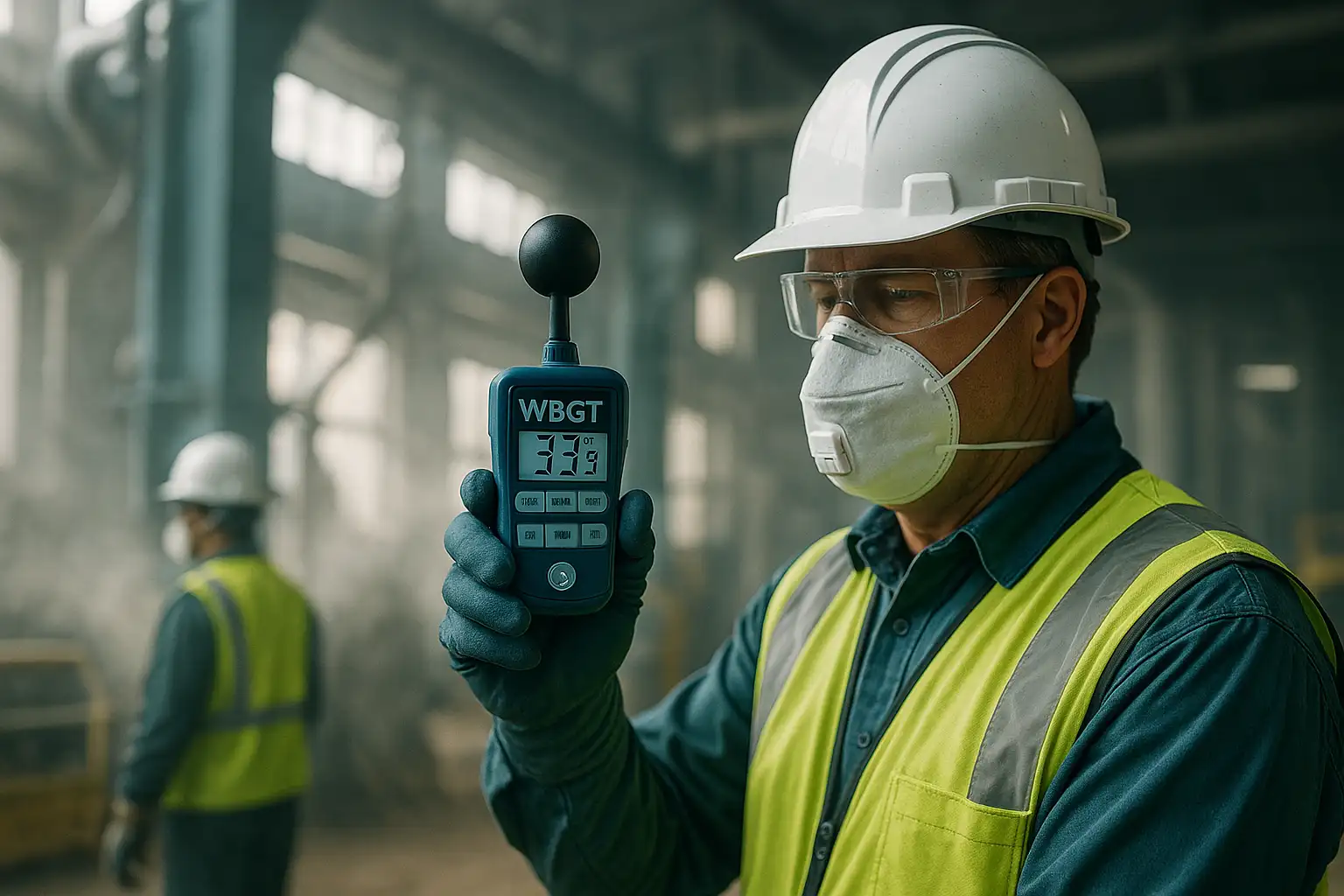
Heat Stress Monitoring for Houston's Climate
Houston's subtropical humidity and extended summer heat season — with heat index values routinely exceeding 110°F from May through September — make WBGT monitoring particularly critical for outdoor and semi-enclosed operations.
AGT Labs provides WBGT monitoring equipment calibrated to NIST-traceable standards, with data logger units capable of continuous recording over full shift durations. Our compliance reports include time-stamped WBGT readings, work-rest cycle recommendations based on NIOSH metabolic rate categories, and heat illness prevention program recommendations aligned with OSHA's National Emphasis Program on heat.
Octave Band Analysis and Sound Level Surveys
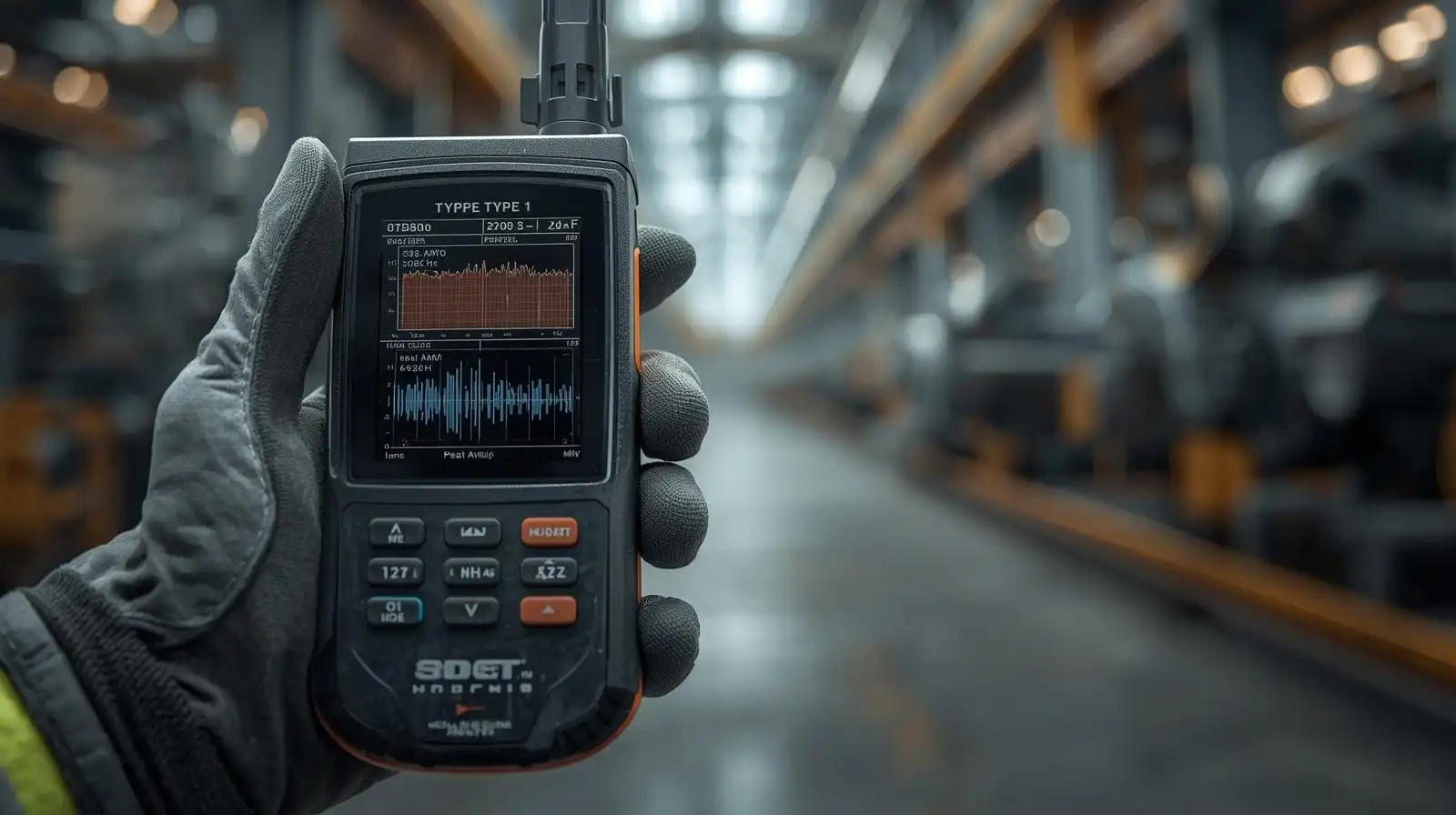
Beyond personal dosimetry, area sound level surveys use Type 1 integrating sound level meters with octave band filter capability. AGT Labs supplies those meters calibrated and pre-configured; your team walks the survey, and we turn the returned readings into the analysis below.
Why Octave Band Data Matters
Octave band analysis breaks down the overall noise level into eight frequency bands from 63 Hz to 8,000 Hz, revealing which frequency ranges dominate the exposure. This data is essential for selecting hearing protection with the correct Noise Reduction Rating (NRR) and for specifying engineering controls such as barriers, enclosures, and damping treatments that target the problematic frequencies.
Area sound level mapping is particularly valuable for facilities with multiple noise sources operating simultaneously — such as fabrication shops, power generation plants, and compressor stations — where personal dosimetry alone cannot identify which equipment or process area requires noise control intervention.
- 8 frequency bands from 63 Hz to 8,000 Hz analyzed per measurement point
- Noise source identification — pinpoint which equipment drives exposure
- Hearing protection selection using frequency-specific NRR calculations
- Engineering control specification for barriers, enclosures, and damping
- Facility noise maps showing zones above the 85 dBA action level
Standards Governing Noise and Heat Stress Monitoring
Equipment Rental & Reporting Logistics
AGT Labs provides state-of-the-art equipment to safety professionals, along with optional data interpretation and report generation services for comprehensive noise and heat stress monitoring.
Noise & Heat Monitoring Isn't One-and-Done
OSHA 1910.95 requires re-monitoring whenever a process, equipment, or control change raises noise exposure, and WBGT heat surveys need a fresh baseline at the start of each Houston heat season. Set up a recurring program or standing equipment account and we'll reserve your dosimeters and WBGT units, schedule your seasonal and annual rounds, and apply volume pricing.
| Turnaround Option | Timeline | Surcharge |
|---|---|---|
| Standard Analysis | 5+ Business Days | No Surcharge |
| 4-Day Rush | 4 Business Days | +25% |
| 3-Day Rush | 3 Business Days | +50% |
| 2-Day Rush | 2 Business Days | +75% |
| 1-Day Rush | 1 Business Day | +100% |
Equipment Rental Program
- Noise Dosimeters — pre-configured to OSHA hearing conservation criteria
- Class 1 & 2 Sound Level Meters with octave band analysis
- Portable WBGT Monitors for continuous heat stress logging
- All equipment ships fully charged with current NIST-traceable certificates
- Protective hard cases with clear deployment instructions
- Pre-paid UPS return shipping labels included
What Noise and Heat Stress Monitoring Costs
Rental is priced per instrument per day and reporting per data set, so the invoice is driven by how many workers you cover and for how long — not by a headline rate. Here is what actually moves it.
Included At No Extra Charge
- NIST-traceable calibration certificate, current at the ship date
- Pre-configuration to OSHA HC and OSHA PEL criteria before the unit leaves us
- Protective hard case, charged batteries and written deployment instructions
- Prepaid UPS return label
- A scoping call before you book — how many units, how many days, which shifts
What Changes The Quote
- Instrument count. OSHA expects representative sampling across each similar exposure group, not one worker per plant — the number of dosimeters moves the invoice further than the day rate does.
- Rental duration. Per instrument per day, with weekly and monthly rates for seasonal heat programmes.
- Instrument class. A Class 1 meter with octave band filters costs more than Class 2 — you need Class 1 only when selecting hearing protection by frequency or specifying engineering controls.
- Reporting depth. Raw data return, versus a full OSHA- and ACGIH-referenced report with work/rest recommendations.
- Standing accounts. Reserved units and scheduled seasonal rounds carry volume pricing.
Send us the headcount and the shift pattern, not an instrument count
Tell us how many people do similar work, how long their shifts run, and whether you need noise, heat, or both — and we will tell you how many instruments the round actually needs, including when that is fewer than you asked for. Call (713) 453-6090 or email info@agtlabs.com.
From Deployment to Compliance Report
Consultation
Contact us to define your monitoring scope (number of workers, days needed, noise vs. heat) so we can reserve the right gear.
Receive Equipment
We ship pre-calibrated, fully charged dosimeters or WBGT monitors directly to your site with deployment instructions.
Monitor Workers
Clip dosimeters to workers or place WBGT monitors in the work area. Let the equipment log data for the full shift.
Return Equipment to IH Lab
Pack the units back in the case and drop off via the provided UPS return label. No software installation required on your end.
Compliance Report from IH Lab
We download the logs at our IH lab, perform the complex regulatory math, and deliver a clean, defensible compliance report to your portal.
Industries Requiring Noise and Heat Stress Monitoring
Manufacturing & Fabrication
Stamping, grinding, and machining operations routinely exceed 85 dBA. Baseline noise dosimetry is required to establish hearing conservation boundaries in metal fabrication shops and select appropriate PPE.
Oil, Gas & Petrochemical
Compressor stations, drilling rigs, and refinery units present massive noise hazards. High-temperature environments near reactors and furnaces require regular WBGT heat stress monitoring.
Construction & Demolition
Heavy equipment operation on construction sites generates extreme, variable noise. Outdoor work under the Texas sun requires rigorous WBGT monitoring to protect crews from heat exhaustion and stroke. These same industrial operations typically require parallel metals in air testing and crystalline silica testing to satisfy comprehensive IH survey requirements.
FAQ
What is the OSHA Action Level and PEL for noise exposure?
What is the difference between a Sound Level Meter and a Noise Dosimeter?
What is WBGT and why is it used for heat stress monitoring?
Do you provide equipment rentals for noise and heat stress monitoring?
How long should a worker wear a noise dosimeter?
What is Octave Band Analysis and when do I need it?
How does acclimatization factor into heat stress monitoring?
Can AGT Labs help interpret my noise and heat stress monitoring data?
Is AGT Labs accredited for noise and heat stress monitoring services?
Noise and Heat Stress Monitoring — Houston Industrial Sectors
AGT Labs serves Houston's energy corridor, port, and manufacturing belt. Physical hazard surveys are a routine compliance requirement across the region's highest-risk workplaces.
Need an Accredited IH Lab for Noise & Heat Stress Monitoring?
AIHA LAP LLC Accredited (LAP-101470 · IHLAP) · Pre-calibrated Dosimeters · SLMs · WBGT Monitors · Data Interpretation · Houston TX. Ask about recurring monitoring programs, standing equipment accounts, and volume pricing for seasonal heat surveys and ongoing hearing conservation.