
Formaldehyde Testing — Aldehyde HPLC/UV Lab, Houston TX
Need formaldehyde testing in Houston? AGT Labs analyzes samples collected by your industrial hygienist, EHS team or consultant — drop off at 10200 East Freeway, Suite 101, or ship from anywhere in the U.S. Houston's AIHA IHLAP-accredited aldehyde testing lab at 10200 East Freeway, Suite 101, Houston TX 77029 — continuously accredited since February 2000. Seven accredited aldehyde methods across two analytical platforms. By HPLC/UV: NIOSH 2016 formaldehyde by active sampling, OSHA 1007 formaldehyde by pump-free diffusive samplers, OSHA 64 glutaraldehyde, and EPA TO-11 multi-carbonyl speciation. By GC/FID: NIOSH 2541 formaldehyde, NIOSH 2539 12-analyte aldehyde screening, and OSHA 72 furfural — all run in-house. AIHA LAP-101470. Texas Medical Center pathology and sterile processing, embalming, composite wood, textile finishing, food and beverage, and Houston Ship Channel chemical exposure monitoring. Samples received before 2:00 PM CT logged same day. Rush turnaround available.
Why accredited aldehyde analysis protects your workers
Formaldehyde Is a Group 1 Carcinogen
IARC classifies formaldehyde as a Group 1 confirmed human carcinogen — nasopharyngeal cancer and leukemia. ACGIH assigns an A1 notation. Accredited HPLC/UV analysis from an IHLAP lab is what makes exposure documentation legally defensible.
Limits Vary by Three Orders of Magnitude
Acetaldehyde's OSHA PEL is 200 ppm. Acrolein's is 0.1 ppm. Glutaraldehyde has no PEL at all — only an ACGIH ceiling of 0.05 ppm. Guessing which aldehyde you have is not a compliance strategy; speciation is.
Respiratory & Dermal Sensitization
Formaldehyde and glutaraldehyde are both potent respiratory and dermal sensitizers — ACGIH carries RSEN and DSEN notations for formaldehyde. Once a worker is sensitized, trace concentrations trigger asthmatic reactions. Ongoing monitoring is the control.
Legal & Workers' Comp Protection
Exposure records from an AIHA IHLAP-accredited laboratory (LAP-101470, accredited since 2000) hold up where it counts — workers' compensation claims, OSHA citations, and litigation involving aldehyde-related illness.
What Is Aldehyde Testing?
Aldehyde testing is industrial hygiene air monitoring for the family of reactive carbonyl compounds — formaldehyde, glutaraldehyde, acetaldehyde, acrolein, and the higher aliphatic and aromatic aldehydes. AGT Labs runs it on two accredited platforms. On the HPLC side, air is drawn or diffused across media coated with DNPH, which reacts with the carbonyl group to form a stable hydrazone derivative, then separated and quantified by High-Performance Liquid Chromatography with UV detection at 360 nm. On the GC side, aldehydes are collected on 2-HMP-coated XAD-2 (or Anasorb for furfural) and analyzed by gas chromatography with flame ionization detection.
The method you order determines which aldehydes get reported. Formaldehyde-specific work runs on NIOSH 2016 (pump-driven DNPH) or OSHA 1007 (pump-free diffusive badges), with NIOSH 2541 as the DNPH-free GC alternative. Glutaraldehyde has its own method — OSHA 64. When you need the whole carbonyl profile from a single cartridge, EPA TO-11 speciates fifteen-plus compounds at sub-ppb detection limits; when you don't yet know which aldehyde is present, NIOSH 2539 screens for twelve. As Houston's AIHA IHLAP-accredited aldehyde testing lab (LAP-101470, continuously accredited since February 2000), AGT Labs runs all seven in-house. No outsourcing, no send-outs.
- Personal breathing zone aldehyde monitoring — TWA, STEL and ceiling
- NIOSH 2016 — formaldehyde by active DNPH cartridge sampling (HPLC/UV)
- OSHA 1007 — formaldehyde by diffusive (passive) samplers, no pump required
- OSHA 64 — glutaraldehyde on DNPH-treated filters for endoscopy and sterile processing
- EPA TO-11 — multi-carbonyl speciation for indoor and ambient air
- NIOSH 2541 — formaldehyde by GC/FID where DNPH chemistry is unsuitable
- NIOSH 2539 — 12-analyte aldehyde screening when the analyte is unknown
- OSHA 72 — furfural by GC/FID for refining, foundry and agricultural residue work
- Composite wood and post-renovation off-gassing assessment; TSCA Title VI and CARB Phase 2 context
- Recurring monitoring programs under OSHA 29 CFR 1910.1048
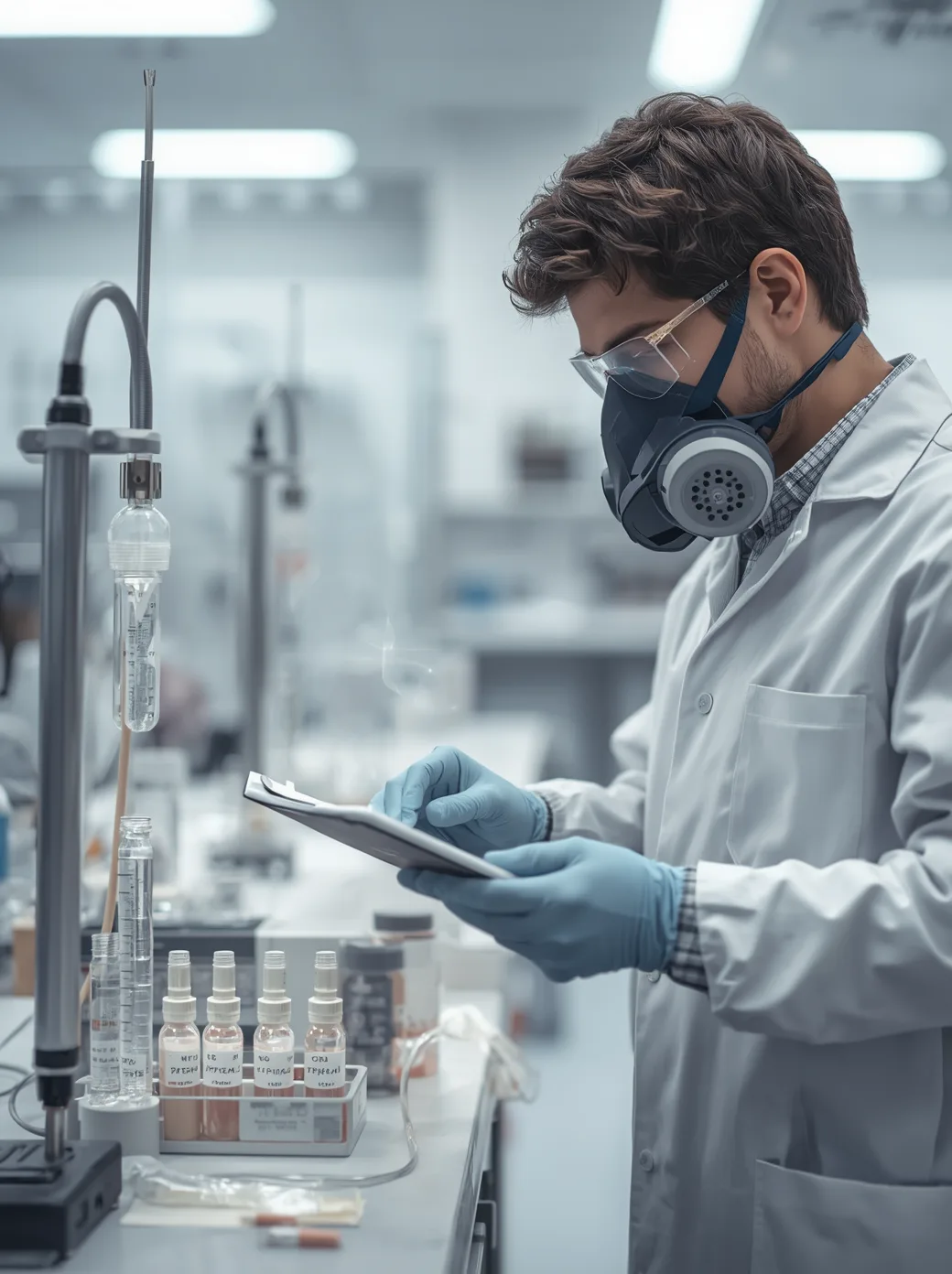
Which Aldehyde Are You Actually Exposed To?
"Aldehyde exposure" covers compounds whose occupational limits differ by a factor of two thousand. Each species below shows its regulatory limit and the AGT Labs accredited method that measures it — so you order the right test the first time.
The substance-specific regulated aldehyde — formalin tissue fixation, embalming fluids, UF/PF resins, textile finishes, chemical synthesis. ACGIH TLV is 0.1 ppm TWA / 0.3 ppm STEL (A1, DSEN, RSEN); NIOSH REL is 0.016 ppm TWA. Order NIOSH 2016 (pump) or OSHA 1007 (passive badge).
High-level disinfectant for heat-sensitive endoscopes and surgical instruments; also used in X-ray film processing and embalming. A potent respiratory sensitizer. There is no OSHA PEL — assess against the ACGIH 0.05 ppm ceiling and NIOSH 0.2 ppm ceiling. Order OSHA 64, on our accredited scope.
Generated in plastics manufacturing, ethanol fermentation, food and beverage processing, and pulp and paper. NIOSH treats it as a potential occupational carcinogen and recommends the lowest feasible concentration despite the high OSHA PEL. Reported under EPA TO-11 carbonyl speciation.
Overheated cooking oils, plastic combustion, pyrolysis and certain syntheses. Two routes on our scope: NIOSH 2539 GC/FID screening (2-HMP chemistry, which suits olefinic aldehydes) confirms presence, and EPA TO-11 reports it in carbonyl speciation — though TO-11 notes acrolein degrades partially on DNPH media. Neither is a quantitative compliance number; for that the dedicated methods are OSHA 52 / NIOSH 2501, which are not within our accredited scope. Call us before sampling.
Intermediates in plasticizer, resin and polymer manufacturing, and combustion by-products. Captured and speciated on a single DNPH cartridge under EPA TO-11 along with crotonaldehyde, isovaleraldehyde and hexanaldehyde — useful when the source is known but the analyte is not.
Flavor and fragrance manufacturing, resin chemistry, and vehicle exhaust in ambient air studies. Included in the EPA TO-11 target list alongside 2,5-dimethylbenzaldehyde — standard analytes in indoor air quality and ambient monitoring programs rather than routine OSHA compliance work.
Generated in oil refining (furfural extraction), foundry core binders and processing of agricultural residues — a recurring Houston Ship Channel and Gulf Coast analyte. Note the gap: the ACGIH TLV of 0.2 ppm is 25× lower than the OSHA PEL, both with skin notations. Order OSHA 72 (Anasorb 747, GC/FID), on our accredited scope.
Seven Accredited Aldehyde Methods — HPLC/UV and GC/FID
All seven sit on AGT Labs' AIHA IHLAP accredited scope (LAP-101470) and all seven run in our Houston laboratory — four on the DNPH/HPLC platform, three on GC/FID. Here is exactly what each one measures, and what it does not.
NIOSH 2016 — Formaldehyde by HPLC/UV
The NIOSH reference method for occupational formaldehyde. Air is drawn by calibrated pump through a DNPH-coated silica cartridge; the formaldehyde hydrazone is analyzed by HPLC with UV detection. Validated for formaldehyde specifically — other carbonyls separate chromatographically but are not quantitated under this method.
OSHA 1007 — Formaldehyde by Diffusive Samplers
OSHA's method written specifically for diffusive (passive) samplers. A DNPH badge clips to the worker's lapel in the breathing zone — no pump, no calibration, no tubing. Validated for both 15-minute STEL and 8-hour TWA determinations under 29 CFR 1910.1048. The practical choice for pathologists, embalmers and anyone who cannot wear pump equipment.
OSHA 64 — Glutaraldehyde by HPLC/UV
OSHA's dedicated glutaraldehyde method, accredited under our IHLAP scope. Air is drawn through a DNPH-treated glass fiber filter and the derivative is quantified by HPLC/UV. This is the test for endoscopy suites, sterile processing departments, dental and veterinary clinics, and film processing — anywhere cold high-level disinfectant is in use.
EPA TO-11 — Multi-Carbonyl Speciation
EPA's compendium method for carbonyl compounds in ambient and indoor air — and the only one of the four that speciates multiple aldehydes. Target analytes include formaldehyde, acetaldehyde, acetone, propionaldehyde, crotonaldehyde, butyraldehyde, isovaleraldehyde, valeraldehyde, benzaldehyde, o/m/p-tolualdehyde, 2,5-dimethylbenzaldehyde, hexanaldehyde and MEK. Sub-ppb detection for IAQ, sick building, and off-gassing investigations.
NIOSH 2541 — Formaldehyde by GC/FID
The DNPH-free route to formaldehyde. Air is drawn through a sorbent tube coated with 2-(hydroxymethyl)piperidine on XAD-2, forming an oxazolidine derivative analyzed by gas chromatography with flame ionization detection. Useful where DNPH chemistry is compromised — elevated ozone, interfering carbonyls, or media handling constraints — or as a confirmatory second method.
NIOSH 2539 — Aldehyde Screening (12 Analytes)
The "which aldehyde do I have?" method. One 2-HMP/XAD-2 tube screens for acetaldehyde, acrolein, butyraldehyde, crotonaldehyde, formaldehyde, furfural, heptanal, hexanal, isobutyraldehyde, isovaleraldehyde, propionaldehyde and valeraldehyde by GC/FID with GC/MS confirmation. Read the caveat below carefully.
OSHA 72 — Furfural by GC/FID
OSHA's fully validated furfural method, on our accredited scope. Air is drawn through an Anasorb 747 sorbent tube and analyzed by GC with flame ionization detection. The analyte that matters in furfural extraction units, foundry core rooms and agricultural residue processing — where the ACGIH TLV sits far below the OSHA PEL.
Which method should I order?
Aldehyde Exposure Limits — OSHA, ACGIH & NIOSH
One family, wildly different limits. Note especially that glutaraldehyde has no OSHA PEL at all, and that ACGIH's formaldehyde TLV is now a TWA plus STEL — not the older ceiling value still quoted in many exposure control plans.
| Aldehyde | OSHA PEL | ACGIH TLV | NIOSH REL | AGT Method |
|---|---|---|---|---|
| Formaldehyde | 0.75 ppm TWA · 2 ppm STEL · AL 0.5 ppm | 0.1 ppm TWA · 0.3 ppm STEL (A1, DSEN, RSEN) | 0.016 ppm TWA · 0.1 ppm ceiling (15 min) | NIOSH 2016 · OSHA 1007 |
| Glutaraldehyde | None established | 0.05 ppm ceiling (SEN) | 0.2 ppm ceiling (0.8 mg/m³) | OSHA 64 |
| Acetaldehyde | 200 ppm TWA (360 mg/m³) | 25 ppm ceiling (A2) | Potential occupational carcinogen — lowest feasible | EPA TO-11 |
| Acrolein | 0.1 ppm TWA (0.25 mg/m³) | 0.1 ppm ceiling | 0.1 ppm TWA · 0.3 ppm ST · IDLH 2 ppm | NIOSH 2539 / TO-11 (screening) — call us |
| Furfural | 5 ppm TWA (skin) | 0.2 ppm TWA (skin) | None established (IDLH 100 ppm) | OSHA 72 |
| Higher aliphatic & aromatic aldehydes | Varies by compound (Z-tables) | Compound-specific TLVs | Compound-specific | EPA TO-11 · NIOSH 2539 screening |
Formaldehyde TWA — 0.75 ppm over 8 hours
Formaldehyde is one of the few substances with both a TWA PEL and a STEL under a substance-specific OSHA standard. The TWA is the average across a full shift and requires continuous or representative task-based sampling for the whole shift.
- Limit: 0.75 ppm, 8-hour time-weighted average
- Action Level: 0.5 ppm TWA — triggers periodic monitoring, medical surveillance and training
- Sampling: Full-shift pump sampling (NIOSH 2016) or passive badge (OSHA 1007)
- Standard: OSHA 29 CFR 1910.1048
- Protects against: chronic effects, including cancer risk from long-term exposure
Formaldehyde STEL — 2 ppm over 15 minutes
STEL monitoring captures the peaks a full-shift average dilutes away. In practice, many formaldehyde overexposures are STEL exceedances during short, high-release tasks — not TWA exceedances.
- Limit: 2 ppm, 15-minute short-term exposure limit
- Critical tasks: embalming, formalin pouring and decanting, histology grossing, resin mixing, press opening
- Sampling: 15-minute task-based samples during peak-exposure activity
- Standard: OSHA 29 CFR 1910.1048
- Protects against: acute irritation, sensitization and short-term toxic effects
Detection Limits & Sample Volume Planning
Sample volume drives detection capability — but only within each method's validated range. NIOSH 2016 is validated from 1 to 15 L, so a full-shift formaldehyde sample is run at a low flow rate, not a high one. Plan around that before you set your pumps.
| Sampling Scenario | Method | Flow / Time | Volume | Approx. Quantifiable Level |
|---|---|---|---|---|
| Formaldehyde STEL (15 min) | NIOSH 2016 | 0.5 L/min × 15 min | 7.5 L | ~0.02 ppm — two orders below the 2 ppm STEL |
| Formaldehyde task sample (1 hr) | NIOSH 2016 | 0.2 L/min × 60 min | 12 L | ~0.014 ppm |
| Formaldehyde full-shift TWA | NIOSH 2016 | 0.03 L/min × 8 hr | ~14 L (within validated range) | ~0.01 ppm — well below the 0.5 ppm action level |
| Formaldehyde TWA / STEL, no pump | OSHA 1007 | Diffusive, 15 min to 8 hr | N/A (passive) | Validated across the PEL, STEL and action level range |
| Glutaraldehyde ceiling assessment | OSHA 64 | Pump through treated filter | Per method / task duration | Reported against the 0.05 ppm ACGIH ceiling — call for current RL |
| Formaldehyde, DNPH-free route | NIOSH 2541 | 0.05 L/min × ~8 hr | up to 36 L | ~0.07 ppm — workable for PEL and action level, less sensitive than NIOSH 2016 |
| Unknown aldehyde — identify first | NIOSH 2539 | 0.05 L/min × 100 min | 5 L maximum | Qualitative identification only — not a quantitative result |
| Furfural TWA | OSHA 72 | 1.0 L/min × 180 min | 180 L | Designed around the 5 ppm PEL; full volume needed to assess the 0.2 ppm ACGIH TLV |
| Indoor air / off-gassing / TSCA context | EPA TO-11 | 1.0 L/min × 8–24 hr | 480–1,440 L | Sub-ppb (< 1 µg/m³) per carbonyl |
Reading the table: quantifiable level = reporting limit ÷ sample volume, converted to ppm at 25 °C and 1 atm. NIOSH 2016 carries an LOD of approximately 0.07 µg per sample; the values above use a conservative reporting limit and stay inside the method's validated 1–15 L volume range. Exceeding that range is a common field error that invalidates results. Need to push a limit lower for a specific project? Talk to our IHLAP-accredited analysts at (713) 453-6090 before you sample.
GC/FID: NIOSH 2539 · 2541 · OSHA 72
Where Workplace Aldehydes Come From
Aldehyde exposure spans healthcare, manufacturing, food processing and the built environment. These are the source categories that generate the occupational and indoor air exposures we test for — and the method that fits each one.
Formalin & Tissue Fixation
Formalin — roughly 37% formaldehyde in water, usually with methanol as a stabilizer — is the standard fixative in pathology and histology. Grossing, decanting, specimen transfer and processing all release formaldehyde vapor. NIOSH 2016 or OSHA 1007.
Cold Sterilants & High-Level Disinfection
Glutaraldehyde solutions used to reprocess endoscopes and heat-sensitive instruments release vapor at soak basins, during transfer and at rinse stations — often in rooms with marginal local exhaust. There is no OSHA PEL, so the ACGIH 0.05 ppm ceiling governs. OSHA 64.
Composite Wood Products
Plywood, MDF, particleboard and hardwood plywood veneer are bonded with urea-formaldehyde and phenol-formaldehyde resins that off-gas continuously — fastest when new, warm and humid. Occupational exposure at the press; indoor exposure after installation. NIOSH 2016 or EPA TO-11.
Embalming & Mortuary Operations
Index fluids run 5–37% formaldehyde, and some preparation rooms also use glutaraldehyde-based products. Arterial injection, cavity treatment and surface application generate concentrated vapor — peak exposures routinely approach the 2 ppm STEL. OSHA 1007 STEL sampling.
Resin, Plastics & Textile Manufacturing
UF, PF and melamine resins in adhesives, coatings, moulded plastics and wrinkle-resistant fabric finishes. Mixing, pressing, curing, sanding and finishing all release aldehydes, and process heat accelerates it. Multiple carbonyls are common here. EPA TO-11 speciation.
Food, Beverage & Thermal Processes
Ethanol fermentation and beverage processing generate acetaldehyde; overheated cooking oils, combustion and pyrolysis generate acrolein and higher aldehydes. When the source is thermal or fermentative, you rarely have just one carbonyl. EPA TO-11 speciation.
Insulation & Older Building Stock
Urea-formaldehyde foam insulation installed in the 1970s–80s continues to off-gas, and phenol-formaldehyde binders in fiberglass insulation release formaldehyde when disturbed during renovation or demolition. EPA TO-11.
New Construction & Building IAQ
Composite wood cabinetry, laminate flooring and new furniture are the most common source of indoor aldehyde complaints, and portable classrooms with heavy composite wood interiors are a recurring problem case. EPA TO-11 documents what is actually in the air.
Chemical Production & Refining
Formaldehyde production, resin synthesis and intermediate manufacturing along the Houston Ship Channel produce process-level exposures, with mixed carbonyl profiles at reactor, loading and maintenance points. NIOSH 2016 or EPA TO-11, program-dependent.
Every Method, Every Analyte, Every Deliverable
No surprises in your aldehyde testing report. Here is exactly what each accredited HPLC/UV analysis returns.
| Analysis | Method / Standard | Sample Media | Report Deliverable | Rush? |
|---|---|---|---|---|
| Formaldehyde — active | NIOSH 2016 · HPLC/UV | DNPH-coated silica cartridge | Formaldehyde ppm / mg/m³ + TWA calculation + OSHA PEL comparison | Yes |
| Formaldehyde — passive | OSHA 1007 · HPLC/UV | Diffusive DNPH sampler / badge | Formaldehyde ppm (TWA and/or STEL) + PEL, STEL and action level comparison | Yes |
| Glutaraldehyde | OSHA 64 · HPLC/UV | DNPH-treated glass fiber filter | Glutaraldehyde ppm / mg/m³ + ACGIH and NIOSH ceiling comparison | Yes |
| Multi-carbonyl speciation | EPA TO-11 · HPLC/UV | Acidified DNPH cartridge | Individual µg/m³ per carbonyl (formaldehyde, acetaldehyde, acetone, propionaldehyde, butyraldehyde, benzaldehyde and more) | Limited |
| Indoor air quality / off-gassing | EPA TO-11 · HPLC/UV | Acidified DNPH cartridge (+ ozone denuder) | Formaldehyde and carbonyl µg/m³ for IAQ assessment and TSCA Title VI context | Limited |
| Formaldehyde — GC route | NIOSH 2541 · GC/FID | 2-HMP on XAD-2 sorbent tube | Formaldehyde ppm / mg/m³ + TWA calculation + OSHA PEL comparison | Yes |
| Aldehyde screening | NIOSH 2539 · GC/FID | 2-HMP on XAD-2 sorbent tube | Qualitative identification across 12 aldehydes, GC/MS confirmed — used to select the quantitative method | Yes |
| Furfural | OSHA 72 · GC/FID | Anasorb 747 sorbent tube | Furfural ppm / mg/m³ + OSHA PEL and ACGIH TLV comparison | Yes |
Turnaround Times & Free Testing Kits
Every rush option and kit detail — clearly laid out before you submit your first sample to our IH testing lab.
Aldehyde Monitoring Isn't One-and-Done
OSHA 1910.1048 requires periodic re-monitoring and ongoing medical surveillance once formaldehyde exposures reach the 0.5 ppm action level — plus repeat monitoring after any process, product or control change. Glutaraldehyde programs follow the same logic against the ACGIH ceiling. Set up a recurring program and we'll set your recurring submission calendar, ship refrigerated media, and apply standing-account volume pricing.
Free Aldehyde Testing Kit Includes
- DNPH-coated cartridges for active formaldehyde sampling (NIOSH 2016) — lot-certified, refrigerated
- Diffusive DNPH passive samplers for pump-free formaldehyde work (OSHA 1007)
- DNPH-treated filter cassettes for glutaraldehyde (OSHA 64)
- Acidified DNPH cartridges for EPA TO-11 indoor and ambient air
- 2-HMP/XAD-2 sorbent tubes for GC/FID work (NIOSH 2541 formaldehyde, NIOSH 2539 screening)
- Anasorb 747 tubes for furfural (OSHA 72)
- Field blanks (10% of sample count, QA compliance)
- Pre-paid UPS return shipping label (domestic)
- Pre-numbered Chain of Custody (COC) form
- Calibrated personal sampling pump (rental available)
Kits ship via UPS Ground — order with 5 business days notice. Houston metro courier pickup available for collected samples: (713) 453-6090.
Sampling Field Requirements
Incorrect sampling invalidates results and wastes project time. Each method has its own validated envelope — sampling outside it is the most common reason an aldehyde result cannot be used for compliance.
From Sample Collection to Certified Report
Request Kit or COC
Call, email, or download the aldehyde testing COC. Media ship free with 5 business days notice, refrigerated and lot-certified.
Collect Samples
Your team or your consultant collects per the method parameters above. Record duration, flow rate, temperature and humidity, and refrigerate immediately.
Ship to the IH Lab
Ship with cold packs, next-day air recommended. Samples received before 2:00 PM CT are logged the same day.
HPLC/UV Analysis
Analysis by IHLAP-accredited analysts at our Houston facility. No outsourcing. Full QA/QC review on every batch.
Certified Report
Delivered via secure portal with method references, TWA/STEL/ceiling calculations, limit comparisons, analyst signature, QA sign-off and AIHA LAP-101470 accreditation.
TSCA Title VI — Composite Wood Product Compliance
EPA's Formaldehyde Standards for Composite Wood Products (TSCA Title VI, 40 CFR 770) sets formaldehyde emission standards for hardwood plywood, medium-density fiberboard, particleboard, and finished goods made from them. It reaches manufacturers, importers, distributors, retailers and fabricators selling into the United States.
AGT Labs supports that work through EPA TO-11 indoor air testing, which documents what is actually present in the occupied space after installation. One distinction worth keeping straight: the TSCA Title VI and CARB Phase 2 numbers below are chamber-test emission limits for the panel itself, not indoor air standards. TO-11 tells you the airborne concentration people are breathing — the number that matters in a complaint investigation.
- Product emission standards: hardwood plywood 0.05 ppm · particleboard 0.09 ppm · MDF 0.11 ppm thin, 0.13 ppm other
- Indoor air testing: EPA TO-11 formaldehyde and carbonyl analysis by HPLC/UV at our accredited Houston lab
- Compliance documentation: certified reports with method references and accreditation details for regulatory submission
- Complaint investigation: post-installation monitoring when occupants report eye, nose or throat irritation
- California CARB Phase 2: TSCA Title VI limits are aligned with CARB Phase 2 for the same product categories
- Schools, daycare and residential: low-level assessment where sensitive occupants and long exposure durations apply
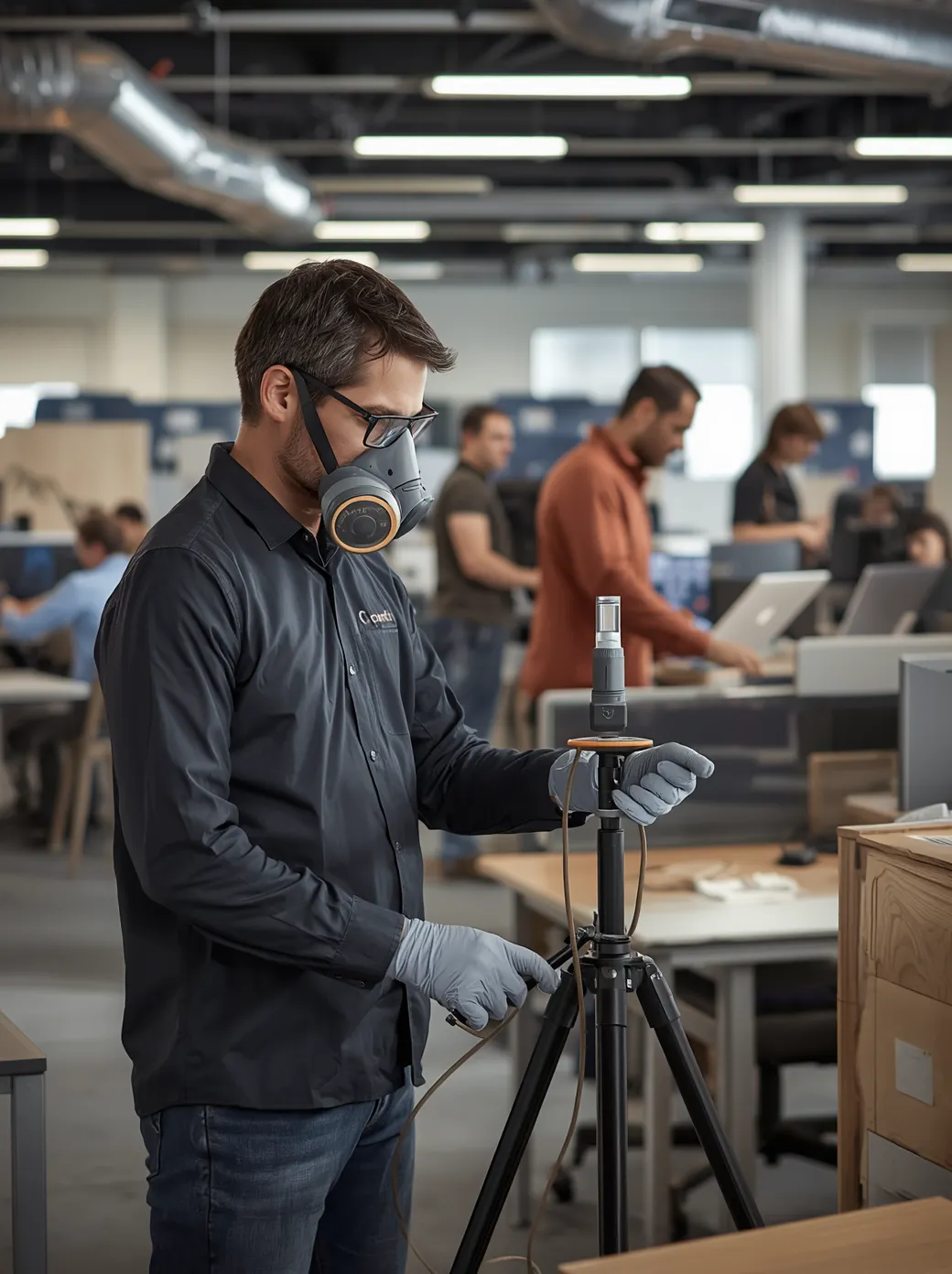
Standards That Require Accredited Testing
Every AGT Labs report is structured to satisfy the applicable federal, Texas state and consensus-standard requirements for the aldehyde in question.
Who Relies on Our Aldehyde Testing Lab
Texas Medical Center & Pathology Labs
The world's largest medical complex sits in our service area. Histology and pathology laboratories use formalin for tissue fixation — the leading healthcare source of formaldehyde exposure. TWA and STEL monitoring during grossing, tissue processing, autopsy and specimen handling by NIOSH 2016 or OSHA 1007.
Endoscopy & Sterile Processing
Glutaraldehyde high-level disinfection in GI suites, sterile processing departments, dental practices and veterinary clinics. With no OSHA PEL, documented OSHA 64 data against the ACGIH 0.05 ppm ceiling is what supports your exposure control plan and LEV verification.
Funeral Homes & Embalming
Index fluids at 5–37% formaldehyde release concentrated vapor during arterial injection and cavity treatment. OSHA 1910.1048 requires monitoring in preparation rooms, and passive OSHA 1007 badges suit the work far better than pump equipment.
Composite Wood Manufacturing
UF and PF resin systems in plywood, MDF, particleboard and hardwood plywood. Exposure concentrates at pressing, sanding and finishing. Occupational monitoring by NIOSH 2016, plus EPA TO-11 where TSCA Title VI and CARB Phase 2 context is needed.
Textile & Garment Finishing
Formaldehyde-based resins deliver permanent press, wrinkle-resistant and flame-retardant finishes. Finishing, curing, cutting and sewing operations all present inhalation and dermal exposure. Personal monitoring under 1910.1048.
Houston Ship Channel Chemical & Resin
Formaldehyde production, resin synthesis and intermediate manufacturing along the channel. Continuous IH monitoring programs, mixed-carbonyl process characterization by TO-11, and TCEQ permit-driven ambient monitoring supported.
Research & University Labs
Cell fixation, histochemistry, tissue preservation and synthesis work across Houston-area academic and pharmaceutical R&D facilities. Fume hood effectiveness verification and personal monitoring per 1910.1048.
Construction & Renovation
New construction and renovation projects using composite wood, laminate flooring and new cabinetry release aldehydes during installation and for months after. EPA TO-11 verifies indoor levels before occupancy — critical for schools, daycare and residential handover.
Federal & DoD Facilities
BRAC remediation, military base renovation and Department of Energy site assessments require accredited laboratory analysis. Our AIHA IHLAP accreditation (LAP-101470) and ISO/IEC 17025:2017 quality system support federal and state aldehyde monitoring projects.
Frequently Asked Questions
Answered by our IHLAP-accredited IH lab analysts.
What is aldehyde testing?
Which aldehyde methods is AGT Labs accredited for?
What is the difference between NIOSH 2016, OSHA 1007, OSHA 64 and EPA TO-11?
Which method gives multi-aldehyde speciation?
Do you test for glutaraldehyde?
What is the OSHA PEL for formaldehyde?
What are the exposure limits for glutaraldehyde, acetaldehyde and acrolein?
Is formaldehyde a carcinogen?
When is aldehyde exposure monitoring required?
What sampling media is used for aldehyde testing?
Can I sample for aldehydes without a pump?
How low can you detect formaldehyde?
How long are DNPH aldehyde samples stable?
Can you test for acrolein?
What is the turnaround time for aldehyde testing?
Can you test formaldehyde off-gassing from composite wood?
Is AGT Labs accredited for aldehyde testing?
I don't know which aldehyde is present — where do I start?
How much does aldehyde testing cost?
Aldehyde Testing Lab Serving Houston's Industries
AGT Labs is at 10200 East Freeway, Suite 101, Houston TX 77029 — inside the Houston Ship Channel industrial corridor. All aldehyde HPLC/UV analysis is performed in-house. No outsourcing, no send-outs. Samples received before 2:00 PM CT are logged the same day.
Accredited (Since 2000)
Methods In-House
by EPA TO-11
10200 E. Freeway
Need an Accredited IH Lab for Aldehyde Testing?
AIHA IHLAP-accredited since 2000 · LAP-101470 · NIOSH 2016 · OSHA 1007 · OSHA 64 · EPA TO-11 · HPLC/UV analysis in-house · 10200 East Freeway, Houston TX 77029. Ask about recurring monitoring programs and volume pricing for ongoing OSHA 1910.1048 compliance sampling.