
Mold Testing Lab Houston TX — Mold Analysis & Inspection
AIHA EMLAP-accredited mold testing lab at 10200 East Freeway, Suite 101, Houston TX 77029. Spore trap, culture, qPCR & clearance sampling — TX TDLR Mold License #LAB1070. Samples received before 2:00 PM CST logged same day.
Why accredited mold testing protects your business
OSHA & NIOSH Defensibility
Results from AIHA EMLAP accredited labs are accepted by OSHA enforcement, legal counsel, and insurance carriers — DIY kits are not.
Worker Health Protection
Chronic mold exposure causes respiratory illness, allergic reactions, and asthma. Quantified data drives targeted engineering controls. Facilities using spray foam insulation should also evaluate isocyanate exposure alongside mold monitoring.
Liability & Insurance
Texas property and liability insurers require licensed lab results (#LAB1070) for mold-related claims — accreditation protects your coverage.
Clearance & Reoccupancy
Post-remediation clearance sampling from a licensed lab verifies safe reoccupancy — a legal requirement for commercial properties in Texas.
What Is Professional Mold Testing & Analysis?
Mold testing and inspection quantifies the types and concentrations of airborne mold spores and viable fungal organisms in workplace air, on surfaces, and inside HVAC systems. Unlike consumer-grade home mold kits, professional mold testing performed in an accredited lab follows validated AIHA, ASTM, and CDC/EPA methodologies and produces legally defensible mold testing data.
At AGT Labs, every mold sample is analyzed in our Houston facility — no outsourcing — by analysts trained to AIHA EMLAP requirements. Results are compared against indoor/outdoor background spore levels and established mold exposure assessment guidelines from AIHA and EPA.
Commercial mold investigations in occupied buildings typically include a broader indoor air quality (IAQ) assessment to evaluate co-occurring pollutants such as VOCs, formaldehyde, and CO2 that may contribute to occupant complaints. Mold analysis is a specialized IH testing discipline that requires AIHA EMLAP accreditation — a credential our industrial hygiene testing lab has maintained continuously since inception.
- Airborne mold spore counts by genus (non-viable spore trap)
- Live fungal organism identification at species level (viable culture)
- Molecular black mold and pathogen detection (qPCR)
- Surface mold contamination mapping (tape lift, swab, contact plate)
- HVAC mold testing and duct system fungal assessment
- Pre- and post-remediation mold clearance sampling
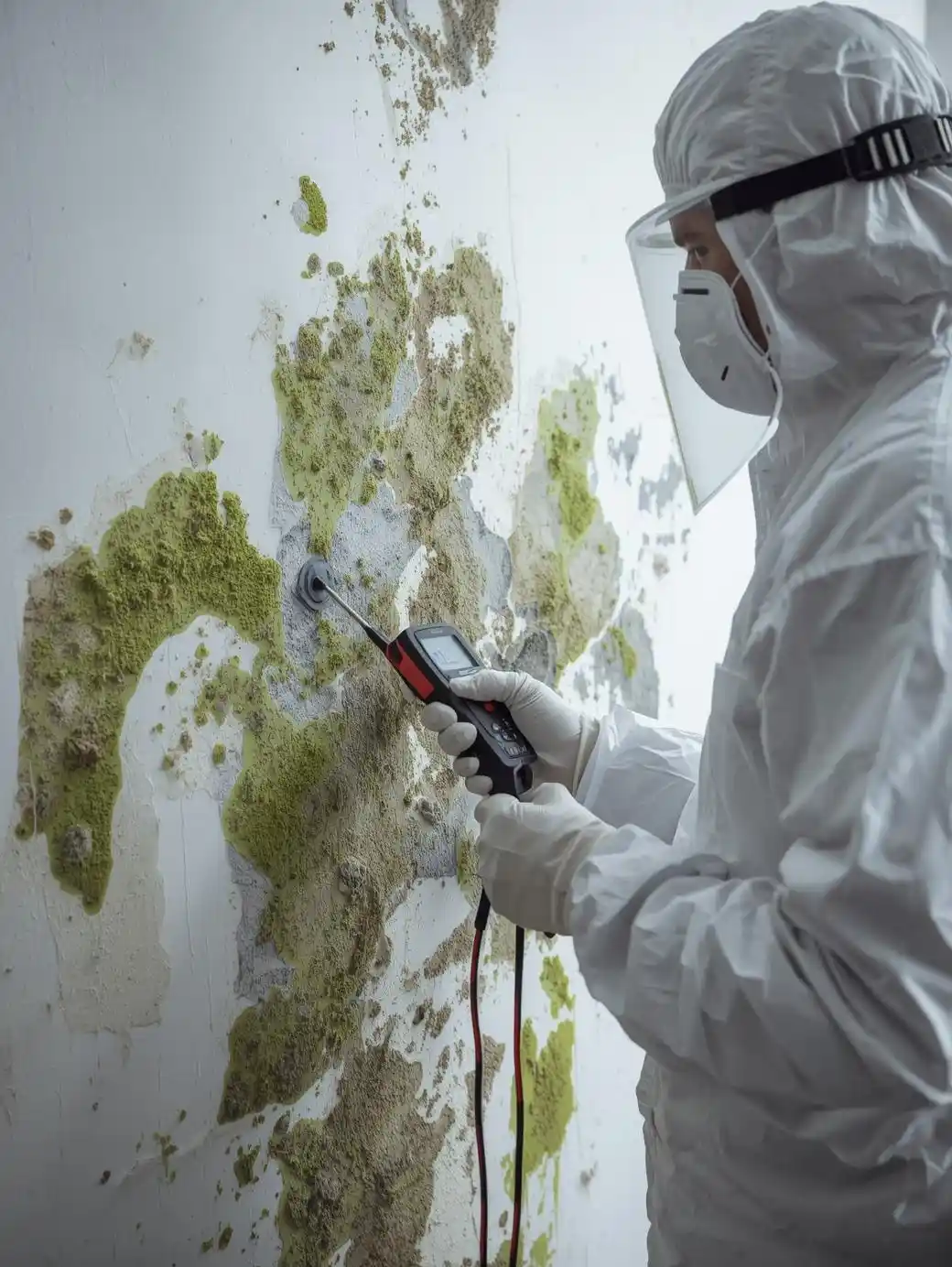
Six Mold Testing Methods — Which One Do You Need?
Choosing the right mold sampling method determines whether results are actionable. Here's exactly what each method measures, the standard followed, and what you receive in the report.
Non-Viable Spore Trap
Air-O-Cell or Burkard cassettes collect all spores — live and dead — for microscopic morphology identification. Best for understanding total fungal burden and genera distribution. Required for indoor/outdoor comparative assessments.
Viable Culture Sampling
Andersen N6, RCS Plus, or Biostage impactors collect live organisms on agar plates. Colonies are incubated and identified to genus/species level. The only method that confirms if mold is actively growing and provides CFU/m³ counts for risk assessment.
qPCR Molecular Analysis
Quantitative PCR detects mold DNA directly from air or bulk samples. Fastest turnaround, most sensitive, and identifies specific target species (e.g. Stachybotrys, Aspergillus niger) without requiring live organisms.
Surface Sampling
Tape lifts, swabs, and RODAC contact plates identify mold on surfaces — walls, ceilings, HVAC diffusers, insulation, and substrates. Critical for confirming visible growth identity and quantifying contamination extent before remediation.
HVAC & Duct Assessment
Swabs and tape lifts from ductwork, coils, drip pans, and diffusers identify mold reservoirs that redistribute spores throughout an entire facility. A common source missed by air sampling alone — especially in buildings with occupant complaints and normal spore counts.
Post-Remediation Clearance
After remediation is complete, clearance sampling verifies that spore levels have returned to background levels and surfaces are free of contamination. AGT Labs issues a formal clearance report that satisfies Texas TDLR requirements, insurer documentation, and IICRC S520 standards.
What's Included in Your Report
Every analysis type, the method our IH lab follows, and exactly what you receive — no surprises.
| Analysis Type | Method / Standard | Sample Type | Report Deliverable |
|---|---|---|---|
| Non-Viable Air (Spore Trap) | Spore trap microscopy · ASTM D7391 | Air-O-Cell, Burkard cassette | Spore counts by genus, morphology, indoor/outdoor ratio |
| Viable Air (Culture) | Culture analysis · AIHA EMLAP | Andersen impactor, RCS Plus | CFU/m³, genus/species ID, colony photos |
| Molecular (qPCR) | qPCR · ISO/IEC 17025 | Air cassette, bulk, swab | CE/m³, target species panel results |
| Surface — Tape Lift | Microscopy | Tape lift slide | Fungal morphology, relative loading |
| Surface — Swab / Contact Plate | Culture or qPCR | Sterile swab, RODAC plate | CFU/cm², species ID |
| HVAC / Duct | Microscopy + culture | Swab, tape lift | Fungal loading, species, recommendations |
| Post-Remediation Clearance | Spore trap ± culture · IICRC S520 | Air + surface samples | Formal clearance letter, pass/fail against criteria |
Mold Species Our Mold Testing Identifies
Our mold inspection laboratory analysts are trained to distinguish genera and species that carry different health risks, remediation requirements, and regulatory significance — not just "mold present/absent."
Turnaround Times & Sample Submission
From kit request to final report — here's exactly what to expect, including how to submit and when you'll have results.
Mold Testing Isn't One-and-Done
Mold work runs in phases — initial assessment, monitoring during remediation, and post-remediation clearance each need their own round, and Gulf Coast humidity means recurring HVAC and moisture-driven checks keep buildings compliant year-round. Set up a recurring monitoring program or standing account and we'll schedule your rounds, hold your media and kits, and apply volume pricing.
What's in Your Sampling Kit
- Air-O-Cell or Burkard spore trap cassettes
- Andersen impactor plates (viable sampling)
- Sterile swabs and tape lift slides
- RODAC contact plates (surface sampling)
- Cooler with gel packs (viable media)
- Chain of Custody form (pre-filled with your info)
- Pre-paid return shipping label (domestic)
- Field blank and duplicate sets included
Courier Pickup Available
- Houston metro area — same day pickup
- Bay City · Freeport · Lake Jackson
- Victoria · Harlingen · South Texas
- UPS Ground shipping nationwide
- International — client pays freight
Sampling Guidelines & Field Requirements
Follow these parameters to ensure mold samples arrive at our lab in a condition that produces valid, actionable results. For a full breakdown of all analysis methods, media types, and detection limits across every test we offer, see our Industrial Hygiene Sampling & Analysis Guide.
From Sample Collection to Final Report
Request Kit or COC
Call or email. With 5 business days notice we ship kits directly to your site. Or download the COC and use your own media.
Collect Samples
Follow field parameters above. Document HVAC status, RH, collect blanks. Complete COC form fully before packing.
Ship or Drop Off
Ship UPS or use our courier pickup. Viable media at 2–8°C. Samples logged same day if received before 2 PM CST.
Analysis & QA
AIHA EMLAP accredited analysis at our Houston lab. No outsourcing. QA review by senior analyst before release.
Results & Report
Results on secure online portal. Report includes data, interpretation, indoor/outdoor comparison, and — if applicable — clearance confirmation.
Additional Mold Analysis Services
Full-spectrum mold testing that most labs don't offer under one roof — eliminating the need to split projects across multiple laboratories.
Mycotoxin Screening High Demand
LC-MS/MS analysis for trichothecenes, aflatoxins, ochratoxin A, fumonisins, and zearalenone in bulk and dust samples. Required for litigation support, food-adjacent facilities, and high-toxigenic species findings.
ERMI / ARMI DNA Panel qPCR
EPA-developed Environmental Relative Moldiness Index (ERMI) uses qPCR to quantify 36 mold species from a single dust sample. Provides a standardized score for comparing buildings and identifying water-damage indicator species simultaneously.
Microbial VOCs (MVOCs)
TO-17 Tenax thermal desorption analysis of volatile metabolites produced by actively growing mold — detects hidden growth even when visual and air sampling are inconclusive. Emerging tool in musty odor investigations.
Bulk & Material Analysis
Microscopic and culture-based analysis of bulk building materials — drywall, insulation, wood, carpet — to confirm contamination extent and support remediation scope definition before abatement begins.
Expert Report & Litigation Support
Chain-of-custody documentation, expert analyst declarations, and data packages formatted for legal proceedings. AGT Labs results have been used in Texas insurance claims and workplace exposure litigation under AIHA EMLAP (LAP-101470) and TX TDLR Mold License #LAB1070.
Regulations & Standards Governing Commercial Mold Testing Labs
These are the frameworks EHS managers, consultants, and industrial hygienists must satisfy — AGT Labs IH testing results are structured to meet all of them. Mold remediation projects in older buildings often trigger parallel requirements for asbestos testing, lead testing, and crystalline silica monitoring when demolition disturbs suspect materials.
Who Relies on AGT Labs Mold Testing Lab
Industrial facilities investigating mold alongside chemical exposure concerns can combine mold sampling with VOC and BTEX testing to distinguish between biological and chemical sources of indoor air contamination. Older industrial buildings with water damage may also require PCB testing for contaminated caulking and PAH testing if coal tar roofing or creosote-treated materials are disturbed during remediation.
Environmental Consultants
Third-party investigations, remediation oversight, clearance sampling, and expert report support for IH consulting firms across Texas and nationwide.
Manufacturing & Industrial
Process area assessments, food-grade facility mold monitoring, HVAC system evaluations, and worker exposure investigations — including isocyanate exposure monitoring for spray coating and polyurethane foam operations.
Healthcare & Pharmaceuticals
Controlled environment monitoring, cleanroom mold assessments, and regulatory documentation for healthcare facilities and pharma manufacturing.
Government & Schools
Public building IAQ complaints, Texas TDLR-required licensed mold lab sampling, and documentation for state and federal facility compliance programs.
Insurance & Legal
Mold-related property claims, litigation support sampling, chain-of-custody documentation, and expert-ready reports for insurers and legal teams in Texas.
Abatement Contractors
Pre-abatement baseline sampling, monitoring during remediation, and post-remediation clearance letters that satisfy Texas TDLR requirements and insurer documentation standards.
Mold Remediation Monitoring & Post-Remediation Clearance Testing
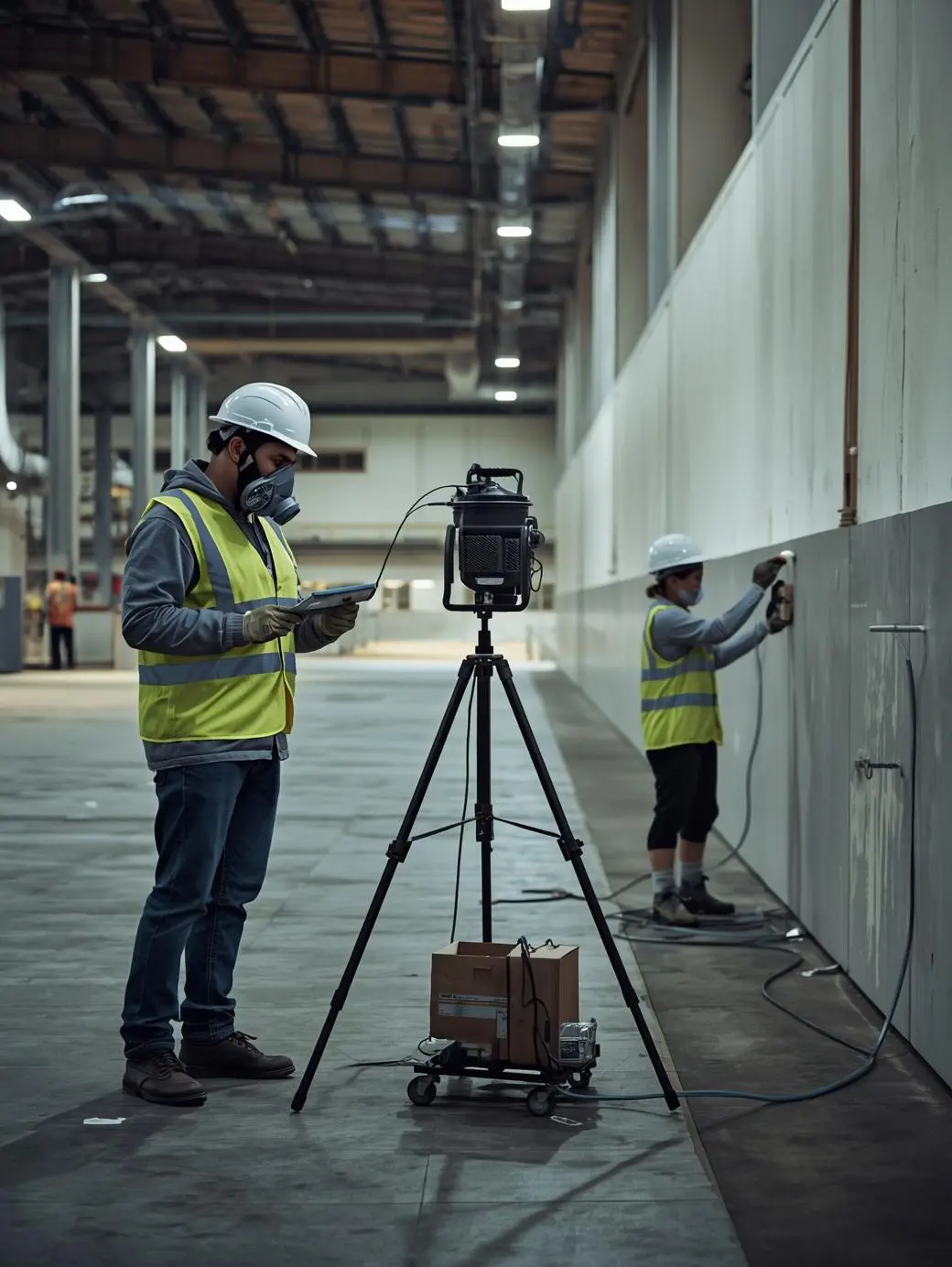
Airborne mold spore concentrations can spike significantly when contaminated materials are disturbed. Real-time mold air quality monitoring during remediation verifies that engineering controls — containment barriers, negative air machines, HEPA filtration — are performing correctly before workers and occupants are exposed.
Post-remediation mold clearance testing from a licensed laboratory is not optional in Texas — it is legally required for commercial properties under TMARR. Our clearance reports include indoor vs. outdoor fungal spore count comparison, surface sampling results, and a formal written clearance determination referencing IICRC S520 and EPA guidance. Water-damaged buildings that require mold remediation may also need asbestos testing if demolition disturbs suspect materials — particularly in structures built before 1980 where pipe insulation and ceiling tiles often contain chrysotile. Flood-damaged facilities should also consider formaldehyde testing for composite wood products exposed to moisture, and mercury vapor monitoring if broken thermometers, switches, or fluorescent lamps are present in the debris.
- Mold spore air monitoring inside and outside remediation containment
- Verification that negative air pressure is maintained throughout abatement
- Post-clearance fungal spore counts compared against outdoor baseline
- Surface mold sampling of previously contaminated areas
- Written mold clearance letter signed by qualified analyst
- Rush mold clearance testing available — 1 business day TAT
Mold Testing — Frequently Asked Questions
What turnaround times do you offer for mold testing?
What's the difference between spore trap and viable (culture) sampling?
Viable culture grows live organisms on agar and identifies species level, with CFU/m³ counts. Required when you need to know if mold is actively growing and for pathogen-specific investigations. Both methods together provide the most complete picture.
Is AGT Labs licensed for mold testing in Texas?
Can you detect Stachybotrys (black mold)?
What do clearance samples confirm after remediation?
How do I submit samples to AGT Labs?
Do you supply sampling equipment and kits?
What are common signs that mold testing is needed?
Houston's Accredited Mold Testing Lab
AGT Labs — Houston's accredited industrial hygiene testing lab — is located at 10200 East Freeway, Suite 101, Houston TX 77029, serving the Gulf Coast region with same-day log-in for samples received before 2:00 PM CST.
Commercial Real Estate & Insurance
Post-flood and post-storm mold assessments and clearance sampling — TX TDLR License #LAB1070 reports accepted by Texas property insurers and state compliance programs.
Healthcare & Texas Medical Center
Controlled environment mold monitoring for Houston's Texas Medical Center facilities, hospital IAQ investigations, and pharmaceutical cleanrooms requiring AIHA EMLAP documentation.
Manufacturing & Port Operations
HVAC mold assessments for Houston Ship Channel industrial facilities, food-grade manufacturing, and Port of Houston warehouse environments.
Government & Schools
TX TDLR-required licensed lab sampling for public buildings, Houston ISD programs, and federal facility compliance documentation under EPA mold guidelines.
Ready to Submit Mold Testing Samples or Request a Quote?
AIHA EMLAP accredited mold testing · IH testing lab · Texas TDLR Mold License #LAB1070 · Rush mold clearance testing available · Houston TX · Nationwide shipping. Ask about recurring monitoring programs and volume pricing for multi-phase remediation projects and ongoing facility mold surveillance.