
AGT Labs Industrial Hygiene

Asbestos Testing — PLM, PCM & Clearance Lab, Houston TX

Three accredited asbestos analyses under one roof at 10200 East Freeway, Houston TX 77029 — bulk material testing before the work, airborne fiber counting during it, and post-abatement clearance before anyone goes back in. NVLAP, PJLA and Texas DSHS credentials on the same laboratory. Not sure which one your project needs? Start here.

NVLAP 101793-0 · ISO/IEC 17025:2017 PJLA 137751 · ISO/IEC 17025:2017 TX DSHS License #300529 AIHA-LAP LAP-101470 1-Day Rush Available
Are you an asbestos inspector or consultant? We're the accredited lab behind your sample results. Independent Lab Testing →
Start Here

Which Asbestos Test Does Your Project Need?

Three different questions, three different analyses. Picking the wrong one wastes money, delays a permit, or produces data a regulator will not accept. Find your situation below.

Find your project in one line

Pre-renovation or pre-demolition building survey
Worker exposure during abatement or maintenance
Releasing a space after abatement
Result came back “trace” and I need a firm number
Proving containment is holding
AHERA school survey or three-year reinspection
→ Bulk sampling, NVLAP required
Waste classification near the 1% threshold
Roofing tear-off or transite cutting scheduled
→ Bulk first, then air monitoring
Our Three Asbestos Services

Bulk Material, Airborne Fiber & Clearance Analysis

Most regulated renovation projects use all three — at different stages, against different criteria, producing different documents.

STAGE 03

Post-Abatement Clearance

After the work. Answers “is this space fit to hand back?” A written pass/fail clearance letter against the project criterion, accepted by Texas DSHS. 1-day rush turnaround, because the containment stays up until the number arrives.

Answers:Can people go back in?
Accredited:TX DSHS #300529 · PJLA 137751
Delivers:Written pass/fail letter
Testing Methods

Our Asbestos Testing Methods — Three Specialized Approaches

AGT Labs offers three distinct asbestos testing methods, each designed for a specific phase of the asbestos management lifecycle. Whether you need to identify asbestos in building materials before renovation, measure airborne fiber concentrations during abatement, or confirm safe re-occupancy after removal, our NVLAP-accredited laboratory delivers accurate results under strict chain-of-custody protocols.

Bulk Sample Analysis (PLM)

Polarized Light Microscopy identifies asbestos in building materials such as floor tile, insulation, ceiling texture, and joint compound. PLM analysis determines whether asbestos is present and quantifies the percentage by type — chrysotile, amosite, crocidolite, tremolite, actinolite, or anthophyllite. This is the first step before any renovation, demolition, or abatement project.
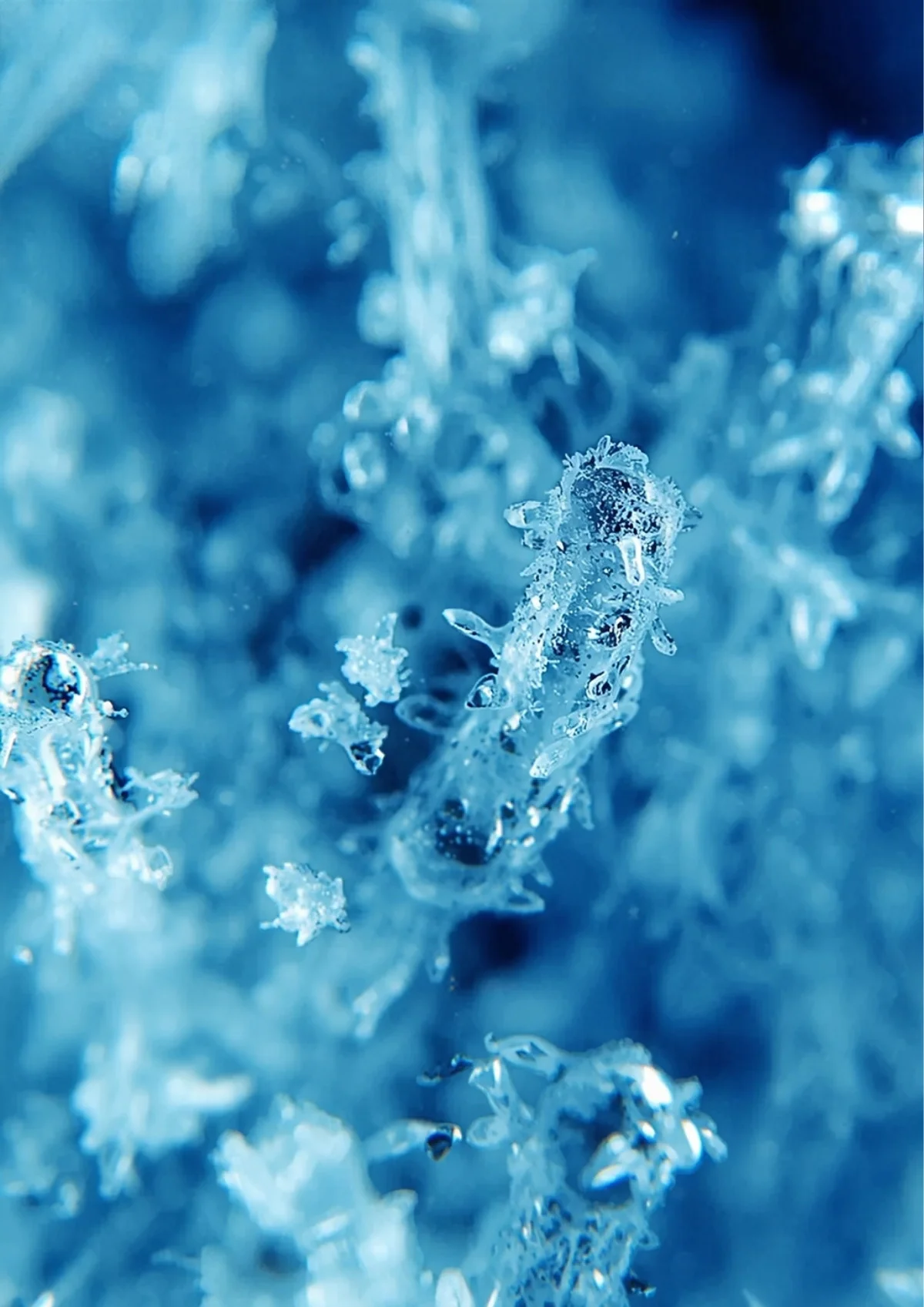
Polarized light microscopy analysis of asbestos bulk sample in laboratory

Best for: Pre-renovation surveys, building inspections, material identification

Method: EPA 600/R-93/116 · NVLAP accredited

Learn More About PLM Testing →

Air Monitoring (PCM)

Phase Contrast Microscopy measures airborne asbestos fiber concentrations during and after abatement work. PCM analysis counts fibers per cubic centimeter of air on 25mm mixed cellulose ester (MCE) filters collected using calibrated sampling pumps. Results are compared against OSHA’s permissible exposure limit (PEL) of 0.1 f/cc and the excursion limit of 1.0 f/cc.

Phase contrast microscopy air monitoring analysis for asbestos fiber counting

Best for: Personal exposure monitoring, area air sampling, abatement oversight

Method: NIOSH 7400

Learn More About PCM Air Testing →

Clearance Testing

Clearance air sampling confirms that an abatement area is safe for re-occupancy after asbestos removal. Aggressive air sampling — using fans, leaf blowers, and physical disturbance — ensures any residual fibers are captured during the sampling period. Results must fall below 0.01 f/cc (EPA clearance criteria) before containment barriers can be removed and occupants return.
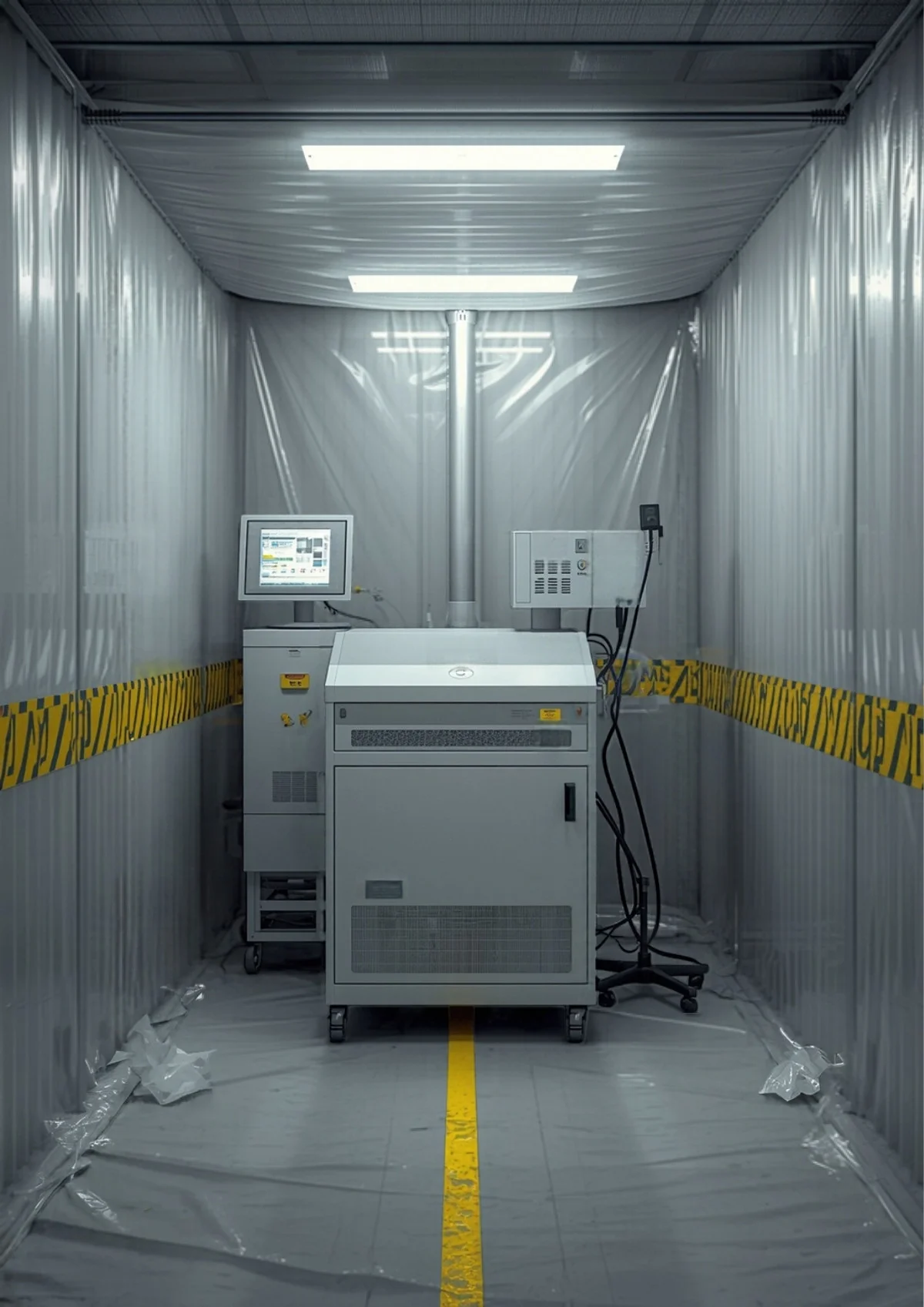
Asbestos clearance air sampling equipment inside plastic containment enclosure during post-abatement testing

Best for: Post-abatement verification, re-occupancy clearance, regulatory compliance

Method: EPA AHERA · 40 CFR Part 763

Learn More About Clearance Testing →

Method Comparison

PCM vs PLM — Which Asbestos Test Do You Need?

Choosing the right asbestos testing method depends on your sample type, regulatory requirements, and project phase. The table below compares the two primary analytical methods AGT Labs offers in-house — PLM for bulk material identification and PCM for airborne fiber counting.

Feature PLM (Bulk) PCM (Air)
Sample Type Building materials Air filter cassettes
What It Measures Asbestos presence & type (%) Total fiber count (f/cc)
Analytical Method EPA 600/R-93/116 NIOSH 7400
Resolution ~1 µm (optical) ~0.25 µm (optical)
Identifies Fiber Type? Yes (6 regulated types) No (counts all fibers)
Typical Use Case Pre-renovation surveys Worker exposure & clearance
Standard Turnaround 5 business days 5 business days
Rush Available? 1- to 4-day rush 1- to 4-day rush
OSHA PEL Threshold 1% by weight 0.1 f/cc (8-hr TWA)

Not sure which test you need? Contact our technical team — we’ll help you select the right method based on your project scope, regulatory requirements, and timeline.

Why Asbestos Testing Matters

Why accredited asbestos analysis protects your business

EPA NESHAP Compliance

A bulk survey is legally required before commercial demolition or renovation, and civil penalties run per violation per day. Pre-demolition surveys of pre-1980 buildings should also screen for PCB-containing caulk and sealants.

Worker Safety Under OSHA

Air monitoring confirms exposure is below the OSHA PEL of 0.1 f/cc during abatement — the evidence that respiratory protection and engineering controls are actually working. Demolition dust also carries respirable silica.

Legal & Liability Record

Improper disposal or accidental disturbance of ACM leads to costly claims years later. NVLAP and TX DSHS-licensed reports are the documentation that gets produced when someone asks what you knew and when.

Clearance & Reoccupancy

Post-abatement clearance verifies airborne fibers have been removed before commercial or industrial reoccupancy — a legal requirement on most regulated Texas projects and the document that closes the job out.

Nationwide Ship-In Service

Asbestos Testing for Clients in All 50 States

We accept ship-in asbestos samples from anywhere in the United States. Our laboratory accreditations are national credentials, not Texas-only ones — but a number of states run their own asbestos laboratory licensing on top of them, and that is worth knowing before you sample.

Samples From Any State

Prepaid return labels ship anywhere in the US. Samples received before 2:00 PM CT are logged the same day, whichever state they travelled from.

Federal, Not Regional, Accreditation

NVLAP is run by NIST, a federal agency. Lab Code 101793-0 carries no geographic restriction, and 40 CFR 763.87 makes NVLAP the accreditation AHERA requires for school samples in every state.

ISO/IEC 17025 Through ILAC-MRA Signatories

NVLAP, PJLA and AIHA-LAP are all signatories to the ILAC Mutual Recognition Arrangement, so your data is produced to an internationally recognized standard of technical competence.

Houston Courier, National Freight

Same-day courier pickup across Houston metro and the Ship Channel corridor. UPS Ground and overnight freight everywhere else in the country.

Some states require their own asbestos laboratory license

National accreditation is not the same as a license to operate in every state. Several jurisdictions require a laboratory to hold that state's own asbestos credential before analysing samples originating there — including New York, Pennsylvania (and the City of Philadelphia separately), Massachusetts, Vermont, Connecticut, Rhode Island, Maine, Virginia, West Virginia, Hawaii and Louisiana. New York in particular does not grant asbestos approval by reciprocity, so no amount of federal accreditation substitutes for it. We hold the Texas DSHS license (#300529). Tell us which state your samples are coming from and we will confirm coverage before you sample, rather than after.

Asbestos-Containing Materials

Where Asbestos Hides in Buildings — ACM Reference Guide

Pre-1980 construction carries the highest ACM risk, but asbestos-containing products were used into the 1990s in some categories. Each material below needs bulk analysis first; the ones that get disturbed need air monitoring during the work too.
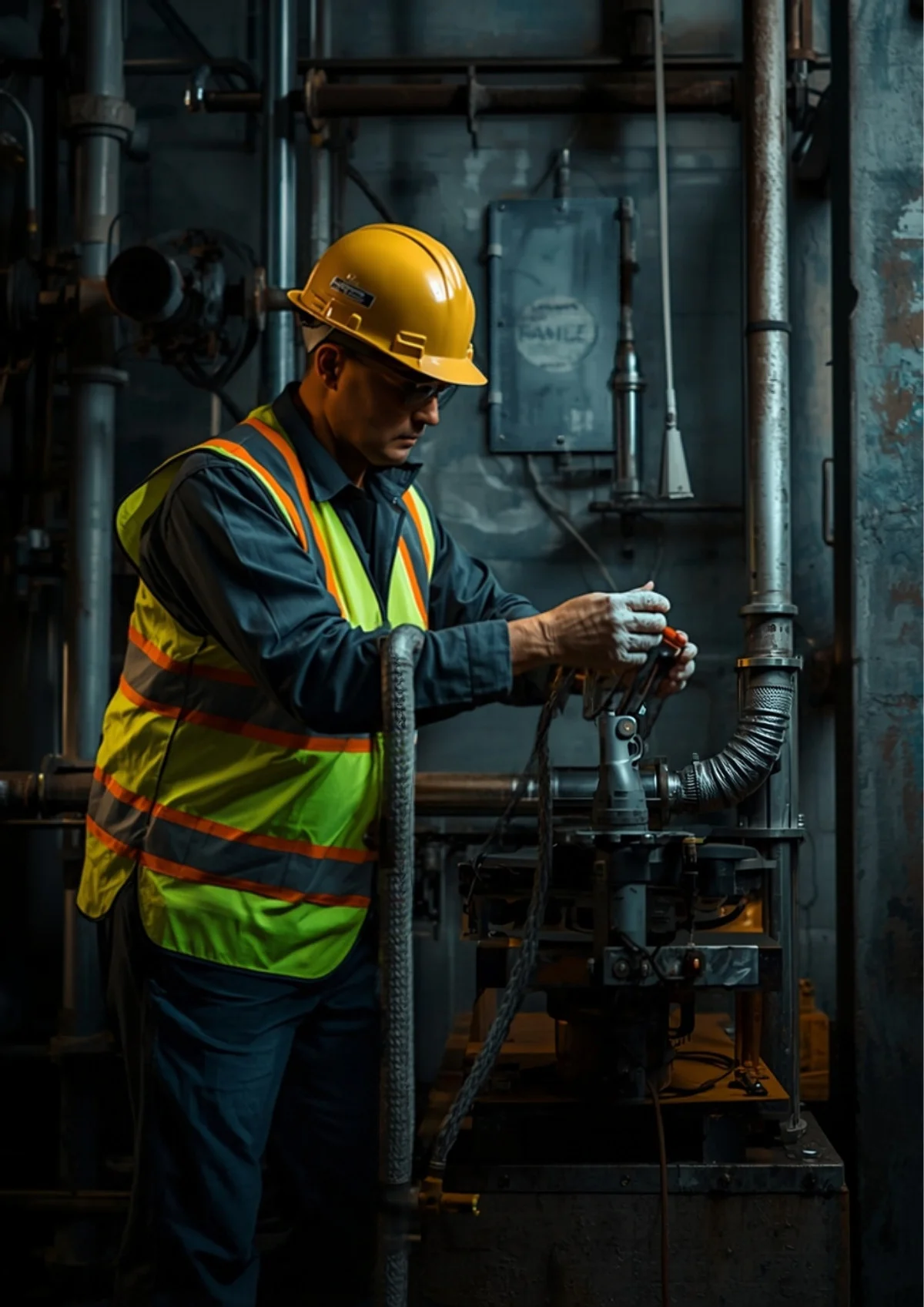
Environmental consultant collecting asbestos bulk material sample from pipe insulation for laboratory testing
Thermal System Insulation
Friable · High
Pipe wrap, boiler insulation, tank jacketing
The most common high-risk ACM in pre-1980 industrial facilities. Friable once deteriorated, so HVAC or plumbing work releases fibers readily. Sample the wrap, cement and outer jacket as separate layers.
→ Bulk + air if disturbed
Floor Tiles & Mastics
Non-Friable If Intact
9×9 and 12×12 vinyl tile, cutback mastic
Pre-1980 9×9 tiles are almost universally asbestos-containing and the mastic beneath is equally likely. The classic layering trap: a clean tile over an 8% mastic. Never composite the two.
→ Bulk PLM, each layer separately
Spray Fireproofing (SFRM)
Friable · High Content
Structural steel fireproofing, textured coatings
Frequently contains amosite or chrysotile at 20–60%. Damaged SFRM is a primary source of ongoing fiber release in occupied buildings. Heterogeneous — send more than the minimum volume.
→ Bulk + air if disturbed
Drywall Joint Compound
Sanding Risk
Joint compound, tape compound, texture
Pre-1977 joint compound is one of the most common high-exposure scenarios in renovation. Dry sanding generates respirable chrysotile well above the OSHA PEL.
→ Bulk + personal air monitoring
Ceiling Tiles
Condition-Dependent
Acoustical and lay-in tiles
Many pre-1980 acoustic tiles contain chrysotile or amosite. Minimal risk intact, but cutting or breaking releases fibers and water damage can make them friable.
→ Bulk PLM, each tile type
Roofing Materials
Tear-Off Risk
Built-up roofing, felts, shingles, bitumen
Pre-1980 felts and built-up membranes commonly contain chrysotile. Non-friable intact but hazardous during mechanical tear-off. Texas requires a survey before commercial roofing replacement.
→ Bulk analysis per system layer
Transite & Cement Board
Cutting / Drilling Risk
A/C pipe, siding, transite panels
Very high chrysotile content, typically 15–50%. Common in industrial facilities and older schools. Cutting or drilling without controls produces extremely high fiber counts.
→ Bulk + air for cutting
Pipe Lagging & Gaskets
Maintenance Risk
Lagging, valve packing, flange gaskets
Pre-1980 mechanical rooms and refinery process lines frequently contain amosite or crocidolite lagging and gasket material. Routine maintenance disturbance is a recurring exposure source.
→ Bulk before turnaround work
Regulated Asbestos Minerals

The Six Regulated Fiber Types We Identify

Fiber type drives health risk, regulatory treatment and how a material must be managed. All six are distinguished by refractive index, extinction angle, pleochroism and dispersion staining, and every one present is named in the report. Full detail on the bulk analysis page.

Asbestos fibers viewed through phase contrast microscope during PCM air sample analysis at AGT Labs
Chrysotile
White asbestos · Serpentine group
Serpentine~95% of use
Floor tile, joint compound, roofing felts, most thermal insulation. IARC Group 1 carcinogen.
Amosite
Brown asbestos · Grunerite series
AmphiboleHigh Potency
Spray fireproofing, ceiling tile, pipe insulation. Straight brittle fibers, highly persistent in lung tissue.
Crocidolite
Blue asbestos · Riebeckite series
AmphiboleHighest Potency
Pipe lagging, cement products, insulation board. Highest mesothelioma rate per unit exposure.
Actinolite
Amphibole series
Amphibole
Contaminant in paint, spackle and assorted building products. Identified by green pleochroism.
Anthophyllite
Mg-Fe amphibole
Amphibole
Rarest of the six in US buildings. Occasional contaminant in talc-based products and flooring mastics.
Lab AccreditationNVLAP 101793-0 · ISO/IEC 17025
PJLA AccreditationPJLA 137751 · PLM & PCM
TX DSHS Asbestos LicenseLicense #300529 · PCM & PLM
IH Lab AccreditationAIHA LAP · ID: LAP-101470
Laboratory Credentials

Four Independent Credentials on One Laboratory

Every asbestos result we issue rests on credentials a regulator, an insurer or a court can verify independently.

AGT Labs technician analyzing asbestos building material sample under polarized light microscope in NVLAP-accredited laboratory
NVLAP — Lab Code 101793-0
NIST's National Voluntary Laboratory Accreditation Program, ISO/IEC 17025:2017, for asbestos fiber analysis in bulk building materials. Covers EPA 40 CFR Part 763 Appendix E and EPA 600/R-93/116. This is the mandatory credential under EPA NESHAP and AHERA.
PJLA — Accreditation No. 137751
Perry Johnson Laboratory Accreditation, an independent ILAC-MRA signatory. Certificate L26-747, ISO/IEC 17025:2017 in Environmental Testing, valid through 30 November 2028 — covering asbestos in solid materials and asbestos in air. A second independent assessment of the same methods NVLAP accredits.
Texas DSHS — License #300529
Texas requires state licensure for any laboratory performing asbestos analysis in Texas. Our license covers both microscopy methods and is valid through August 2027 — required in addition to NVLAP for every regulated Texas project.
AIHA-LAP — ID LAP-101470
Our industrial hygiene laboratory accreditation, covering NIOSH 7400 asbestos fiber counting alongside 117 accredited methods across 12 analytical platforms. Continuously accredited since February 2000.
Scope — Stated Plainly

What We Do, and What We Do Not

Three things worth knowing before you send samples. We would rather tell you now than have you find out from a report.

We do not collect samples

AGT Labs is an analytical laboratory. We do not perform building inspections, site surveys or field sampling. You, your consultant or your abatement contractor collect the samples and send them in. In Texas, bulk sampling of a regulated facility must be done by a TX DSHS-licensed asbestos inspector. We supply the kits, the protocols and the analysis.

Lab Logistics

Turnaround Times & Free Asbestos Testing Kits

The same turnaround ladder applies across all three services. Detailed sampling protocols live on each service page, and the two field guides walk through collection step by step — collecting bulk samples and collecting air samples for PCM.

Turnaround Options — All Asbestos Services
1-Day Rush1 business day+100%
2-Day Rush2 business days+75%
3-Day Rush3 business days+50%
4-Day Rush4 business days+25%
Standard5+ business daysNo Surcharge
Samples received before 2:00 PM CT logged same day on any tier. Multi-layer bulk samples are billed per layer and field blanks are analyzed and billed as samples. Point count rush is limited — call (713) 453-6090 to confirm.

Free Asbestos Testing Kits

  • 25 mm MCE cassettes (0.8 µm) for air sampling and clearance
  • Pre-labeled airtight containers for bulk samples
  • Field blank cassettes to meet the 10% QA requirement
  • Layer documentation forms and a site sketch template
  • Lot-certified, calibration-traceable media documentation
  • Pre-numbered Asbestos Chain of Custody form
  • Pre-paid UPS return shipping label (domestic)
Download Asbestos COC

Kits ship via UPS Ground — order with 5 business days notice. Houston metro courier pickup available: (713) 453-6090.

Regulatory Compliance

Standards That Require Accredited Asbestos Testing

Every report is structured to satisfy the applicable federal and Texas state requirements. The same renovation scope often triggers parallel obligations for lead, respirable crystalline silica and formaldehyde.

EPA NESHAP — 40 CFR Part 61, Subpart M
Requires a bulk asbestos survey before demolition or renovation of any public or commercial building regardless of age. The rule specifies the PLM method (40 CFR 763 Subpart E, Appendix E) rather than a laboratory accreditation — EPA separately recommends NVLAP-accredited analysis for non-school buildings. Civil penalties are assessed per violation per day and adjusted annually for inflation. → Bulk analysis
EPA AHERA — 40 CFR Part 763
Governs asbestos management in K–12 schools: bulk survey of all suspect materials, three-year reinspection, periodic surveillance, and a defined clearance procedure after response actions. This is where NVLAP is mandatory — 40 CFR 763.87 requires NVLAP-accredited analysis for school samples, in every state. → Clearance testing
OSHA 29 CFR 1926.1101 — Construction
Requires an initial exposure assessment and air monitoring for Class I–IV asbestos construction work. PEL 0.1 f/cc as an 8-hour TWA; excursion limit 1.0 f/cc over 30 minutes. → Air monitoring
OSHA 29 CFR 1910.1001 — General Industry
Covers asbestos exposure in manufacturing, industrial maintenance and custodial operations — the standard that applies to Houston Ship Channel refineries and chemical plants during turnaround work. Same limits as the construction standard.
Texas DSHS — Asbestos Laboratory License
Texas requires state licensure for any laboratory performing asbestos analysis in Texas. AGT Labs holds License #300529, valid through August 2027 — required in addition to NVLAP for all regulated Texas projects, and the basis on which DSHS accepts our clearance letters.
NVLAP/PJLA Accredited (ISO/IEC 17025)
The international standard for testing laboratory competence, held here under three independent accreditation bodies — NVLAP, PJLA and AIHA-LAP — covering the same asbestos methods. This is what makes a result defensible outside Texas as well as inside it.
Industries & Clients

Who Relies on Our Asbestos Testing Lab

Pre-renovation surveys rarely stop at asbestos. Pre-1978 buildings often carry lead paint in the same assemblies, and industrial renovations add PAH from coal tar roofing.

Environmental Consultants

Pre-demolition surveys, point count for waste classification and complete monitoring packages across Texas and the Gulf Coast. Volume pricing for high-submission accounts, and PCB analysis on the same submission.

Abatement Contractors

Baseline surveys, personal and area monitoring through the job, and fast clearance letters so reoccupancy is never held up. Standing accounts with kits shipped ahead, scoped per job.

Schools & Government

AHERA surveys, three-year reinspection support and periodic surveillance for K–12 schools, universities and public buildings. NVLAP accreditation is mandatory for AHERA analysis — and held. See our dedicated education and government & municipal facilities testing programs for the full scope.

Industrial & Petrochemical

OSHA 1910.1001 exposure assessments for Houston Ship Channel refineries and chemical plants — thermal insulation surveys, gasket assessments and turnaround monitoring. Add mercury vapor for equipment decommissioning.

Insurance & Legal

Litigation-grade chain-of-custody documentation, expert microscopist declarations and annotated photomicrographs. NVLAP and PJLA accreditation is part of what makes a result defensible and credible in Texas courts.

Property Owners & Real Estate

Pre-purchase surveys, disclosure compliance, O&M program development and renovation clearance. Worth bundling with indoor air quality and mold testing for complete due diligence.

Client Questions

Asbestos Testing — Frequently Asked Questions

General questions answered here. Method-specific questions are on each service page.

Which asbestos test do I need?
It depends on the question you are answering. Testing a material before renovation or demolition → bulk sampling. Measuring what workers are breathing during the work → air monitoring. Releasing a space after abatement → clearance testing. Most regulated projects need all three at different stages of the job.
When is asbestos testing legally required in Texas?
EPA NESHAP (40 CFR 61 Subpart M) requires a bulk survey before demolition or renovation of any public or commercial building regardless of age. OSHA 29 CFR 1926.1101 requires an exposure assessment before Class I–IV asbestos work. Texas DSHS requires analysis by a state-licensed laboratory for all regulated asbestos projects in Texas — AGT Labs holds License #300529, valid through August 2027.
Is AGT Labs an accredited asbestos testing laboratory?
Yes, under three independent credentials. NVLAP Lab Code 101793-0 (ISO/IEC 17025:2017) for asbestos fiber analysis in bulk building materials. PJLA Accreditation No. 137751, Certificate L26-747, covering asbestos in solid materials and asbestos in air. Texas DSHS Asbestos Laboratory License #300529 for both microscopy methods. Airborne fiber counting also sits within our AIHA-LAP scope (LAP-101470).
Do you collect the samples?
No. AGT Labs is an analytical laboratory — we do not perform building inspections, site surveys or field sampling. You, your consultant or your abatement contractor collect the samples and send them to us. In Texas, bulk sampling of a regulated facility must be carried out by a TX DSHS-licensed asbestos inspector. We supply the kits, the sampling protocols and the accredited analysis.
What materials most commonly contain asbestos?
In pre-1980 buildings: thermal pipe and boiler insulation, 9×9 floor tiles and their mastics, drywall joint compound (especially pre-1977), spray-applied fireproofing, ceiling tiles, roofing felts, transite board and pipe lagging in mechanical rooms. Buildings from 1980–1990 may still contain asbestos in flooring, roofing and industrial gaskets. All of these are tested by bulk analysis.
How long does asbestos testing take?
Standard turnaround is 5+ business days with no surcharge across all three services. Rush options: 1-day (+100%), 2-day (+75%), 3-day (+50%), 4-day (+25%). Point count rush is limited — call to confirm. Samples received before 2:00 PM CT are logged the same day regardless of tier.
How much does asbestos testing cost in Houston?
Pricing depends on which analysis, the sample count, the number of layers per bulk sample, and the turnaround tier. AGT Labs provides itemised quotes before any work begins, with volume pricing for environmental consultants and abatement contractors submitting regularly. Rush surcharges run from 25% (4-day) to 100% (1-day). Call (713) 453-6090 or email info@agtlabs.com.
Do you supply sampling kits?
Yes, free with 5 business days notice — MCE cassettes for air sampling, pre-labeled airtight containers for bulk samples, field blanks, lot-certified media documentation, a pre-numbered chain of custody and a prepaid UPS return label. Houston metro courier pickup is available on request.
Do you offer accounts for abatement and demolition contractors?
Yes. Contractors who submit regularly can set up a standing account with volume pricing, a dedicated lab contact, pre-labeled kits scoped to specific jobs, and priority 1-day turnaround including resamples on a failed clearance. Pre-demolition surveys run on one submission — asbestos alongside lead, PCB and mercury. See clearance testing to set one up.
Can I test my home for asbestos myself?
You can collect your own sample using a DIY kit for many situations, but sampling is the highest-risk step since disturbing suspect material can release fibers. In Texas, bulk sampling in a regulated facility, including most renovation and demolition projects, must be done by a TX DSHS-licensed asbestos inspector. For a simple residential check, AGT Labs' free sampling kit lets you or a licensed inspector collect a small sample and mail it in for lab analysis, with results in as fast as 1 day.
What's the difference between asbestos testing and an asbestos inspection?
Asbestos testing is the lab analysis: we examine a submitted sample and report whether asbestos fibers are present and at what concentration. An asbestos inspection is a separate, on-site service performed by a TX DSHS-licensed inspector who surveys the building, decides what to sample, collects the samples, and issues a regulatory survey report, required before most Texas renovation or demolition permits. AGT Labs performs the lab testing; we do not perform inspections or collect samples in the field. Find a licensed inspector on the Texas DSHS inspector directory.
What is the 3-5-7 rule for asbestos sampling?
It's the EPA AHERA minimum sample-count guideline for friable surfacing materials, such as sprayed-on ceiling texture or fireproofing: collect at least 3 samples if the homogeneous area is under 1,000 sq ft, 5 samples for 1,000–5,000 sq ft, and 7 samples over 5,000 sq ft. It applies specifically to friable surfacing material; thermal system insulation and other material types follow different minimums. Our free sampling kits include enough bags for a compliant multi-sample submission.
What should I do if I find a small amount of asbestos in my home?
Don't disturb it. Intact asbestos-containing material in good condition that won't be cut, sanded, drilled or demolished can often be safely left in place and simply monitored. If it's damaged or needs to come out for a renovation, Texas law requires a licensed asbestos abatement contractor to remove it — AGT Labs does not perform removal. After abatement, a clearance air test, which we do provide, confirms the space is safe to reoccupy.
Houston TX Laboratory

Asbestos Testing Lab Serving Houston's Built Environment

AGT Labs is at 10200 East Freeway, Suite 101, Houston TX 77029 — inside the Houston Ship Channel industrial corridor. All asbestos analysis is performed in-house by TX DSHS-licensed microscopists. No outsourcing, no send-outs.

Primary Sector
Renovation & Demolition
EPA NESHAP pre-demolition surveys for Houston commercial buildings, industrial facilities and healthcare campuses — each layer analyzed separately with ACM determination and waste classification for permit submittal.
Oil & Gas
Refinery & Petrochemical
OSHA 1910.1001 exposure assessment for Ship Channel refineries and chemical plants — thermal insulation surveys, gasket assessments and maintenance turnaround monitoring with clearance letters accepted by TX DSHS.
Public Sector
Schools & Government
EPA AHERA surveys and three-year reinspection support for Houston-area K–12 schools and HISD facilities — per-layer analysis of all suspect materials with NVLAP-accredited results per 40 CFR Part 763.
Environmental
Remediation & Site Assessment
Reported as in-house analysis — see the scope note above.
3
Asbestos Services
Bulk · Air · Clearance
4
Independent
Credentials Held
1-Day
Rush Turnaround
Available
77029
Houston TX
10200 E. Freeway

Not Sure Which Asbestos Test You Need?

Tell us what stage the project is at and we will tell you which analysis answers it. NVLAP 101793-0, PJLA 137751 and TX DSHS #300529 — free kits, 1-day rush available.