
Asbestos Bulk Sampling & PLM Analysis Lab, Houston TX

NVLAP-accredited PLM (Polarized Light Microscopy) analysis of bulk building materials per EPA 600/R-93/116 — every layer separated, identified and reported with a clear ACM determination. 400-point and 1000-point counts available when a sub-1% call is needed for waste classification. Analyzed in-house at 10200 East Freeway, Houston TX 77029. Samples received before 2:00 PM CST logged same day.

NVLAP 101793-0 · ISO/IEC 17025:2017 PJLA 137751 · PLM TX DSHS License #300529 Same-Day Rush Available Free Bulk Sampling Kits
Why PLM Bulk Analysis Matters

Why accredited PLM analysis protects your project

The Permit Depends On It

EPA NESHAP requires a PLM bulk survey before demolition or renovation of any public or commercial building, regardless of age, analyzed by an NVLAP-accredited laboratory. Without it the permit does not issue.

Layers Decide the Answer

A tile can be clean while the mastic beneath it is 8% chrysotile. Compositing layers dilutes the result and produces a false negative on the layer that actually gets disturbed. We analyze and report every layer separately.

Trace Is Not a Pass

A trace result means fibers were seen below the visual estimate threshold. Where the disposal or abatement decision turns on the 1% line, a point count to 0.25% or 0.1% is what makes the call defensible.

Three Independent Credentials

NVLAP 101793-0, PJLA 137751 and TX DSHS #300529 all cover the same PLM analysis. Reports are accepted by OSHA, EPA, AHERA programs and Texas courts.

Nationwide Ship-In Service

Bulk Sampling Analysis for All 50 States

Bulk samples travel well — sealed, stable and light. We accept them from anywhere in the United States, and our accreditations are national credentials rather than Texas-only ones. A number of states do run their own asbestos laboratory licensing on top, which is worth settling before you cut samples.

Bulk Samples From Any State

Prepaid return labels ship anywhere in the US. Sealed bulk samples are stable in transit, so a survey in Ohio or Oregon reaches us in the same condition it left.

NVLAP Is Federal, Not Regional

NVLAP is run by NIST. Lab Code 101793-0 carries no geographic restriction, and 40 CFR 763.87 makes it the accreditation AHERA requires for school bulk samples in every state.

Kits Ship Nationwide

Free bulk sampling kits — pre-labeled containers, layer documentation forms, site sketch template, pre-numbered COC and a prepaid return label — ship anywhere with five business days notice.

Houston Courier, National Freight

Same-day courier pickup across Houston metro. UPS Ground and overnight freight for everywhere else, logged same day if received before 2:00 PM CST.

Check your state before you sample

National accreditation is not a license to operate in every state. Several jurisdictions require a laboratory to hold that state's own asbestos credential before analysing bulk samples originating there — including New York, Pennsylvania (and the City of Philadelphia separately), Massachusetts, Vermont, Connecticut, Rhode Island, Maine, Virginia, West Virginia, Hawaii and Louisiana. New York does not grant asbestos approval by reciprocity, so federal accreditation does not substitute for it. We hold the Texas DSHS license (#300529). Call us with the sample's state of origin before the survey, not after the report.

Bulk Material Analysis

What Is PLM Asbestos Bulk Analysis?

PLM is the analysis of a physical piece of building material to answer one question: does this material contain asbestos, which type, and how much? A microscopist views the prepared sample under polarized light with dispersion staining, matches the optical properties of any fibers present against the six regulated asbestos minerals, and reports a percentage by volume for each distinct layer.

It is the method EPA NESHAP requires before demolition or renovation of a public or commercial building, and the method AHERA requires for suspect materials in schools. If you are surveying a building rather than measuring what workers are breathing, PLM is the analysis you need — for the air side, see PCM air monitoring.

  • PLM bulk qualitative — fiber type and percentage per layer, EPA 600/R-93/116
  • PLM point count — quantitative sub-1% determination, 400-point and 1000-point
  • Per-layer separation, analysis and reporting with ACM determination
  • All six EPA-regulated asbestos minerals identified and named
  • Analyzed in-house by TX DSHS-licensed microscopists — no send-outs
  • Reports carry method reference, analyst signature, QA sign-off and NVLAP number

Who does what

AGT Labs is an analytical laboratory. You or your consultant collect the samples and send them to us — we do not perform building inspections or field sampling. In Texas, bulk sampling of a regulated facility must be carried out by a TX DSHS-licensed asbestos inspector. We supply the kit, the protocol and the analysis.
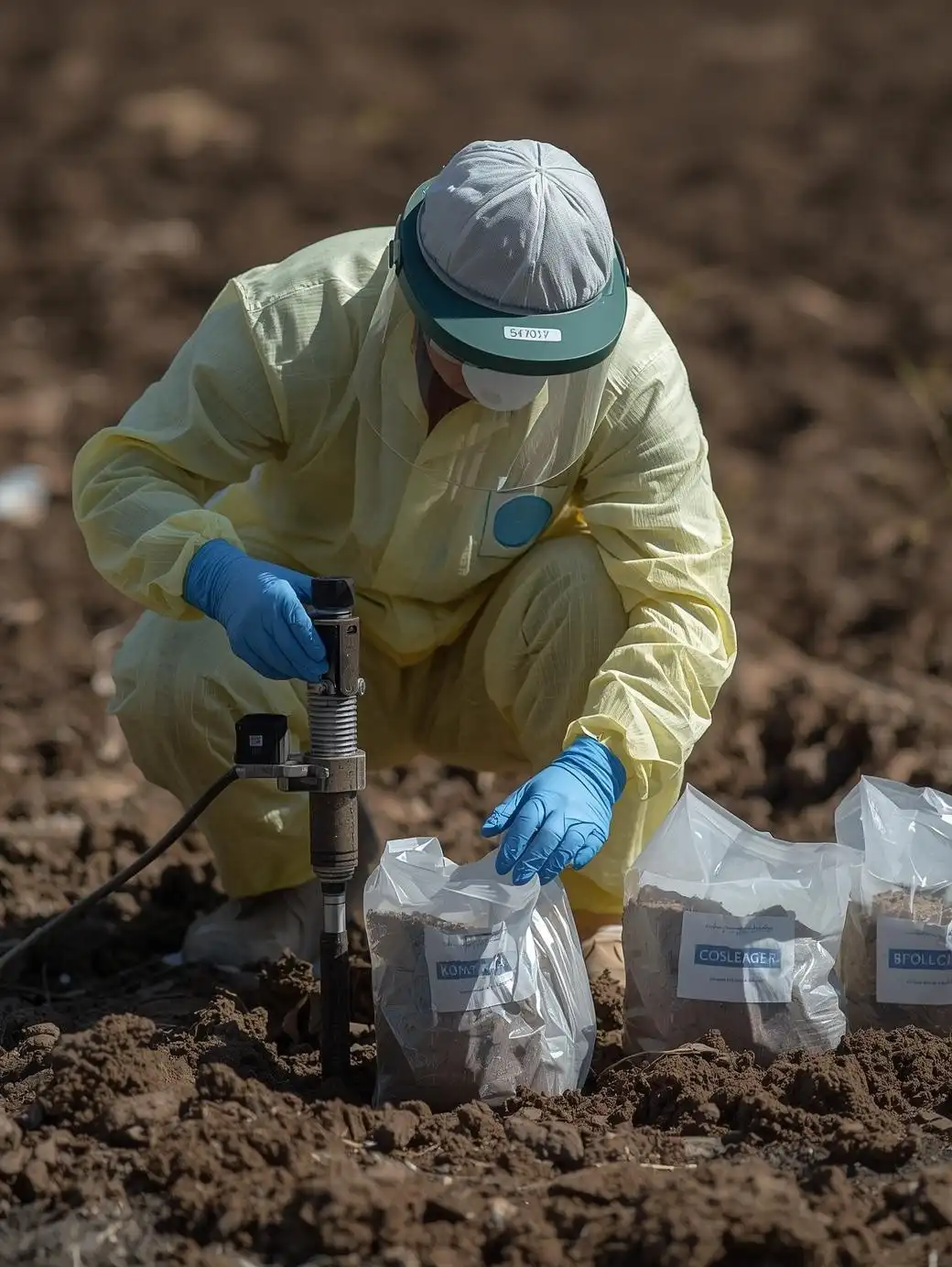
PLM asbestos bulk sample preparation Houston TX NVLAP accredited laboratory
Analysis Methods

PLM Bulk Analysis Methods & Detection Limits

Three PLM analyses, three detection limits, three different jobs. Choosing the wrong one either overspends or produces a number a regulator will not accept.

PLM 02

PLM Point Count — 400-Point

Quantitative counting across 400 points to resolve asbestos content to 0.25%. Ordered when standard PLM returns trace and the project needs a defensible number rather than an estimate near the regulatory threshold.

Standard:EPA 600/R-93/116 (400-point)
Sensitivity:0.25%
Report:Quantitative % by fiber type
Rush:Limited — call to confirm
PLM 03

PLM Point Count — 1000-Point

The most sensitive PLM quantification available, resolving to 0.1%. Used for waste characterization decisions and where a specification or disposal facility demands the tighter figure.

Standard:EPA 600/R-93/116 (1000-point)
Sensitivity:0.1%
Report:Quantitative % by fiber type
Rush:Limited — call to confirm

Which PLM analysis does your project need?

Pre-renovation or pre-demolition survey?
→ PLM Bulk Qualitative
Standard PLM returned “trace”?
→ 400-Point Count (0.25%)
Waste classification near the 1% line?
→ 1000-Point Count (0.1%)
AHERA school survey?
→ PLM Bulk, NVLAP-accredited
Measuring what workers breathe?
Clearing a space after abatement?

Soil and environmental matrices — scope statement

We analyze soil, sediment and construction debris by PLM (ASTM D7521), but this work sits outside our NVLAP and PJLA accredited scope, which covers bulk building materials. It is reported as an in-house analysis and labeled as such. If your project requires accredited soil analysis, tell us before shipping and we will confirm exactly what we can certify.

Regulated Asbestos Minerals

The Six Regulated Fiber Types PLM Identifies

Fiber type drives health risk, regulatory treatment and how the material must be managed. PLM distinguishes all six by refractive index, extinction angle, pleochroism and dispersion staining colour — every one named in the report where present.

Chrysotile
White asbestos · Serpentine group
SerpentineMost Common (~95%)EPA Regulated
Roughly 95% of asbestos ever used commercially. Floor tile, drywall joint compound, roofing felts and most thermal insulation. Curved, flexible fiber bundles readily identified by PLM in all common building materials. IARC Group 1 carcinogen.
Amosite
Brown asbestos · Grunerite series
AmphiboleHigh PotencyEPA Regulated
Straight, brittle fibers that persist in lung tissue far longer than chrysotile — strongly associated with mesothelioma. Concentrated in spray-applied fireproofing, ceiling tiles and pipe insulation, often at high percentages.
Crocidolite
Blue asbestos · Riebeckite series
AmphiboleHighest PotencyEPA Regulated
The most carcinogenic of the six — thin diameter and high biopersistence give it the highest mesothelioma rate per unit exposure. Found in pipe lagging, asbestos-cement products and some insulation boards.
Tremolite
Tremolite asbestos · Calc-amphibole
AmphiboleEPA Regulated
Present as a contaminant in some talc deposits and certain chrysotile products. Identified by extinction angle, pleochroism and refractive index. Where vermiculite attic insulation is suspected, specialized methods beyond standard PLM apply — call before shipping.
Actinolite
Actinolite asbestos · Amphibole series
AmphiboleEPA Regulated
Occurs as a contaminant in paint, spackle and assorted building products. PLM identifies it by characteristic green pleochroism and oblique extinction. Reported by fiber type in every bulk result where present.
Anthophyllite
Anthophyllite asbestos · Mg-Fe amphibole
AmphiboleEPA Regulated
The rarest of the six in US buildings. Turns up occasionally as a contaminant in talc-based products and flooring mastics. Identified by its pleochroism and extinction angle.
Asbestos-Containing Materials

Which Materials Need PLM Bulk Sampling

Pre-1980 construction carries the highest ACM risk, but asbestos-containing products were used into the 1990s in some categories. Demolition that disturbs these materials also generates respirable particulate — consider adding dust testing and, in pre-1980 buildings, PCB analysis of caulk and sealants.

Thermal System Insulation
Friable · High
Pipe wrap, boiler insulation, tank jacketing
The highest-risk ACM in pre-1980 industrial facilities. Friable once deteriorated, so any HVAC or plumbing work releases fibers readily. Sample the wrap, the cement and the outer jacket as separate layers.
→ PLM Bulk, each layer separately
Floor Tiles & Mastics
Non-Friable If Intact
9×9 and 12×12 vinyl tile, cutback mastic
Pre-1980 9×9 tiles are almost universally asbestos-containing, and the mastic beneath is equally likely. This is the classic layering trap — a clean tile over an 8% mastic. Never composite the two.
→ PLM Bulk, tile + mastic + leveller separately
Spray Fireproofing (SFRM)
Friable · High Content
Structural steel fireproofing, textured coatings
Frequently contains amosite or chrysotile at 20–60%. Damaged SFRM is a primary source of ongoing fiber release in occupied buildings. Heterogeneous — send more material than the minimum.
→ PLM Bulk · larger sample volume
Drywall Joint Compound
Sanding Risk
Joint compound, tape compound, texture
Pre-1977 joint compound is one of the most common high-exposure scenarios in renovation. Dry sanding generates respirable chrysotile well above the OSHA PEL. Sample compound and texture as separate layers.
→ PLM Bulk · compound and texture separately
Ceiling Tiles
Condition-Dependent
Acoustical and lay-in tiles
Many pre-1980 acoustic tiles contain chrysotile or amosite. Minimal risk intact, but cutting or breaking releases fibers, and water damage can make them friable. Sample each tile type present.
→ PLM Bulk · each tile type separately
Roofing Materials
Tear-Off Risk
Built-up roofing, felts, shingles, bitumen
Pre-1980 felts and built-up membranes commonly contain chrysotile. Non-friable intact but hazardous during mechanical tear-off. Texas requires a survey before commercial roofing replacement.
→ PLM Bulk · per roofing system layer
Transite & Cement Board
Cutting / Drilling Risk
A/C pipe, siding, transite panels
Very high chrysotile content — typically 15–50%. Common in industrial facilities and older schools. Cutting or drilling without controls produces extremely high fiber counts.
→ PLM Bulk · confirm before any cutting
Pipe Lagging & Gaskets
Maintenance Risk
Lagging, valve packing, flange gaskets
Pre-1980 mechanical rooms and refinery process lines frequently contain amosite or crocidolite lagging and gasket material. Routine maintenance disturbance is a recurring exposure source.
→ PLM Bulk before turnaround work
Lab AccreditationNVLAP 101793-0 · ISO/IEC 17025
PJLA AccreditationPJLA 137751 · PLM & PCM
TX DSHS Asbestos LicenseLicense #300529 · PCM & PLM
IH Lab AccreditationAIHA LAP · ID: LAP-101470
Quantitative Determination

When You Need a Point Count Instead

Standard PLM is a visual area estimate, reliable to about 1% by volume. That is sufficient for most NESHAP and OSHA purposes — a material above 1% is asbestos-containing, and a clear non-detect supports the permit.

Two situations need more than an estimate. The first is a trace result: fibers were observed but below the estimate threshold. Trace is not a pass, and treating it as one is how material gets disposed of incorrectly. The second is waste classification, where the disposal route turns on whether the material is above or below 1% — a visual estimate sitting right at the threshold will not defend itself.

A 400-point count resolves to 0.25%; a 1000-point count to 0.1%. Both are performed here under the same accreditation as the qualitative analysis.

  • Order a point count when standard PLM reports “trace”
  • Order a point count when the disposal decision sits near 1%
  • 400-point resolves to 0.25% · 1000-point resolves to 0.1%
  • Rush turnaround is limited by the count itself — confirm before committing to a deadline
PLM point count quantitative asbestos analysis 400 point 1000 point Houston TX
Report Deliverables

Every PLM Method, Every Standard, Every Deliverable

No surprises in the report. Here is exactly what each PLM analysis returns — method, media and deliverable side by side.

Analysis TypeMethod / StandardSample MediaReport DeliverableRush?
PLM Bulk — QualitativeEPA 600/R-93/116Bulk material (per layer)Fiber type + % asbestos + ACM determinationYes
PLM Point Count — 400-ptEPA 600/R-93/116 (400-point)Bulk materialQuantitative % to 0.25% by fiber typeLimited
PLM Point Count — 1000-ptEPA 600/R-93/116 (1000-point)Bulk materialQuantitative % to 0.1% by fiber typeLimited
PLM Soil & Debris In-houseASTM D7521 · not in accredited scopeSoil, sediment, construction debrisFiber type + concentration, reported as in-houseCall

Reading your PLM report

Three results you will see, and what each one means for the project:

What the result actually tells you

None detected
No asbestos observed above ~1% by volume in that layer. Supports most permits.
Trace
Fibers present below the estimate threshold. Not a pass — order a point count.
A % with a fiber type
Above 1% is ACM under EPA and OSHA. The layer is regulated, not the composite.
Lab Logistics

PLM Turnaround Times & Free Bulk Sampling Kits

Every rush option and kit detail, laid out before you submit your first bulk sample.

Turnaround Options — PLM Bulk
Same-Day RushBefore 2:00 PM CSTCall for pricing
1-Day Rush1 business day+100%
2-Day Rush2 business days+75%
3-Day Rush3 business days+50%
4-Day Rush4 business days+25%
Standard5+ business daysNo Surcharge
Samples received before 2:00 PM CST logged same day. Multi-layer samples are billed per layer. Point count rush is limited — call (713) 453-6090 to confirm availability before committing to a deadline.

Free PLM Bulk Sampling Kit Includes

  • Pre-labeled airtight bulk sample containers with sample IDs
  • Layer documentation forms — record what you saw before you cut
  • Site sketch template for homogeneous-area mapping
  • Pre-numbered Asbestos Chain of Custody form
  • Pre-paid UPS return shipping label (domestic)
  • Sampling protocol card — volume, layers, suppression, sealing
Download Asbestos COC

Kits ship via UPS Ground — order with 5 business days notice. Houston metro courier pickup available: (713) 453-6090.

Field Protocol Reference

PLM Bulk Sampling Field Requirements

Incorrect sampling invalidates the result and costs a return trip. Follow these parameters and every sample produces defensible data. Step-by-step in the field: how to collect asbestos bulk samples. Full reference: IH Sampling & Analysis Guide.

Sample Collection
Volume
Minimum 1–2 cm³ per sample. Fill a 20 mL container at least ¼ full. Send more for heterogeneous matrices such as SFRM or built-up roofing.
Layers
Each distinct layer sampled separately — each is analyzed, reported and billed individually. Photograph the full profile before cutting.
Suppression
Mist the area with water before collection. Run a HEPA vacuum adjacent to the cut. Wear appropriate PPE.
Sealing
Airtight container, sealed immediately. Double-bag friable material. Label with sample ID, date, location and depth.
Shipping & Log-In
Ship to
10200 East Freeway, Suite 101, Houston TX 77029. Samples received before 2:00 PM CST are logged same day.
Packaging
Friable samples double-bagged. All samples inside a tamper-evident outer bag. Containers upright and cushioned.
COC
Complete the Asbestos COC fully before shipping. State the number of layers per sample and note the rush tier required.
Contact
(713) 453-6090 for Houston metro same-day courier pickup and rush confirmation.

Who collects the samples

You or your consultant. AGT Labs does not perform building inspections or field sampling. In Texas, bulk sampling of a regulated facility must be carried out by a TX DSHS-licensed asbestos inspector, and the sampling plan — how many samples, from which homogeneous areas — is theirs to determine. We supply the kit, the protocol and the accredited analysis.

Submission Workflow

From Bulk Sample to Certified PLM Report

1

Request Kit or COC

Call, email or download the Asbestos COC. Bulk kits ship free with 5 business days notice, or use your own containers.

2

Collect & Separate

Your licensed inspector collects per the sampling plan. Photograph the profile, separate every layer, seal immediately.

3

Ship or Drop Off

UPS or Houston metro courier pickup. Received before 2:00 PM CST means logged the same day on any tier.

4

In-House PLM Analysis

Prepared and analyzed by TX DSHS-licensed microscopists in Houston. No outsourcing. Full QA/QC review on every batch.

5

Certified Report

Secure portal delivery with method reference, % per layer, ACM determination, analyst signature, QA sign-off and NVLAP number.

Regulatory Compliance

Regulations That Require Accredited PLM Bulk Analysis

Every report is structured to satisfy the applicable federal and Texas state requirements. The same renovation scope often triggers parallel obligations for lead, respirable crystalline silica and PCBs.

EPA NESHAP — 40 CFR Part 61, Subpart M
Requires a PLM bulk asbestos survey before demolition or renovation of any public or commercial building regardless of age. The rule specifies the method (40 CFR 763 Subpart E, Appendix E) rather than a laboratory accreditation — EPA separately recommends NVLAP-accredited analysis for non-school buildings. Civil penalties are assessed per violation per day and adjusted annually for inflation.
EPA AHERA — 40 CFR Part 763
Governs asbestos management in K–12 schools. Requires a PLM bulk survey of all suspect materials, three-year reinspection by licensed inspectors and periodic surveillance. This is where NVLAP is mandatory — 40 CFR 763.87 requires NVLAP-accredited analysis for school samples, in every state.
OSHA 29 CFR 1926.1101 & 1910.1001
Require identification of asbestos-containing material before Class I–IV construction work and in general industry maintenance. PLM identifies what is present; PCM air monitoring then documents worker exposure against the 0.1 f/cc PEL.
NVLAP — ISO/IEC 17025:2017, Lab Code 101793-0
NIST's NVLAP program is the mandatory laboratory credential for PLM under EPA NESHAP and AHERA. Our scope covers EPA 40 CFR Part 763 Appendix E and EPA 600/R-93/116 for bulk building materials.
Texas DSHS — Asbestos Laboratory License #300529
Texas requires state licensure for any laboratory performing asbestos PLM or PCM analysis in Texas. AGT Labs holds License #300529 for both, valid through August 2027 — required in addition to NVLAP for all regulated Texas projects.
PJLA — ISO/IEC 17025:2017, Accreditation No. 137751
Perry Johnson Laboratory Accreditation is an independent ILAC-MRA signatory. Certificate L26-747 covers asbestos in solid materials by EPA 600/R-93/116, valid through 30 November 2028 — a second independent assessment of the same PLM method NVLAP accredits.
Client Questions

PLM Bulk Asbestos Testing — Frequently Asked Questions

Answered by the accredited microscopists who run the analysis.

What is PLM asbestos bulk analysis?
PLM (Polarized Light Microscopy) analyses a physical piece of building material under polarized light with dispersion staining to identify the asbestos mineral type present and its percentage by volume. PLM per EPA 600/R-93/116 is the legally required method for pre-demolition and pre-renovation surveys under EPA NESHAP. Each distinct material layer is analyzed and reported separately with a clear ACM determination.
How many bulk samples do I need?
That is set by the survey protocol and the homogeneous areas in the building, not by the laboratory. AHERA specifies minimum sample counts by material type and area under 40 CFR Part 763. Your licensed inspector determines the sampling plan; we analyze what arrives. In Texas, bulk sampling of a regulated facility must be performed by a TX DSHS-licensed asbestos inspector.
Do I have to sample every layer separately?
Yes — and it is the most common field error we see. Compositing a floor tile with its mastic can dilute an asbestos-containing mastic below the reporting threshold and produce a result that is wrong in the direction that matters most. Separate the layers in the field, or send the intact profile and we will separate it here. Each layer is analyzed, reported and billed individually.
What does a PLM "trace" result mean for my permit?
Trace is not a non-detect. Fibers were observed but fell below the visual estimate threshold of roughly 1% by volume. Standard PLM non-detect is generally sufficient for EPA NESHAP and OSHA compliance and supports most demolition permits. If the result returns trace, or the project needs a defensible sub-1% determination for waste classification, order a 400-point count (0.25%) or 1000-point count (0.1%).
How much bulk material should I collect?
Minimum 1–2 cm³ per sample — fill a 20 mL container at least a quarter full. Send more for heterogeneous matrices such as textured coatings or built-up roofing. Mist the area with water before collection, run a HEPA vacuum adjacent to the cut, seal in an airtight container immediately and double-bag anything friable.
Is AGT Labs NVLAP accredited for PLM?
Yes. NVLAP Lab Code 101793-0 under ISO/IEC 17025:2017 for asbestos fiber analysis of bulk building materials, covering EPA 40 CFR Part 763 Appendix E and EPA 600/R-93/116. We also hold PJLA Accreditation No. 137751 (Certificate L26-747) for asbestos in solid materials by PLM, and Texas DSHS Asbestos Laboratory License #300529, valid through August 2027. The same analysis carries three independent credentials.
Can you test soil or construction debris for asbestos?
We analyze soil, sediment and construction debris by PLM, but this work sits outside our NVLAP and PJLA accredited scope, which covers bulk building materials. We report it as an in-house analysis and label it clearly as such on the report. If your project requires accredited soil analysis, tell us before you ship and we will confirm exactly what we can and cannot certify.
How long does PLM bulk analysis take?
Standard turnaround is 5+ business days with no surcharge. Rush options: same-day (call for pricing, samples before 2:00 PM CST), 1-day (+100%), 2-day (+75%), 3-day (+50%), 4-day (+25%). Point count rush is limited by the count itself — call to confirm before you commit to a deadline. Samples received before 2:00 PM CST are logged the same day on any tier.
How much does PLM bulk asbestos testing cost in Houston?
Pricing depends on sample count, the number of distinct layers within each sample, and the turnaround tier. Layers matter more than most people expect — one floor tile sample with tile, mastic and levelling compound is three analyses. AGT Labs provides itemised quotes before any work begins, with volume pricing for environmental consultants and abatement contractors submitting regularly. Call (713) 453-6090 or email info@agtlabs.com.
Do you supply bulk sampling kits?
Yes, free with 5 business days notice — pre-labeled airtight containers, layer documentation forms, a site sketch template, a pre-numbered chain of custody and a prepaid UPS return shipping label. Houston metro courier pickup is available on request.
Who collects the samples?
You or your consultant. AGT Labs is an analytical laboratory — we do not perform building inspections or field sampling. In Texas, bulk sampling of a regulated facility must be carried out by a TX DSHS-licensed asbestos inspector. We supply the kit, the protocol and the analysis.

Ready to Submit PLM Bulk Samples?

NVLAP 101793-0, PJLA 137751 and TX DSHS #300529 — three independent credentials on the same analysis. Free sampling kits, 5-day standard, same-day rush available.