
VOC Testing — EPA TO-15 Analysis Lab, Houston TX
Need VOC testing in Houston? AGT Labs analyzes samples collected by your industrial hygienist, EHS team or consultant — drop off at 10200 East Freeway, Suite 101, or ship from anywhere in the U.S. Whole-air VOC testing by evacuated SUMMA canister and GC-MS at our Houston, TX laboratory. EPA TO-15 testing identifies and quantifies 60+ volatile organic compounds from a single canister down to sub-ppbv — the regulatory standard for vapor intrusion, indoor air quality, ambient monitoring, and unknown VOC identification. TO-15 analysis sits on our AIHA-LAP scope (LAP-101470) as an accredited GC/MS method, and is performed in-house at our Houston laboratory.
You cannot manage a VOC exposure you have not identified — and smell is not a detection method
Odour Thresholds Are Unreliable
Some VOCs are detectable by smell far below any health-relevant concentration; others are odourless at levels well above their screening values. Olfactory fatigue removes even that signal within minutes of entering a space. Laboratory VOC testing is the only way to convert "something smells off" into a defensible number.
Vapor Intrusion Is a Property Liability
Chlorinated solvents and petroleum hydrocarbons migrate from subsurface plumes into overlying buildings with no visible sign at the surface. It surfaces during due diligence, transaction review, or a tenant complaint — usually at the worst possible moment. TO-15 testing of sub-slab and indoor air is how it gets characterised.
Unknown Mixtures Defeat Targeted Methods
A targeted method finds only what you asked it to look for. When the source is unidentified — a new odour, a health complaint cluster, an unfamiliar process stream — a targeted analysis can return clean results while the actual culprit goes unmeasured. TO-15 analysis identifies 60+ compounds at once, including the ones you would not have thought to request.
Regulators Expect Canister Data
EPA and state environmental programmes are written around TO-15 canister sampling for ambient and indoor air. Submitting an equivalent result from a non-standard method invites a data usability challenge and, at worst, a repeat sampling event. Using the method the reviewer expects is the cheapest form of insurance in the project.
What Is VOC Testing?
VOC testing is laboratory measurement of volatile organic compounds in air. VOCs are carbon-based chemicals that evaporate readily at room temperature — solvents, fuels, degreasers, adhesives, refrigerants, and the compounds that off-gas from new flooring, cabinetry and furnishings.
Because they are invisible and unreliably detected by smell, laboratory VOC testing is the only defensible way to establish what is present and at what concentration. Broad-spectrum VOC testing is normally performed by EPA Method TO-15: a whole-air sample is collected in an evacuated SUMMA canister and analysed by GC-MS, identifying and quantifying 60+ compounds simultaneously in one run.
- EPA TO-15 whole-air canister analysis by GC-MS — AIHA-LAP accredited under LAP-101470
- Sorbent tube and passive badge options for targeted low-level work
- TVOC screening for indoor air quality baselines and LEED
- Grab and 8–24 hour time-integrated sampling supported
- Analysed in-house at our Houston VOC testing lab
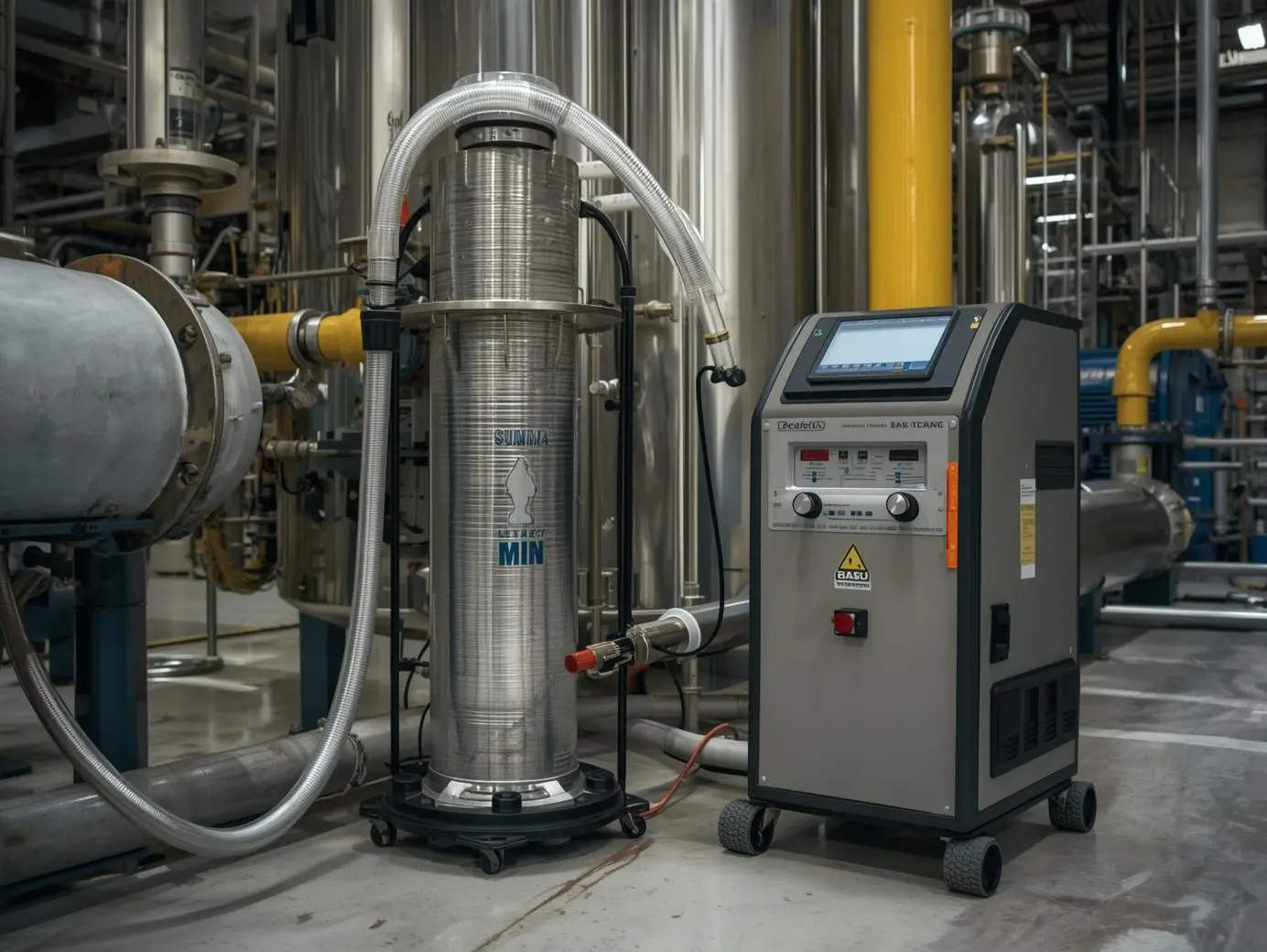
EPA TO-15 Testing & TO-15 Analysis
TO-15 analysis by GC-MS detects 60+ volatile organic compounds simultaneously from a single SUMMA canister, down to sub-ppbv — the accepted method for vapor intrusion, ambient air monitoring, permit compliance, and unknown VOC identification.
What Is TO-15 Testing? EPA TO-15 Analysis Explained
The defining feature of TO-15 is what it does not do: it does not adsorb the sample onto a chemical medium. That single design choice is why it outperforms targeted methods when the compound list is unknown.
EPA TO-15 — Whole Air VOC Testing by GC-MS
An evacuated, SUMMA-polished stainless-steel canister draws in ambient air under vacuum — no pump, no sorbent, no adsorption or desorption step to bias the result. The canister returns to the laboratory for TO-15 analysis by gas chromatography–mass spectrometry, which separates and identifies each compound by its mass spectrum and quantifies it against a calibrated standard.
TO-15 Analysis Detects 60+ VOCs from One SUMMA Canister
These groups represent the standard EPA TO-15 target analyte list. All compounds are identified and quantified simultaneously in a single GC-MS run — no separate analysis is required for different compound classes.
- Benzene Aromatic · IARC 1
- Toluene Aromatic
- Ethylbenzene Aromatic
- o/m/p-Xylene Aromatic
- MTBE Fuel Oxygenate
- n-Hexane Fuel
- n-Heptane Fuel
- Cyclohexane Fuel
- Isooctane Fuel
- Styrene EPA HAP
- Naphthalene EPA HAP
- Cumene EPA HAP
- Trichloroethylene (TCE) Vapor Intrusion
- Perchloroethylene (PCE) Vapor Intrusion
- 1,1,1-Trichloroethane Chlorinated
- Methylene chloride Chlorinated
- Chloroform Chlorinated
- Carbon tetrachloride Chlorinated
- Vinyl chloride IARC 1 · HAP
- 1,2-Dichloroethane Chlorinated
- cis-1,2-Dichloroethylene Degradation
- 1,2-Dichloropropane Chlorinated
- Chlorobenzene Chlorinated
- 1,4-Dichlorobenzene Chlorinated
- Acetone Solvent
- Methyl ethyl ketone (MEK) Solvent
- Methyl isobutyl ketone Solvent
- 4-Methyl-2-pentanone Solvent
- Ethyl acetate Solvent
- Butyl acetate Solvent
- Isopropyl alcohol (IPA) Solvent
- Acrylonitrile EPA HAP · IARC 2B
- Acrolein EPA HAP
- Carbon disulfide Neurotoxin
- Tetrahydrofuran (THF) Solvent
- 1,4-Dioxane Solvent · HAP
* Important: EPA Method TO-15 does not specify a fixed target compound list — the method addresses a broad set of VOCs drawn from the Clean Air Act hazardous air pollutant list, and every laboratory publishes its own standard list. The groups above reflect the AGT Labs standard TO-15 list. Always confirm the analyte list against your site history and screening levels before sampling, and contact us to add compounds where method performance can be demonstrated.
TO-15 is generally limited to compounds boiling below about 200 °C, and several important groups fall outside it entirely. Ordering TO-15 for these returns a clean-looking result that never captured the compound you were worried about.
- Formaldehyde and most aldehydes — poorly recovered from canisters; DNPH cartridge methods are used instead. See aldehyde testing.
- Polynuclear aromatic hydrocarbons (PAH) — most cannot be successfully sampled or analysed by TO-15. See PAH testing by NIOSH 5506.
- Personal occupational exposure records — TO-15 characterises a space, not a worker’s breathing zone. See BTEX testing by NIOSH 1501.
SUMMA Canister or Passive Badge?
TO-15 canister analysis is within our AIHA IHLAP accredited scope. The media decision is made before anything ships, and it is difficult to reverse in the field. Match the medium to the question you are trying to answer.
| Sampling Media | Method | Sample Duration | Hold Time | Best For | Watch Out For |
|---|---|---|---|---|---|
| SUMMA canister (6L) | EPA TO-15 | Grab (~30 sec) or 8–24 hr integrated | 30 days ambient | Vapor intrusion, IAQ, ambient air, unknown mixtures | Bulky to deploy; canister blank matters |
| SUMMA canister (1L) | EPA TO-15 | Grab sampling | 30 days ambient | Odour complaints, incident response, spot checks | Smaller volume limits achievable detection |
| Passive diffusion badge | OVM-type passive sampler | Hours to days, no pump | Per manufacturer | Wide-area screening, many locations, low budget | Screening tool — not a regulatory substitute |
| Activated charcoal tube | NIOSH 1501 / 1500 (GC-FID) | Full shift, personal pump | 14 days refrigerated | Personal occupational exposure — see BTEX testing | Targeted list only; not for unknown mixtures |
TO-15 Testing Field Protocol — SUMMA Canister
Vapor Intrusion Testing — Sub-Slab & Indoor Air
Paired sub-slab and indoor air TO-15 testing to characterise chlorinated solvent and petroleum hydrocarbon migration from subsurface plumes into overlying buildings.
Why Vapor Intrusion Requires TO-15 Testing
Vapor intrusion is the migration of volatile chemicals from contaminated soil or groundwater into overlying structures through foundation cracks, expansion joints and utility penetrations. Trichloroethylene, perchloroethylene, benzene and MTBE are the usual culprits, and they can reach concentrations of regulatory concern in basements and ground-floor spaces with no visible sign at the surface at all.
EPA TO-15 testing is the preferred method because a vapor intrusion investigation asks three things at once that only canister sampling answers well: what compounds are present when the plume composition is uncertain, what the concentration is over a representative period rather than an instant, and whether the data will survive regulatory review. Sub-slab and indoor air samples are normally collected simultaneously and compared, with an outdoor sample to establish background.
- Paired sub-slab and indoor air TO-15 analysis
- Outdoor background sample to separate ambient contribution
- Time-integrated 8–24 hour sampling for screening level comparison
- Phase II ESA and due diligence VOC testing support
- Reporting formatted for state environmental agency submittal

TVOC Screening & Indoor Air Quality Baselines
Aggregate Total Volatile Organic Compound measurement for initial indoor air quality assessment, building off-gassing evaluation, and LEED certification — often the first step before compound-specific TO-15 analysis.
What Is TVOC Testing?
TVOC is a single number representing everything volatile in the air at once. That makes it fast and cheap — and means it cannot tell you which compound is driving the reading.
Documenting a worker's personal benzene exposure?
TO-15 testing characterises the air in a space. It is not the method OSHA expects for a worker's compliance record. Personal 8-hour TWA monitoring against the benzene standard uses a charcoal tube worn in the breathing zone and analysed by NIOSH 1501 — a different medium, a different instrument and a different report. That work lives on a separate page.
When VOC Testing by TO-15 Is the Right Method
Six scenarios where whole-air canister sampling and TO-15 analysis is what the project — or the regulator — expects.
Vapor Intrusion Investigation
Paired sub-slab and indoor air samples characterising chlorinated solvent or petroleum hydrocarbon migration from a subsurface plume into an overlying structure, compared against EPA and state screening levels.
Indoor Air Quality & Building Assessment
Offices, schools, healthcare facilities and residential properties requiring VOC testing for tenant complaints, post-construction off-gassing evaluation, or pre-occupancy clearance following renovation or remediation.
Unknown Odour & Complaint Investigations
When occupants report an unusual odour, eye and throat irritation, or headaches with no identified source, a grab canister captures the air composition at the moment of complaint for full compound identification.
Phase II ESA & Property Due Diligence
Soil vapour and indoor air VOC testing during Phase II Environmental Site Assessment, transaction due diligence, and brownfield redevelopment — where the finding drives price, indemnity or the deal itself.
LEED Pre-Occupancy Testing
Indoor air quality assessment supporting LEED v4 and v4.1 EQ credit, verifying that VOC concentrations in a newly completed or renovated space meet the credit thresholds before occupants move in.
Ambient & Fenceline Air Monitoring
Perimeter and community-facing ambient air VOC testing around industrial facilities, waste handling operations and remediation sites, where hazardous air pollutant concentrations must be documented over time.
TO-15 Analysis Turnaround & Canister Supply
Tell Us the Screening Level Before You Sample
Some EPA and state vapor intrusion screening values sit below routine reporting limits for certain compounds. If we know the threshold your data will be compared against, we can confirm before the canister ships whether the standard reporting limit will resolve it — rather than after the sampling event has already happened.
VOC Testing & TO-15 Sampling Kits
- Certified SUMMA canisters (1L and 6L) — evacuated, cleaned and pressure-tested before shipment
- Calibrated flow controllers preset for grab or 8–24 hour integrated fill
- Canister pressure log and vacuum gauge for field recording
- Passive OVM diffusion badges for wide-area screening
- Sub-slab sampling port accessories and sealing materials
- Chain of Custody with pre-coded analytes and method version field
- Pre-paid return shipping in a protective canister transport case
Who Relies on Our VOC Testing Lab
Environmental Remediation & Consulting
Vapor intrusion investigation, sub-slab and soil vapour VOC testing, remediation progress monitoring, and post-closure verification for chlorinated solvent and petroleum hydrocarbon plumes. Regulatory submittal-ready TO-15 analysis with full QC documentation.
Phase II ESA & Property Due Diligence
Soil vapour and indoor air VOC testing supporting Phase II Environmental Site Assessment, transaction due diligence, brownfield redevelopment and lender-driven environmental review — where the finding affects price, indemnity or closing.
Commercial Real Estate & LEED
Pre-occupancy VOC testing for LEED v4 and v4.1 EQ credit Indoor Air Quality Assessment, post-construction off-gassing evaluation for new buildings, and tenant complaint investigation across commercial office, retail and mixed-use portfolios.
Schools, Healthcare & Public Facilities
Indoor air quality investigation in classrooms, clinics and public buildings following renovation, water damage remediation, odour complaints or occupant health concerns — where the audience for the report includes parents, staff and elected officials.
Industrial & Manufacturing Facilities
Ambient and perimeter VOC testing around process areas, waste handling operations and storage installations. Off-gassing characterisation from materials and finished product, and source identification when a process stream produces an unexpected emission profile.
Environmental & IH Consultants
Consulting firms managing multi-site VOC testing programmes who need a laboratory that returns canisters on schedule, flags reporting limit conflicts before sampling rather than after, and produces data packages that survive agency review without a second round.
VOC Testing & TO-15 Analysis — Frequently Asked Questions
What is VOC testing?
What is EPA TO-15 analysis?
What VOCs does EPA TO-15 detect?
Should I collect a grab sample or a 24-hour integrated sample?
What is TVOC testing and when is it used?
What is vapor intrusion and why does it require TO-15 testing?
How long are SUMMA canister samples valid after collection?
Does AGT Labs provide SUMMA canisters and flow controllers?
What should I check before ordering TO-15 testing?
Is AGT Labs accredited for VOC testing?
Need a VOC Testing Lab for EPA TO-15 Analysis?
ISO/IEC 17025:2017 · AIHA LAP-101470 · EPA TO-15 on our AIHA-LAP scope · TVOC screening · 60+ VOCs on the standard list · GC-MS in-house · certified SUMMA canisters supplied · Houston TX. Tell us the screening level you're working to and we'll confirm the reporting limit before you sample.