
PCB Testing Lab Houston, TX — Polychlorinated Biphenyls · Air · NIOSH 5503
Need PCB testing in Houston? AGT Labs analyzes samples collected by your industrial hygienist, EHS team or consultant — drop off at 10200 East Freeway, Suite 101, or ship from anywhere in the U.S. Houston's AIHA IHLAP-accredited PCB testing lab and industrial hygiene testing laboratory at 10200 East Freeway, Suite 101, Houston TX 77029. NIOSH 5503 analysis for polychlorinated biphenyls (PCBs) by GC/ECD — Aroclor pattern matching for 1016, 1242, 1248, 1254, and 1260. Air monitoring by NIOSH 5503 GC/ECD. All performed in-house with no outsourcing. AIHA LAP-101470 and ISO/IEC 17025:2017 accredited — continuous AIHA accreditation since 2000. Samples received before 2:00 PM CT logged same day.
Why accredited PCB analysis protects your workers and building occupants
IARC Group 1 — Confirmed Carcinogen
PCBs are classified by IARC as Group 1 confirmed human carcinogens. Even decades after their 1979 ban, PCBs persist in building materials, transformers, and industrial equipment — releasing into indoor air and contaminating surfaces.
Building Renovation Risk
Pre-1979 building caulk, sealants, and fluorescent light ballasts frequently contain PCBs. Renovation that disturbs these materials releases PCBs into indoor air and onto surfaces — creating exposure risks for workers and future building occupants.
EPA Surface Cleanup Standards
EPA defines PCB surface cleanup levels: 10 µg/100 cm² for high-contact surfaces and 100 µg/100 cm² for low-contact surfaces.
What Is PCB Testing?
PCB testing — formally known as polychlorinated biphenyls testing — is an industrial hygiene (IH) air monitoring service that measures the concentration of polychlorinated biphenyls in workplace air using Gas Chromatography with Electron Capture Detection (GC/ECD). PCBs are a class of 209 synthetic chlorinated organic compounds manufactured primarily as Aroclor mixtures from the 1920s through 1979, widely used in transformers, capacitors, hydraulic fluids, and building materials (caulk, sealants, fluorescent ballasts) before their US ban.
As Houston's AIHA IHLAP-accredited PCB testing lab and trusted IH testing lab, AGT Labs performs all NIOSH 5503 air analyses in-house by GC/ECD at our Houston facility (LAP-101470). We operate under ISO/IEC 17025:2017. We provide Aroclor pattern matching for the five most common commercial mixtures (1016, 1242, 1248, 1254, 1260) plus total PCB calculations. No outsourcing, no subcontracting.
- Personal breathing zone PCB air monitoring — NIOSH 5503 GC/ECD
- Area air monitoring for PCB indoor air contamination assessment
- Aroclor pattern matching: 1016, 1242, 1248, 1254, 1260
- Total PCB calculation from individual Aroclor contributions
- Federal & DoD project support — BRAC remediation, PCB transformer decommissioning
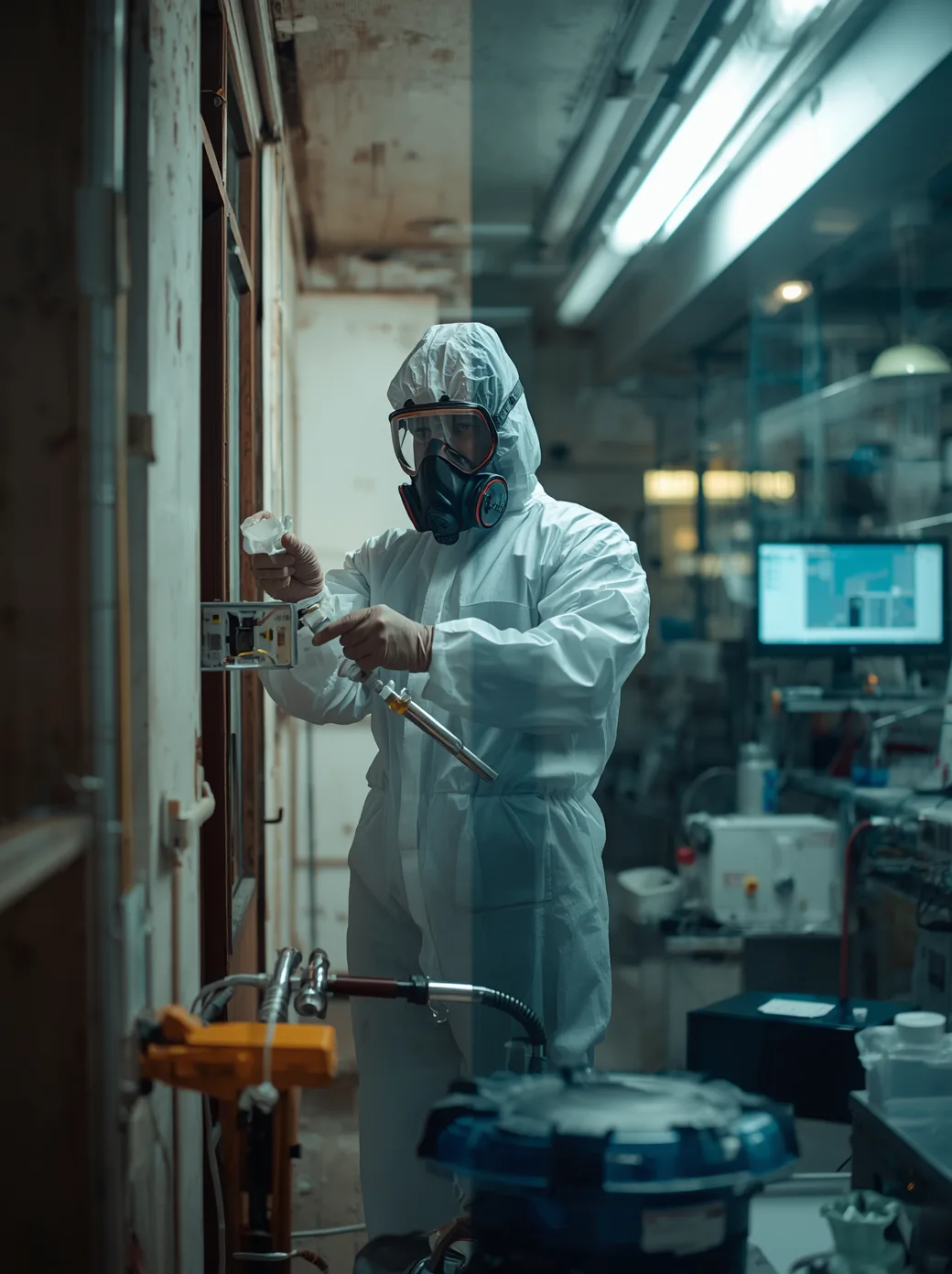
PCB Testing Method — NIOSH 5503
NIOSH 5503 is the validated analytical method for polychlorinated biphenyls in workplace air. Here's exactly what this method measures.
NIOSH 5503 — PCBs by GC/ECD
Air samples collected on OVS tubes (glass fiber filter + XAD-2 sorbent) or GFF cassettes capture both particulate and vapor-phase PCBs. The media is extracted with hexane and analyzed by gas chromatography with electron capture detection (GC/ECD) — a highly sensitive and selective technique for chlorinated compounds. Results are reported as individual Aroclor patterns and total PCBs.
Detection Limits & Sample Volume Planning
GC/ECD is among the most sensitive analytical techniques for chlorinated compounds. Here's the headroom you have versus OSHA, ACGIH, and EPA criteria — and the sample volumes that get you there.
| Sample Type | Reporting Limit | Reference Criterion | Recommended Sample Size | Headroom vs. Criterion |
|---|---|---|---|---|
| Air — OSHA PEL (Aroclor 1254) | ≈ 0.1 µg/sample | OSHA PEL · 0.5 mg/m³ | 240–480 L (4–8 hours @ 1 L/min) | ~2,400× below PEL |
| Air — ACGIH TLV (Aroclor 1254) | ≈ 0.1 µg/sample | ACGIH TLV · 0.5 mg/m³ | 480–960 L (full shift @ 1–2 L/min) | ~2,400× below TLV |
| Air — Indoor Air Assessment | ≈ 0.1 µg/sample | NIOSH REL · 0.001 mg/m³ | ≥ 960 L (extended sampling) | ~5× below REL |
Why GC/ECD Matters for PCBs
Electron capture detection is selectively responsive to halogenated compounds, giving GC/ECD a sensitivity advantage of 10–100× over GC/MS for PCBs. That sensitivity is what allows our lab to certify air results well below the ACGIH TLV (0.5 mg/m³, which matches the OSHA PEL) and confirm surface decontamination far below EPA's 10 µg/100 cm² high-contact cleanup standard.
For low-level indoor air assessments — schools, public buildings, and post-cleanup verifications — extending sample volume to 960 L or higher pushes the effective MDL into the low-µg/m³ range, suitable for occupant risk assessment.
Aroclor Pattern Identification by GC/ECD
PCBs were manufactured as commercial mixtures called Aroclors, each with a characteristic chlorine content indicated by the last two digits of the product number. GC/ECD produces unique chromatographic patterns for each Aroclor, allowing identification of which mixture(s) are present in a sample. Environmental weathering can alter patterns over time.
| Aroclor | Chlorine % | Typical Sources | Volatility | Common In |
|---|---|---|---|---|
| Aroclor 1016 | 41% | Capacitors, small electrical devices | Higher | Electrical manufacturing facilities |
| Aroclor 1248 | 48% | Transformers, heat transfer fluids | Moderate | Utility and industrial transformers |
Pattern Interpretation Notes
Environmental weathering alters Aroclor chromatographic patterns over time. Lighter (lower-chlorinated) congeners evaporate preferentially, leaving behind heavier congeners. A sample that originally contained Aroclor 1242 may appear more like 1254 or 1260 after decades of weathering in building caulk.
Mixed Aroclors are common in transformer oil and building materials. AGT Labs reports all Aroclor patterns detected plus total PCB concentration. When patterns are ambiguous due to weathering, our analysts note the interpretation and provide total PCB data for regulatory comparison.
NIOSH 5503 — Deliverables & Report Format
No surprises in your PCB testing report. Here's exactly what NIOSH 5503 IH testing analysis returns.
| Analysis Type | Method / Standard | Sample Media | Report Deliverable | Rush? |
|---|---|---|---|---|
| NIOSH 5503 — PCB Air | NIOSH 5503 · GC/ECD | OVS tube or GFF cassette | Individual Aroclor concentrations + total PCB (µg/m³) + OSHA PEL comparison | Yes |
Turnaround Times & Free Testing Kits
Every rush option and kit detail — clearly laid out before you submit your first sample to our IH testing lab.
PCB Monitoring Isn't One-and-Done
Set up a recurring program or standing account and we'll set your recurring submission calendar, hold your media, and apply volume pricing.
Free PCB Testing Kit Includes
- OVS tubes (GFF + XAD-2) for PCB air sampling — lot-certified
- Field blanks (10% QA compliance)
- Pre-paid UPS return shipping label (domestic)
- PCB Chain of Custody (COC) form — pre-numbered
- Calibrated personal sampling pump (rental available)
Kits ship via UPS Ground — order with 5 business days notice. Houston metro courier pickup available: (713) 453-6090.
Sampling Field Requirements
Incorrect sampling invalidates results and wastes project time. Follow these parameters to ensure every sample produces valid, defensible data.
From Sample Collection to Certified Report
Request Kit or COC
Call, email, or request PCB testing COC.
Collect Samples
Follow NIOSH 5503 parameters for air. Record locations, flow rates, and material descriptions on COC.
Ship to IH Lab
Ship via UPS. PCB samples logged same day if received before 2:00 PM CT.
GC/ECD Analysis at IH Lab
Gas chromatography with electron capture detection at our Houston IH testing facility. Aroclor pattern matching and total PCB calculation. No outsourcing.
Certified PCB Report
Results delivered with individual Aroclor concentrations, total PCB, OSHA PEL or EPA cleanup standard comparison, analyst signature, QA sign-off, and AIHA LAP-101470 accreditation.
Standards That Require Accredited Testing
Every AGT Labs report from our IH lab is structured to satisfy all applicable federal and Texas state regulatory requirements.
Who Relies on Our IH Testing Lab
Electrical Utilities
PCB transformer decommissioning, capacitor replacement, and switchgear maintenance expose workers to Aroclor-containing dielectric fluid. NIOSH 5503 personal monitoring during transformer draining, tank cutting, and PCB waste handling is essential for OSHA compliance.
Building Renovation
Air monitoring during construction and renovation work documents worker exposure.
Manufacturing
Legacy capacitor production facilities, hydraulic equipment manufacturing, and industrial sites with historical PCB use face ongoing contamination. Air monitoring documents current exposure levels.
Environmental Remediation
PCB-contaminated soil, sediment, and groundwater remediation projects require worker air monitoring. NIOSH 5503 personal and area monitoring during excavation, dredging, and material handling.
Schools & Public Buildings
EPA has identified PCB-containing caulk in many pre-1979 schools and public buildings. Indoor air testing documents occupant exposure in schools.
Shipbuilding & Marine
Legacy PCB-containing paints, sealants, and electrical equipment on vessels built before 1979 create exposure risks during ship repair, drydock maintenance, and decommissioning. IH monitoring per NIOSH 5503 required.
Waste Management & RCRA
Facilities handling PCB waste, PCB-contaminated materials, and TSCA-regulated equipment require worker air monitoring.
Federal & DoD Facilities
BRAC remediation, federal building decommissioning, and military installation cleanup projects require accredited PCB analytical data. Our AIHA IHLAP (LAP-101470) and ISO/IEC 17025:2017 accreditation supports air monitoring for legacy transformer projects and federal facility work.
Frequently Asked Questions
Questions answered by our accredited IH lab team.
What is PCB testing and why is it important?
What is NIOSH 5503 and how does it work?
What is the OSHA PEL for PCBs?
What is Aroclor pattern matching?
What is the turnaround time for PCB testing?
Is AGT Labs accredited for PCB testing?
How much does PCB testing cost?
Do I need PCB testing before building renovation?
What is the detection limit for PCB testing by GC/ECD?
How long are PCB samples stable in shipping?
Does AGT Labs perform PCB testing for federal projects and DoD facilities?
Can a single sample test for both PCBs and other GC-amenable compounds?
IH Testing Lab Serving Houston's Industries
AGT Labs is located at 10200 East Freeway, Suite 101, Houston TX 77029 — inside the Houston Ship Channel industrial corridor. As a full-service industrial hygiene testing lab, all analyses are performed in-house. No outsourcing, no send-outs. Samples received before 2:00 PM CT logged same day.
Accredited
Identified by GC/ECD
TAT Available
10200 E. Freeway
Need an Accredited IH Lab for PCB Testing?
AIHA IHLAP-accredited PCB testing lab · LAP-101470 · ISO/IEC 17025:2017 · NIOSH 5503 · GC/ECD · Aroclor pattern matching · Air testing · Rush same-day available · 10200 East Freeway, Houston TX 77029. Ask about recurring monitoring programs and volume pricing for multi-phase PCB projects and ongoing compliance sampling.