
BTEX Testing Lab Houston TX — Benzene, Toluene, Ethylbenzene & Xylenes
AIHA LAP accredited (LAP-101470) BTEX testing lab serving Houston and the Gulf Coast. Personal BTEX testing by NIOSH 1501 GC-FID for OSHA benzene compliance under 29 CFR 1910.1028, NIOSH 1500 total hydrocarbon analysis from the same charcoal tube, and EPA Method 325B refinery fenceline benzene analysis. Every BTEX testing sample is analysed in-house at our Houston TX industrial hygiene laboratory — no subcontracting, no send-outs.
Benzene has no safe exposure level — OSHA's action level is 0.5 ppm, and petrochemical operations routinely exceed it without active monitoring
Benzene Is an IARC Group 1 Carcinogen
Benzene is a confirmed human carcinogen — the highest IARC classification — and is directly linked to acute myeloid leukemia (AML) and other blood cancers. OSHA's Benzene Standard (29 CFR 1910.1028) requires documented BTEX testing any time exposures may exceed the 0.5 ppm action level. There is no recognized safe threshold.
OSHA Enforcement Is Active in Petrochemical
Benzene and BTEX violations are among the most frequently cited in refinery, chemical plant, and petroleum handling inspections across Texas. Without documented personal exposure records from an accredited BTEX testing lab, any OSHA inspection following a health incident creates immediate citation risk. Monitoring records from an AIHA LAP accredited laboratory are your legal shield.
Toluene and Xylenes Are Not Harmless By-Products
Benzene attracts the attention, but toluene, ethylbenzene and xylenes are central nervous system depressants with their own PELs — and ACGIH sets toluene and ethylbenzene TLVs ten and five times lower than the OSHA figure. Speciated BTEX testing quantifies all four separately so no compound is assessed against the wrong limit.
Total Hydrocarbon Readings Conceal Benzene
A direct-reading meter or a total hydrocarbon result that sits comfortably under the 500 ppm Stoddard solvent PEL tells you nothing about benzene, which typically makes up 1–5% of petroleum distillate vapour. At 300 ppm total, that is potentially 3–15 ppm benzene — many times the PEL. Only speciated BTEX testing resolves it.
What Is BTEX Testing?
BTEX testing is targeted air monitoring for four aromatic hydrocarbons — benzene, toluene, ethylbenzene and xylenes — in workplace air. A calibrated personal pump draws air through an activated charcoal tube clipped in the worker's breathing zone across a full shift. At the laboratory the tube is desorbed with carbon disulfide and each compound is quantified individually by GC-FID under NIOSH Method 1501.
The word that matters is individually. BTEX testing reports benzene as its own number rather than folding it into a total hydrocarbon sum — which is precisely what OSHA 29 CFR 1910.1028 requires, because benzene's action level of 0.5 ppm sits hundreds of times below the PEL for the petroleum distillate mixtures it is usually found in.
- NIOSH 1501 GC-FID — the method OSHA expects for benzene records
- Personal 8-hour TWA and 15-minute STEL sampling supported
- All four BTEX compounds quantified from a single charcoal tube
- Results compared to OSHA PEL, ACGIH TLV and NIOSH REL
- Analysed in-house at our AIHA LAP accredited Houston BTEX testing lab
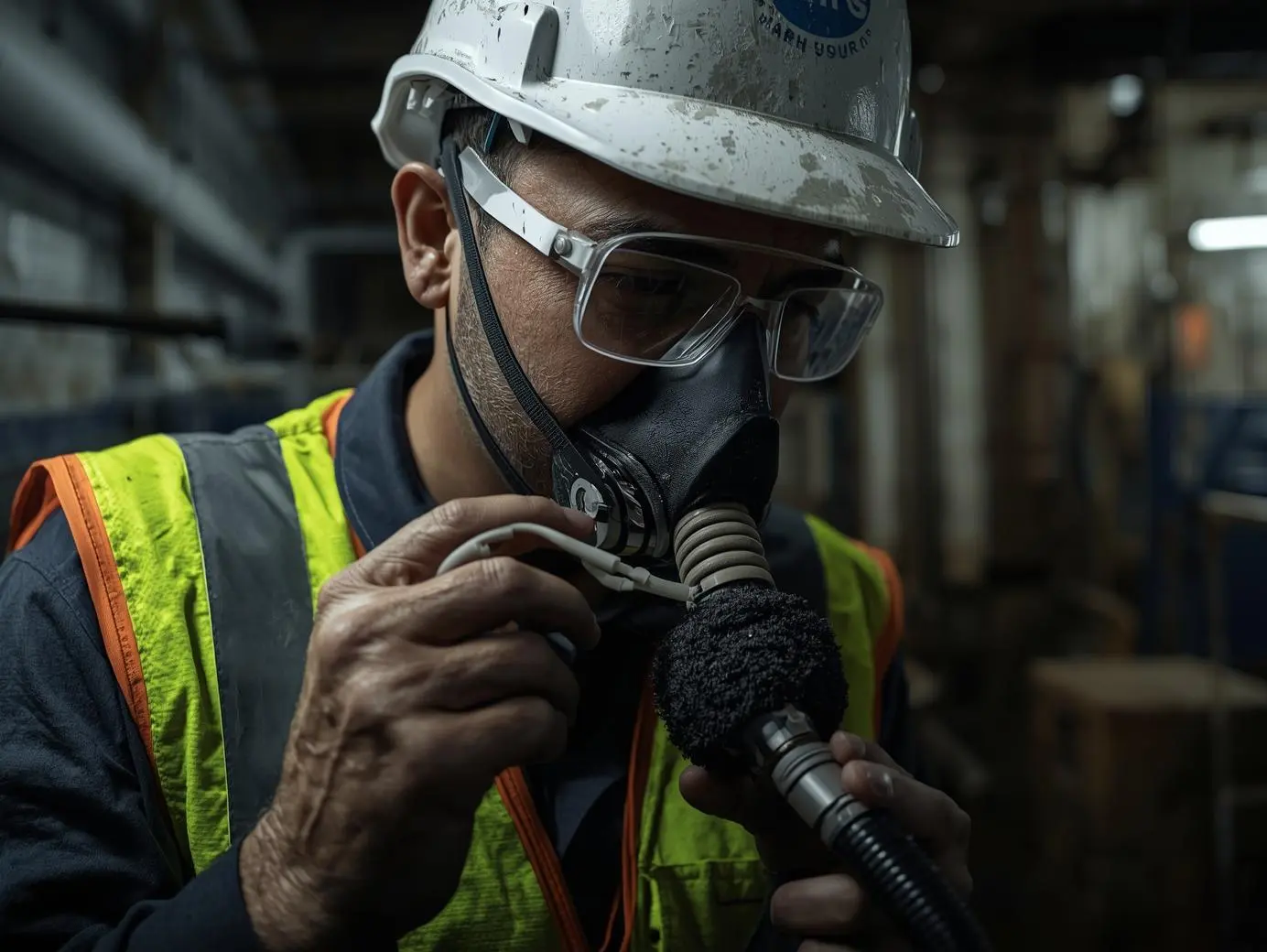
BTEX Testing — Benzene, Toluene, Ethylbenzene & Xylenes
Targeted personal exposure monitoring by NIOSH 1501 charcoal tube, run in-house at our AIHA LAP accredited BTEX testing lab to document OSHA PEL compliance in petrochemical and refining operations.
OSHA PEL, Action Level, ACGIH TLV & NIOSH REL — All Compared
Benzene is the reason BTEX testing programs exist. Its regulatory limits are among the most stringent for any common workplace chemical — and they differ significantly between OSHA, ACGIH, and NIOSH. AGT Labs reports against all three.
Why Benzene Dominates BTEX Testing Programs
Benzene is present in virtually every petroleum product, from crude oil and gasoline to refinery process streams and aromatic solvents. Unlike toluene and xylenes — which are irritants and CNS depressants — benzene is a bone marrow toxin and confirmed human carcinogen that causes acute myeloid leukemia (AML) and aplastic anemia at long-term exposures below 1 ppm. The NIOSH REL of 0.1 ppm reflects this carcinogenicity — it is 10 times more protective than OSHA's PEL. AGT Labs uses NIOSH 1501 GC-FID BTEX testing for routine benzene compliance monitoring, with detection limits well below the OSHA action level, ensuring all exceedances are captured and reported with full confidence.
BTEX Exposure Limits — Benzene, Toluene, Ethylbenzene & Xylenes
Speciated BTEX testing exists because these four compounds carry wildly different limits. Assessing them as a group, or against a single mixture PEL, means at least one compound is being judged against the wrong number.
| BTEX Compound | OSHA PEL (8-hr TWA) | OSHA STEL / Ceiling | ACGIH TLV | NIOSH REL | Primary Health Concern |
|---|---|---|---|---|---|
| Benzene | 1 ppm · AL 0.5 ppm | 5 ppm STEL | 0.5 ppm | 0.1 ppm | IARC Group 1 carcinogen — AML, aplastic anemia |
| Toluene | 200 ppm | 300 ppm ceiling | 20 ppm | 100 ppm | CNS depression, developmental toxicity |
| Ethylbenzene | 100 ppm | — | 20 ppm | 100 ppm | IARC Group 2B, ototoxicity, irritation |
| Xylenes (o/m/p) | 100 ppm | — | 100 ppm | 100 ppm | CNS depression, eye and respiratory irritation |
Reference values only. Verify current OSHA, ACGIH and NIOSH values against the governing standard for your jurisdiction and application. Note the gap between the OSHA PEL and ACGIH TLV for toluene (10×) and ethylbenzene (5×) — every AGT Labs BTEX testing report carries all three comparisons.
BTEX Testing Lab Methods — NIOSH 1501 & EPA 325B
NIOSH 1501 — BTEX Testing by GC-FID
The occupational standard for personal 8-hour TWA BTEX testing — the method OSHA expects for benzene PEL documentation. Uses activated charcoal tubes with a personal sampling pump, adsorbing aromatic hydrocarbons during a full work shift, then desorbing with CS₂ for GC-FID analysis.
EPA Method 325B — Fenceline Benzene Analysis
EPA's Refinery Sector Rule (40 CFR Part 63 Subpart CC) requires continuous fenceline benzene monitoring using passive sorbent tubes deployed for two-week integrated sampling periods along facility perimeters. AGT Labs supports these programs with passive tube supply, analysis, and result reporting.
BTEX Testing Field Protocol — NIOSH 1501 Charcoal Tube
Total Hydrocarbons Monitoring — NIOSH 1500
Aggregate aliphatic and aromatic hydrocarbon monitoring for Stoddard solvent, mineral spirits, naphtha, and petroleum distillate workplaces — GC-FID analysis from the same charcoal tube as BTEX testing. Total hydrocarbon results do not replace compound-specific BTEX testing where benzene may be present.
What Is Total Hydrocarbon Monitoring and When Is It Required?
Total hydrocarbon (THC) monitoring measures the combined mass concentration of all aliphatic and aromatic hydrocarbons present in breathing-zone air as a single aggregate value — without identifying each individual compound. It applies when the OSHA PEL is set for the total petroleum distillate mixture rather than individual compounds.
NIOSH 1500 Reports a Sum — BTEX Testing by NIOSH 1501 Reports Each Compound
NIOSH 1500 uses a non-polar GC column and GC-FID detection to report all captured hydrocarbons as a single sum in ppm or mg/m³. This is the correct approach when the regulatory PEL applies to the total mixture — Stoddard solvent (500 ppm), VM&P naphtha, mineral spirits, or kerosene — and the individual compound profile is not needed for compliance.
Both NIOSH 1500 and NIOSH 1501 BTEX testing use the same 100/50 mg activated charcoal tube collected at the same flow rate. Both can be run from the same field sample — the laboratory splits the CS₂ extract for both analyses. One tube collection, two compliance results.
- Same charcoal tube as NIOSH 1501 BTEX testing — no second tube required
- GC-FID with non-polar column — all carbons summed as one value
- Result compared to Stoddard solvent PEL of 500 ppm TWA
- Applicable to mineral spirits, VM&P naphtha, kerosene, and petroleum distillates
- Always order alongside NIOSH 1501 BTEX testing in any petroleum product environment
Total Hydrocarbon OSHA PELs — Petroleum Distillates
| Petroleum Distillate | OSHA PEL (8-hr TWA) | NIOSH REL | NIOSH Method | Key Industries |
|---|---|---|---|---|
| Stoddard Solvent | 500 ppm (2,900 mg/m³) | 350 mg/m³ | NIOSH 1500 | Dry cleaning, degreasing, printing |
| Mineral Spirits | 100 ppm | 350 mg/m³ | NIOSH 1500 | Painting, surface prep, cleaning |
| VM&P Naphtha | 300 ppm (1,350 mg/m³) | Not established | NIOSH 1500 | Coatings, adhesives, rubber |
| Kerosene / Jet Fuel | No OSHA PEL (use ACGIH TLV 200 mg/m³) | Not established | NIOSH 1500 | Aviation, fuel handling, heating |
| n-Hexane (individual) | 500 ppm | 50 ppm (neurotoxin) | NIOSH 1500 / 1501 | Adhesives, shoe manufacturing, lab |
| Benzene (in petroleum distillate) | 1 ppm PEL · 0.5 ppm AL | 0.1 ppm (carcinogen) | NIOSH 1501 BTEX testing — mandatory | All petroleum product environments |
A total hydrocarbon result below the 500 ppm Stoddard solvent PEL does not mean benzene is below its 0.5 ppm action level. Benzene typically represents 1–5% of total petroleum distillate vapour. At a total THC reading of 300 ppm, that could mean 3–15 ppm benzene — three to fifteen times the OSHA PEL. NIOSH 1501 speciated BTEX testing is mandatory in any petroleum product environment, regardless of how low the total hydrocarbon reading appears. Order both methods from the same charcoal tube.
NIOSH 1500 vs NIOSH 1501 BTEX Testing — When to Order Each
Both methods use the same charcoal tube — the decision is made at the COC stage, not the field stage. In petroleum product environments, both should always be specified together.
How to Choose a BTEX Testing Lab for OSHA Compliance
Not every laboratory that offers BTEX testing holds accreditation for the specific method your project requires. Four checks before you ship samples.
Need broad VOC screening rather than BTEX compliance?
BTEX testing answers a specific occupational question: how much benzene, toluene, ethylbenzene and xylene did this worker breathe. When you don't yet know which compounds are present — vapour intrusion, indoor air quality, ambient monitoring, unidentified odour complaints — a whole-air SUMMA canister analysed by GC-MS is the right tool, covering a broad VOC list in a single run. That work lives on a separate page.
When BTEX Testing Is the Required Method
Three scenarios where speciated BTEX testing — not a total hydrocarbon sum and not a direct-reading meter — is what the regulation expects.
Refinery / Petrochemical Benzene Compliance
Workers in petroleum refining, chemical production, and fuel transfer operations are commonly exposed to benzene above the OSHA action level of 0.5 ppm. OSHA's Benzene Standard requires documented personal monitoring, medical surveillance, and records retention.
Solvent Degreasing & Surface Coating Operations
Industrial cleaning and coating operations generate toluene, xylenes and other aromatic solvents that require personal exposure monitoring against compound-specific OSHA PELs — and frequently contain benzene as a trace constituent of the base petroleum distillate.
EPA Fenceline Monitoring — Refineries
EPA's Refinery Sector Rule (40 CFR 63 Subpart CC amendments) requires fenceline benzene monitoring using passive sorbent tubes deployed at facility perimeters for two-week integrated sampling periods. Triggers corrective action at ≥9 µg/m³ annual average.
BTEX Testing Turnaround & Sampling Media
BTEX Testing Isn't One-and-Done
OSHA 1910.1028 requires repeat monitoring at least every 6 months once exposures reach the 0.5 ppm action level, and refinery fenceline programs (EPA 325B) run on continuous two-week cycles. Set up a recurring program and we'll schedule your rounds, supply charcoal tubes and pumps, and apply standing-account volume pricing.
BTEX Testing Sampling Kits
- Lot-certified activated charcoal tubes (100/50 mg) for NIOSH 1501 BTEX testing
- Calibrated low-flow personal pumps (50–200 mL/min) — loaner program
- Field blank charcoal tubes (10% QA compliance)
- Passive sorbent tubes for EPA Method 325A fenceline deployment
- Tenax TA / Carbopack thermal desorption tubes
- Passive OVM diffusion badges (3M 3500 series) for screening
- Industrial Hygiene Chain of Custody (COC) with pre-coded analytes
- Pre-paid UPS return shipping label with cold pack packaging
Who Relies on Our BTEX Testing Lab
Petroleum Refining & Petrochemical Manufacturing
The Houston Ship Channel complex houses one of the world's largest concentrations of petroleum and chemical facilities. Routine BTEX testing (NIOSH 1501) for OSHA 1910.1028 compliance, turnaround and unit shutdown work, and maintenance operations in benzene-rich process environments.
Oil & Gas Operations
Upstream oil and gas — worker personal BTEX testing at well pads, tank batteries, produced water handling facilities, and compression stations, where benzene exposure during gauging and manual tank operations routinely exceeds the action level.
Fuel Terminals, Tank Cleaning & Marine Transfer
Tank gauging, confined space entry for tank cleaning, loading rack operations, and marine product transfer generate short, intense benzene exposures that a full-shift average can dilute. Both TWA and 15-minute STEL BTEX testing are typically required.
Industrial Coating, Printing & Cleaning
Solvent-based coatings, printing inks, and parts-cleaning operations generate toluene and xylene vapours requiring personal exposure monitoring against compound-specific PELs. NIOSH 1501 BTEX testing paired with NIOSH 1500 total hydrocarbons from a single charcoal tube.
Rubber, Adhesives & Foundry Operations
Rubber compounding, adhesive application, shoe manufacturing, and foundry core-making use aromatic and petroleum distillate solvents with a long history of benzene content. Speciated BTEX testing separates benzene from the bulk solvent for accurate PEL comparison.
IH Consultants & EH&S Compliance Programs
Industrial hygiene consulting firms managing multi-site BTEX testing programmes across refineries, chemical plants, and mixed industrial facilities. AGT Labs provides AIHA LAP accredited, OSHA-defensible NIOSH 1501 data with tri-limit reporting (OSHA/ACGIH/NIOSH) and a dedicated project coordinator.
BTEX Testing — Frequently Asked Questions
What is BTEX testing?
How do I choose a BTEX testing lab for OSHA compliance?
What is the OSHA PEL for benzene in air?
What are the exposure limits for toluene, ethylbenzene and xylenes?
What is the difference between NIOSH 1501 and NIOSH 1500?
When do I need BTEX testing rather than general VOC testing?
Does AGT Labs provide charcoal tubes and personal sampling pumps for BTEX testing?
How long are charcoal tube BTEX samples valid after collection?
Can you test for benzene at refineries for EPA fenceline monitoring?
Is AGT Labs accredited for BTEX testing?
Need an Accredited BTEX Testing Lab?
AIHA LAP Accredited (LAP-101470) · ISO/IEC 17025 · NIOSH 1501 BTEX testing · NIOSH 1500 total hydrocarbons · EPA Method 325B fenceline benzene · GC-FID in-house · OSHA 1910.1028 compliance · Houston TX. Ask about recurring monitoring programs and volume pricing for ongoing benzene compliance sampling.