
Mercury Vapor Testing Lab Houston, TX — NIOSH 6009 & CVAA Analysis
Houston's AIHA IHLAP-accredited mercury vapor testing lab at 10200 East Freeway, Suite 101, Houston TX 77029 — continuously accredited since February 2000. NIOSH 6009 (CVAA) mercury vapor analysis for workplace air monitoring, OSHA ID-140 mercury vapor method, and OSHA ID-145 inorganic mercury compound analysis — all performed in-house by Cold Vapor Atomic Absorption Spectroscopy. AIHA LAP-101470 · NVLAP 101793-0 · ISO/IEC 17025:2017. Petroleum mercury removal units, chlor-alkali plants, dental offices, fluorescent lamp recycling, and Houston Ship Channel mercury exposure monitoring. Samples received before 2:00 PM CST logged same day. Rush 24-hour turnaround available.
Why accredited mercury analysis protects your workers
OSHA Ceiling Limit Compliance
The OSHA PEL for mercury vapor is 0.1 mg/m³ as a ceiling limit — meaning exposure must never exceed this value at any point during the work shift. CVAA analysis from an IHLAP-accredited IH testing lab documents compliance.
Central Nervous System Protection
Chronic mercury vapor inhalation causes tremors, memory loss, personality changes, and kidney damage. Even low-level exposures below the OSHA ceiling can produce subclinical neurological effects — making accurate NIOSH 6009 monitoring critical.
Environmental Liability (D009)
Mercury is EPA-listed hazardous waste (D009) under RCRA. Spills, contaminated building materials, and improperly decommissioned equipment create cleanup liability. Accredited IH lab testing documents baseline and clearance concentrations.
Legal & Insurance Protection
Documented mercury exposure monitoring from an AIHA IHLAP-accredited laboratory (LAP-101470, accredited since 2000) provides legally defensible records for workers' compensation, regulatory inspections, and litigation support.
What Is Mercury Vapor Testing?
Mercury vapor testing — formally known as elemental mercury exposure testing — is an industrial hygiene (IH) air monitoring service that measures the concentration of elemental mercury (Hg⁰) and inorganic mercury compounds in workplace air using Cold Vapor Atomic Absorption Spectroscopy (CVAA). Mercury is unique among metals — it is liquid at room temperature and continuously releases invisible, odorless vapor that workers inhale without awareness. Because mercury vapor is not detectable by human senses, accredited industrial hygiene testing is the only reliable way to verify exposure levels.
As Houston's AIHA IHLAP-accredited mercury vapor testing lab and trusted IH testing lab, AGT Labs performs all NIOSH 6009, OSHA ID-140, and OSHA ID-145 analyses in-house by CVAA at our Houston facility (LAP-101470, continuously accredited since February 2000). No outsourcing, no subcontracting. When your chlor-alkali plant, dental office, petroleum mercury removal unit, or mercury spill remediation project needs defensible exposure data, you get results from the accredited IH lab that actually ran the samples.
- Personal breathing zone mercury vapor monitoring — NIOSH 6009 CVAA
- Area mercury vapor monitoring for spill assessment and clearance verification
- OSHA ID-140 mercury vapor analysis for OSHA compliance documentation
- OSHA ID-145 inorganic mercury compound analysis (particulate + vapor)
- Post-remediation clearance air testing for mercury spill cleanup projects
- Surface wipe sampling for mercury contamination assessment
- Pre-demolition mercury screening for industrial facilities
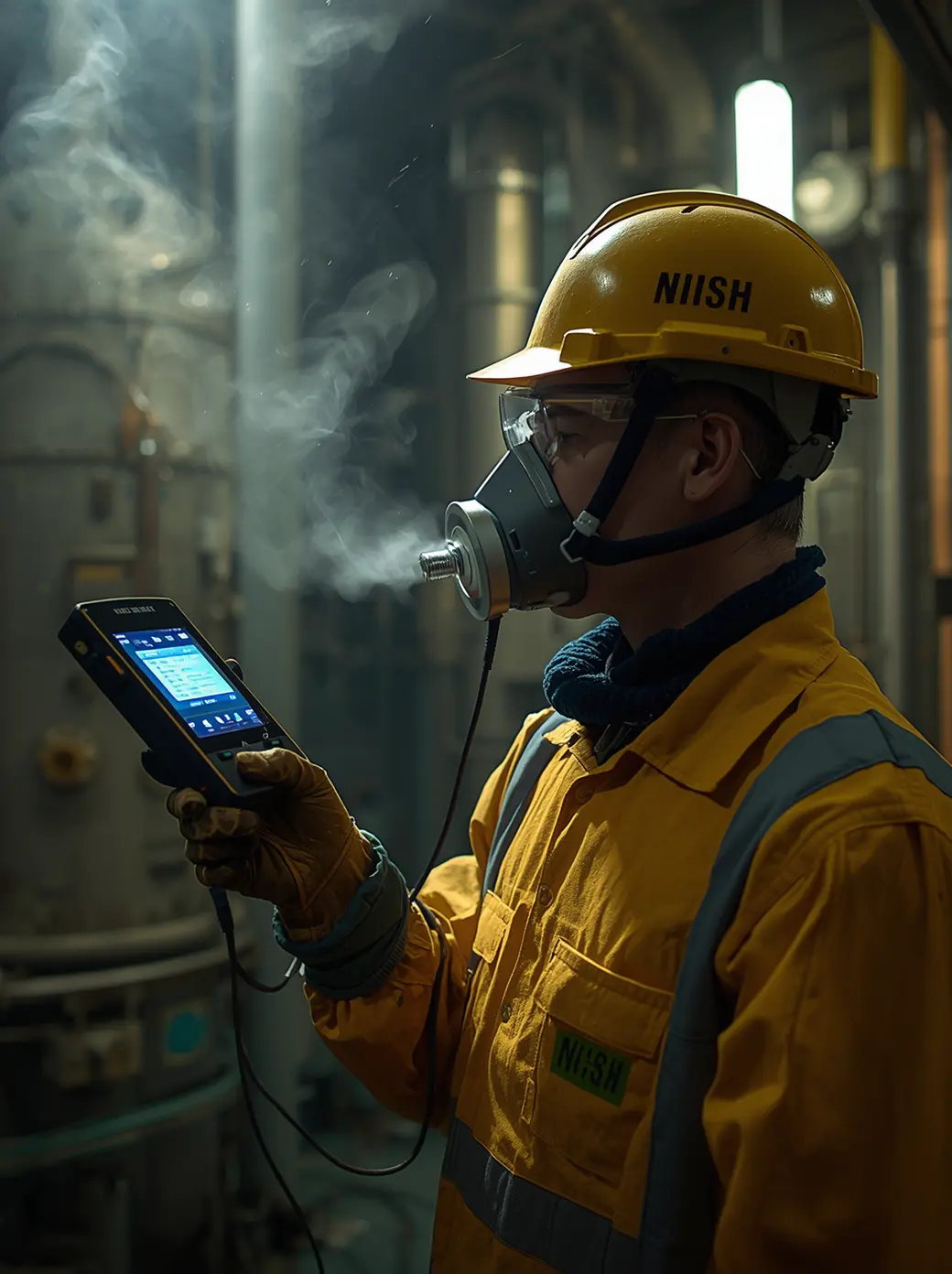
Three Forms of Mercury — Three Different Methods
Mercury exists in workplace environments in three chemically distinct forms. Each requires a different sampling and analytical approach. Choosing the wrong method means missing the actual exposure.
The metallic mercury in thermometers, dental amalgam, chlor-alkali cells, and laboratory instruments. Continuously evaporates at room temperature into invisible, odorless vapor. Sample with NIOSH 6009 or OSHA ID-140 — hopcalite sorbent tube + CVAA analysis. Crosses the alveolar-capillary membrane and the blood-brain barrier when inhaled.
Mercury salts and oxides found in mercury recycling, chemical manufacturing, and mining operations. Often coexist with elemental mercury vapor. Sample with OSHA ID-145 — dual-stage sampling train (MCE filter for particulate + charcoal tube for vapor). Causes acute kidney damage at high exposures.
Methylmercury and dimethylmercury form via biological methylation of inorganic mercury — primarily an environmental/food-chain concern rather than a routine industrial hygiene exposure. Workplace exposure occurs in laboratories handling organomercury reagents. Specialty analytical methods required — contact AGT Labs to discuss project requirements.
Where Mercury Hides in Buildings & Industry
Mercury is present in far more workplaces than most people realize. These are the primary source categories that generate mercury vapor exposure — and where NIOSH 6009 monitoring is essential.
Thermometers & Instruments
Laboratories, medical facilities, and HVAC systems still contain mercury thermometers, sphygmomanometers, and barometers. Breakage releases liquid mercury that vaporizes continuously at room temperature — a single broken thermometer can contaminate an entire room above the OSHA ceiling limit.
Fluorescent Lamps & HID Lighting
Every fluorescent tube and HID lamp contains 3–15 mg of mercury. Lamp recycling facilities, breakage during retrofit projects, and improper disposal release mercury vapor. Crushing operations without proper ventilation routinely exceed OSHA ceiling limits.
Chlor-Alkali Plants
Mercury cell chlor-alkali process uses tons of liquid mercury as a cathode for electrolytic chlorine and caustic soda production. Cell rooms, end boxes, hydrogen handling areas, and decomposer rooms are the highest-exposure zones in any industry. Houston Ship Channel hosts several of these facilities.
Dental Offices
Dental amalgam (silver fillings) is approximately 50% mercury by weight. Amalgam preparation, placement, removal, and polishing release mercury vapor directly into the dental operatory. Amalgam traps, storage containers, and autoclave sterilization are additional sources.
Industrial Equipment
Manometers, barometers, pressure switches, tilt switches, and float switches in industrial and marine settings contain liquid mercury. Equipment maintenance, decommissioning, and disposal release vapor. Legacy equipment in refineries and chemical plants is a common source.
Gold & Silver Refining
Mercury amalgamation is still used in artisanal and small-scale gold mining (ASGM) worldwide. Mercury is mixed with gold-bearing ore, then heated to vaporize the mercury — leaving gold behind. Retort and refining operations generate extreme mercury vapor concentrations.
Building Demolition
Older buildings contain hidden mercury sources: thermostats, silent wall switches, medical and laboratory equipment, boiler room instruments, and electrical switchgear. Pre-demolition mercury screening by an accredited IH lab prevents uncontrolled mercury releases during demolition.
Mercury Testing Methods — NIOSH 6009, OSHA ID-140 & OSHA ID-145
Three validated methods for mercury vapor and inorganic mercury analysis. Each targets different mercury species and sampling configurations. Here's exactly what each method measures, with detection limits and recommended sample volumes.
NIOSH 6009 — Mercury Vapor by CVAA
The primary occupational exposure method for elemental mercury vapor. Air drawn through hopcalite sorbent tubes that oxidize and trap mercury vapor. Collected mercury is digested and analyzed by CVAA at 253.7 nm. The most widely used method for mercury vapor personal monitoring in industrial hygiene.
OSHA ID-140 — Mercury Vapor by CVAA
OSHA's validated method for elemental mercury vapor assessment. Same hopcalite sorbent tube collection as NIOSH 6009 with OSHA-specific analytical procedures and reporting structure. Use when documentation must reference OSHA enforcement methods directly. Results comparable to OSHA PEL ceiling of 0.1 mg/m³.
OSHA ID-145 — Inorganic Mercury by CVAA
Covers both particulate inorganic mercury compounds and mercury vapor using a two-stage sampling train — MCE filter (particulate) plus charcoal sorbent tube (vapor). Essential for workplaces where both forms coexist: mercury recycling, thermometer manufacturing, chlor-alkali cell decommissioning, mercury salt handling.
Which method should I order?
Detection Limits, Sample Volumes & Quantification
Sample volume drives detection capability. The longer you sample, the lower the air concentration you can quantify. Use this guidance to design your sampling plan.
| Sampling Scenario | Flow / Time | Total Volume | Reportable Range | Best for |
|---|---|---|---|---|
| Ceiling sample (15-min) | 0.20 L/min × 15 min | 3 L | ~0.033 – 1.0+ mg/m³ | OSHA ceiling determination, peak exposure events |
| Short-task sample (1-hr) | 0.20 L/min × 60 min | 12 L | ~0.008 – 0.5 mg/m³ | Maintenance turnarounds, amalgam removal, short tasks |
| Half-shift TWA | 0.20 L/min × 4 hr | 48 L | ~0.002 – 0.1 mg/m³ | Half-shift personal monitoring |
| Full-shift TWA (8-hr) | 0.20 L/min × 8 hr | 96 L | ~0.001 – 0.05 mg/m³ | OSHA TWA determination, ACGIH TLV comparison (0.025 mg/m³) |
| Low-level IAQ / clearance | 0.20 L/min × 8 hr | 96 L | down to ~0.001 mg/m³ | Post-spill clearance, IAQ investigations, ATSDR action level (0.0002 mg/m³) |
Reading the math: Reportable range = LOQ (0.10 µg) ÷ sample volume (L), converted to mg/m³. A 96-L full-shift sample with a 0.10 µg LOQ resolves to ~0.001 mg/m³ — sufficient for ATSDR action level comparison and post-remediation clearance work. Talk to our IHLAP-accredited analysts at (713) 453-6090 if you need to push the detection limit lower than the table shows.
Why CVAA — Not ICP-MS — for Mercury Vapor
Mercury is one of the few metals where ICP-MS isn't the right answer. Here's the technical reasoning every industrial hygienist and EHS manager should understand.
| Performance Criterion | CVAA (NIOSH 6009 / OSHA ID-140 / ID-145) | ICP-MS / ICP-AES (NIOSH 7300 / 7303) |
|---|---|---|
| Mercury sensitivity | Excellent — sub-µg/L detection at 253.7 nm | Adequate but limited by memory effects |
| Memory effects | None — CVAA isolates Hg before measurement | Significant — Hg sticks to ICP torch & tubing, contaminating subsequent samples |
| Spectral interferences | None at 253.7 nm | Possible from W, Os, and other elements at Hg masses |
| Method recognition | Specifically called out in NIOSH 6009 & OSHA ID-140/145 | Multi-element panel only — not Hg-specific |
| OSHA / NIOSH compliance documentation | Method-of-record for mercury vapor | Acceptable for 30-element panel screens, not Hg-specific |
| Cost per Hg-only result | Lower — single-element optimized | Higher unless ordered as part of full panel |
Bottom line: When mercury is the analyte of interest, CVAA is the regulator-recognized, technically superior choice. AGT Labs runs CVAA in-house at our Houston IH testing lab — no outsourcing, no method substitution. If you also need a 30-element ICP panel for the same project (e.g., welding fume + Hg), we run mercury on the dedicated CVAA instrument and the other metals on ICP/AES — never compromising mercury sensitivity by lumping it into the ICP panel.
Every Mercury Method, Every Standard, Every Deliverable
No surprises in your mercury testing report. Here's exactly what each CVAA IH testing analysis returns — methods, media, and deliverables side by side.
| Analysis Type | Method / Standard | Sample Media | Report Deliverable | Rush? |
|---|---|---|---|---|
| NIOSH 6009 — Hg Vapor | NIOSH 6009 · CVAA | Hopcalite sorbent tube (100/50mg) | Mercury concentration (mg/m³) + OSHA ceiling comparison | Yes |
| OSHA ID-140 — Hg Vapor | OSHA ID-140 · CVAA | Hopcalite sorbent tube (100/50mg) | Mercury concentration (mg/m³) + OSHA PEL comparison | Yes |
| OSHA ID-145 — Inorganic Hg | OSHA ID-145 · CVAA | MCE filter + charcoal tube | Particulate + vapor Hg (mg/m³) + total | Limited |
| Mercury Surface Wipe | NIOSH 6009 modified · CVAA | Ghost Wipe / Whatman smear tab | Mercury surface loading (µg/100 cm²) | Yes |
Mercury Spill Response & Clearance Protocol
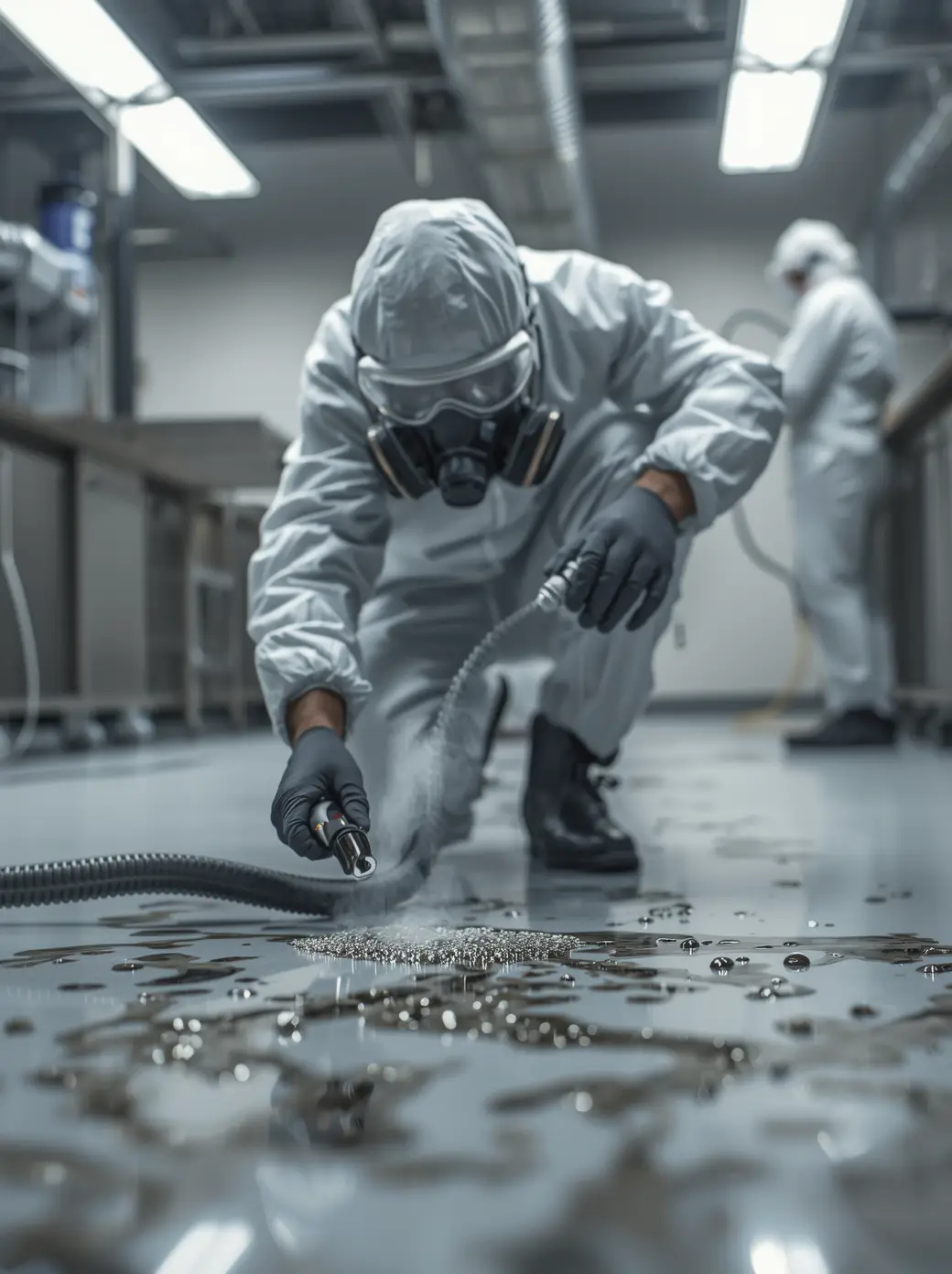
Mercury spills — from broken thermometers to industrial process releases — create invisible vapor hazards that persist until all liquid mercury is removed and surfaces are decontaminated. A structured spill response and clearance protocol ensures worker safety and regulatory compliance at every stage.
Pre-remediation air monitoring establishes baseline vapor concentrations. During cleanup, personal NIOSH 6009 monitoring protects remediation workers. Post-remediation clearance testing verifies that mercury vapor concentrations have returned to safe levels before reoccupancy. Surface wipe sampling for mercury complements air monitoring by quantifying residual mercury contamination on floors, walls, equipment surfaces, and HVAC components.
- Phase 1 — Assessment: Pre-remediation baseline air monitoring (NIOSH 6009 CVAA) plus surface wipe sampling to map contamination extent
- Phase 2 — Worker Protection: Personal exposure monitoring during mercury cleanup operations — real-time and integrated sampling
- Phase 3 — Clearance: Post-remediation clearance air testing at breathing zone height for reoccupancy determination
- Phase 4 — Verification: Mercury surface wipe sampling — Ghost Wipe or smear tab method — on floors, walls, and HVAC components
- HVAC and ductwork mercury contamination assessment — mercury vapor migrates through ventilation systems
- Results compared to OSHA ceiling (0.1 mg/m³), ATSDR MRL (0.0002 mg/m³), or project-specific clearance criteria
Turnaround Times & Free Testing Kits
Every rush option and kit detail — clearly laid out before you submit your first sample to our IH testing lab.
Free Mercury Testing Kit Includes
- Hopcalite sorbent tubes (NIOSH 6009 / OSHA ID-140) — lot-certified
- MCE filter cassettes + charcoal backup tubes (OSHA ID-145)
- Mercury surface wipe media (Ghost Wipes)
- Field blank sorbent tubes (10% QA compliance)
- Pre-paid UPS return shipping label (domestic)
- Mercury Chain of Custody (COC) form — pre-numbered
- Calibrated personal sampling pump (rental available)
Kits ship via UPS Ground — order with 5 business days notice. Houston metro courier pickup available: (713) 453-6090.
Sampling Field Requirements
Incorrect sampling invalidates results and wastes project time. Follow these parameters to ensure every sample produces valid, defensible data.
From Sample Collection to Certified Report
Request Kit or COC
Call, email, or download the mercury testing COC. Hopcalite and MCE kits ship free with 5 days notice.
Collect Samples
Follow the NIOSH 6009 or OSHA ID-145 field parameters above. Seal all sorbent tubes and cassettes immediately. Record flow rates on COC.
Ship to IH Lab
Ship via UPS or schedule Houston metro courier pickup. Mercury samples logged same day if received before 2:00 PM CST.
CVAA Analysis at IH Lab
Cold Vapor Atomic Absorption analysis performed by IHLAP-accredited analysts at our Houston IH testing facility. No outsourcing.
Certified Mercury Report
Results delivered via secure portal with method references, concentration data, OSHA PEL comparison, analyst signature, QA sign-off, and AIHA LAP-101470 accreditation — accepted by OSHA, EPA, and state programs.
Standards That Require Accredited Mercury Testing
Every AGT Labs report from our IH lab is structured to satisfy all applicable federal, Texas state, and local regulatory requirements.
Who Relies on Our Mercury Vapor Testing Lab
Petroleum & Natural Gas
Mercury is a trace contaminant in natural gas and crude oil processed at Houston Ship Channel refineries and Gulf Coast gas plants. Mercury Removal Unit (MRU) catalyst replacement, decommissioning, and turnaround maintenance create high-exposure events. NIOSH 6009 personal monitoring documents worker exposure during MRU work.
Chlor-Alkali Plants
Mercury cell chlor-alkali process releases mercury vapor in cell rooms, hydrogen handling areas, and maintenance zones. NIOSH 6009 personal monitoring is critical during cell work, brine handling, and maintenance turnarounds in Houston Ship Channel facilities. OSHA ID-145 captures both vapor and particulate Hg in cell decommissioning.
Dental Offices & Texas Medical Center
Dental amalgam preparation, placement, and removal release mercury vapor. AGT Labs serves Houston-area dental practices including Texas Medical Center clinics, dental schools, and private practitioners. NIOSH 6009 monitoring for operatories, amalgam storage, and autoclave rooms documents OSHA 1910.1000 and Texas State Board of Dental Examiners compliance.
Thermometer & Instrument Manufacturing
Facilities producing or decommissioning mercury thermometers, barometers, manometers, and laboratory instruments face continuous mercury vapor exposure. OSHA ceiling monitoring required during any process that heats or agitates liquid mercury.
Fluorescent Lamp Recycling
Lamp crushing and recycling operations release mercury vapor from broken fluorescent tubes (3–15 mg Hg per tube). OSHA 1910.1000 monitoring required. AGT Labs provides NIOSH 6009 CVAA analysis for Houston-area lamp recycling facilities and large facility lamp retrofit projects.
Gold & Silver Refining
Gold refining operations using mercury amalgamation release vapor during heating/retort. Real-time monitoring during retort operations and post-process clearance air testing required to demonstrate worker safety and regulatory compliance.
Environmental Remediation
Mercury-contaminated brownfield sites, former industrial facilities, and mercury spill cleanup projects require pre-remediation baseline air monitoring, during-work exposure monitoring, and post-remediation clearance testing by an accredited IH lab. Houston metro area courier pickup available.
Building Demolition & Renovation
Older buildings contain hidden mercury sources: thermostats, silent wall switches, medical/lab equipment, boiler instruments, and electrical switchgear. Pre-demolition mercury screening and post-removal clearance testing prevent uncontrolled releases.
Federal & DoD Facilities
BRAC remediation, military base renovation, and Department of Energy site cleanup projects require accredited environmental laboratory analysis. AGT Labs is AIHA IHLAP-accredited (LAP-101470) and ISO/IEC 17025-compliant for mercury vapor analysis — qualifying us for federal contracts that require accredited industrial hygiene testing.
Frequently Asked Questions
Questions answered by our IHLAP-accredited IH lab analysts.
What is mercury vapor testing and why is it important?
What is NIOSH 6009 and how does it measure mercury exposure?
What is the OSHA PEL for mercury vapor?
What is the difference between NIOSH 6009 and OSHA ID-140?
What is the detection limit for NIOSH 6009 mercury analysis?
Why is CVAA used for mercury instead of ICP-MS?
When is mercury exposure monitoring required?
What sampling media is used for mercury vapor testing?
What is the difference between mercury vapor and inorganic mercury testing?
How long do mercury samples remain stable after collection?
Does AGT Labs test for mercury in dental offices?
What is the turnaround time for mercury testing?
Is AGT Labs accredited for mercury vapor testing?
How much does mercury vapor testing cost?
Can AGT Labs test for mercury spill cleanup clearance?
What is CVAA and why is it used for mercury?
What industries require mercury exposure monitoring?
Mercury Vapor Testing Lab Serving Houston's Industries
AGT Labs is located at 10200 East Freeway, Suite 101, Houston TX 77029 — inside the Houston Ship Channel industrial corridor. As a full-service industrial hygiene testing lab, all CVAA mercury analyses are performed in-house. No outsourcing, no send-outs. Samples received before 2:00 PM CST logged same day.
Accredited (Since 2000)
Methods In-House
TAT Available
10200 E. Freeway
Need an Accredited IH Lab for Mercury Vapor Testing?
AIHA IHLAP-accredited mercury vapor testing lab since 2000 · LAP-101470 · NVLAP 101793-0 · ISO/IEC 17025:2017 · NIOSH 6009 · OSHA ID-140 · OSHA ID-145 · CVAA analysis · Rush same-day available · 10200 East Freeway, Houston TX 77029