
Inorganic Chemical Testing Lab Houston TX
& Reactive Gases Laboratory
AIHA IHLAP-accredited (LAP-101470) industrial hygiene testing laboratory at 10200 East Freeway, Houston TX 77029 — in-house reactive gas monitoring for H₂S, SO₂, Cl₂, NH₃, NO₂, O₃, CO, HCN, ClO₂, and phosgene. AIHA IHLAP-accredited methods (LAP-101470): NIOSH 6004 (SO₂), NIOSH 6011 (Cl₂), NIOSH 6015 (NH₃), OSHA Method 214 (O₃). Specialty in-house (non-accredited) methods: NIOSH 6013 (H₂S), NIOSH 6014 (NO₂), NIOSH 6604 (CO), NIOSH 6010 (HCN), OSHA ID-202 (ClO₂), OSHA 61 (phosgene). AIHA IHLAP LAP-101470 and ISO/IEC 17025:2017 accredited — continuous AIHA accreditation since 2000. Samples received before 2:00 PM CST logged same day.
Reactive gases cause irreversible injury within seconds — most have no visible color, and several have IDLHs within striking range of their OSHA PELs
Narrow Margins Between PEL & IDLH
For chlorine, the OSHA PEL (ceiling 1 ppm) is only 10× below the IDLH (10 ppm). For H₂S, the ACGIH TLV of 1 ppm is 50× below the IDLH of 50 ppm — but the aging OSHA ceiling of 20 ppm is only 2.5× below IDLH. Inorganic chemical testing against both limits is the only way to understand actual risk margin.
Delayed-Onset Toxicity Is a Hidden Danger
Nitrogen dioxide (NO₂) can cause pulmonary edema with a latency of 4–48 hours after exposure — workers feel fine initially. Phosgene similarly causes delayed lung injury hours after a seemingly minor exposure. Inorganic chemical testing during suspect events creates the documentation record needed for medical response.
OSHA PELs Are Dangerously Outdated
Most OSHA reactive gas PELs were set in 1971. ACGIH TLVs for SO₂ (0.25 ppm vs OSHA 5 ppm — 20× difference), NO₂ (0.2 ppm vs OSHA 5 ppm ceiling — 25× difference), and H₂S (1 ppm vs OSHA 20 ppm ceiling — 20× difference) reflect decades of additional toxicological evidence.
OSHA Requires Documented Monitoring Programs
Facilities handling listed toxic gases above certain quantities are subject to OSHA PSM (29 CFR 1910.119), EPA RMP, and OSHA General Duty Clause obligations. For facilities with process safety requirements, documented inorganic chemical testing is part of the Process Hazard Analysis and incident investigation record.
10 Inorganic Chemicals & Reactive Gases — IDLH & Accreditation Reference
Every gas listed below is analyzed by AGT Labs in-house. Four gases (SO₂, Cl₂, NH₃, O₃) are within the AIHA IHLAP-accredited scope (LAP-101470). Six gases (H₂S, NO₂, CO, HCN, ClO₂, phosgene) are performed in-house as specialty analyses but are not within our AIHA IHLAP-accredited scope. IDLH values shown are NIOSH-established limits.
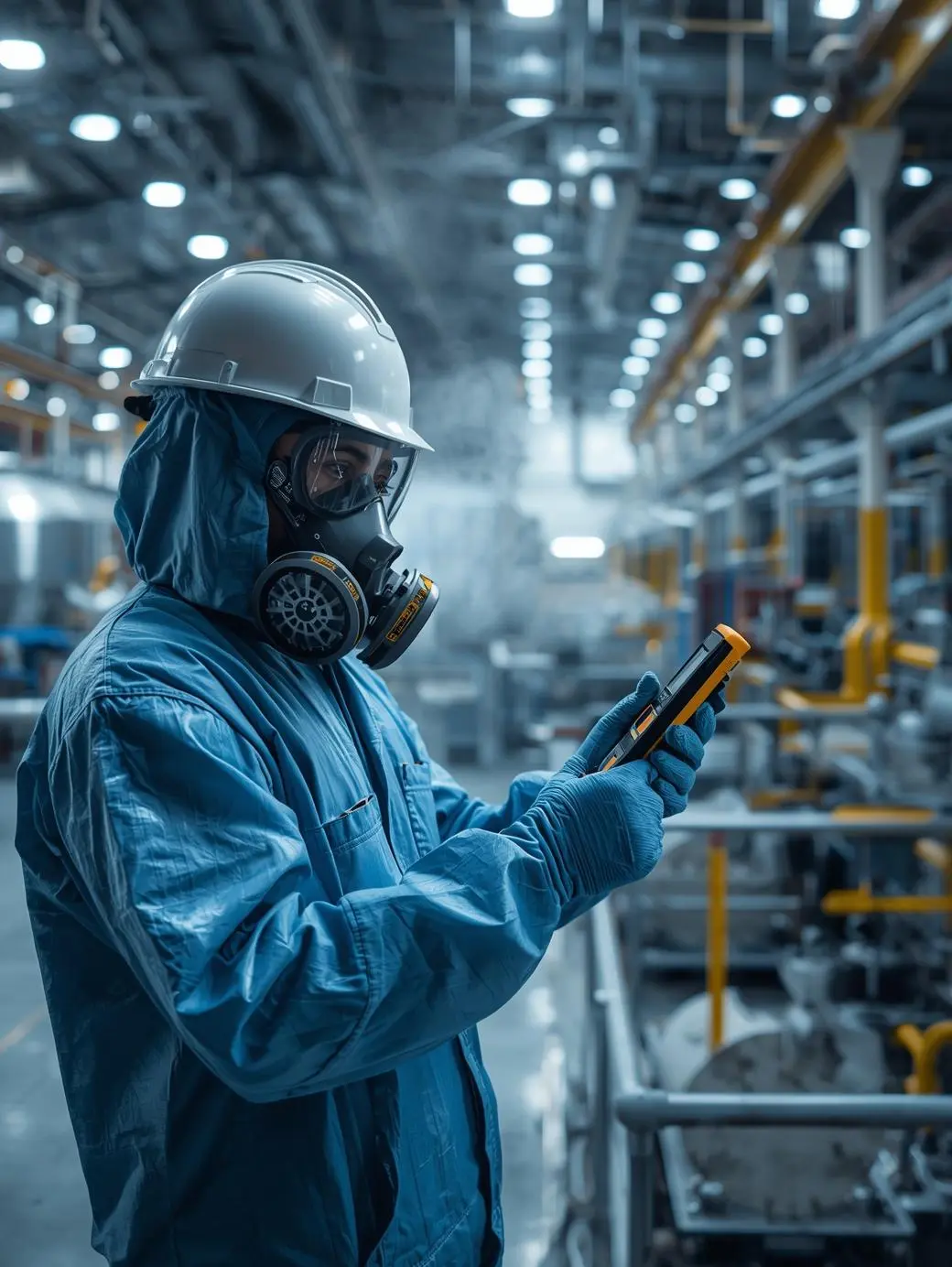
Each Gas Requires a Chemically Specific Collection Medium
Unlike solvent testing — where a single charcoal tube captures many compounds — inorganic chemical testing demands gas-specific sorbent chemistry. Using the wrong medium produces zero recovery and completely invalid results. AGT Labs advises on correct media selection for every project based on your target analytes and clearly labels each result as accredited or specialty in-house.
All ten gases are analyzed by in-house instrumentation at our Houston TX industrial hygiene testing lab — no send-outs, no delays from third-party labs, and full chain of custody from receipt to final report.
- SO₂ — sodium carbonate filter, sulfate IC detection (NIOSH 6004) · AIHA-accredited
- Cl₂ — Na₂CO₃ / sulfamic acid sorbent tube, chloride IC detection (NIOSH 6011) · AIHA-accredited
- NH₃ — sulfuric acid sorbent tube, ammonium IC detection (NIOSH 6015) · AIHA-accredited
- O₃ — nitrite-impregnated filter / impinger, nitrate IC detection (OSHA Method 214) · AIHA-accredited
- H₂S — silver nitrate sorbent tube, sulfide IC (NIOSH 6013) · specialty in-house
- NO₂ — sodium iodide sorbent tube, nitrite IC (NIOSH 6014) · specialty in-house
- CO — molecular sieve tube, GC-TCD analysis (NIOSH 6604) · specialty in-house
- HCN — KOH sorbent tube, cyanide IC (NIOSH 6010) · specialty in-house
- ClO₂ — impinger / OSHA ID-202 UV-Vis · specialty in-house
- Phosgene — OSHA 61 colorimetric / IC · specialty in-house
- Federal & DoD project support — AIHA IHLAP + ISO/IEC 17025 quality system
OSHA PELs, ACGIH TLVs & NIOSH RELs — Gas by Gas
Critical note: the ACGIH TLV is 2–25× more protective than the OSHA PEL for most reactive gases. OSHA PELs were set in 1971 — AGT Labs reports inorganic chemical testing results against all three limits in every report and clearly labels each gas as AIHA-accredited or specialty in-house.
Hydrogen Sulfide
NIOSH 6013 · Silver nitrate tube · IC
Sources: oilfield sour gas, petroleum refining, wastewater, confined spaces (manholes, digesters). Workers can be overcome instantly above 150 ppm when the gas paralyzes the olfactory nerve.
Sulfur Dioxide
NIOSH 6004 · Na₂CO₃ filter · IC
Generated by combustion of sulfur-containing fuels, petroleum coking, smelting, and sulfuric acid manufacturing. Major asthmogen even at sub-PEL concentrations.
Chlorine
NIOSH 6011 · Na₂CO₃/sulfamic tube · IC
Water treatment, pulp/paper bleaching, food sanitation, chemical manufacturing. Cl₂ causes severe pulmonary edema rapidly at IDLH. Very narrow safety margin.
Ammonia
NIOSH 6015 · H₂SO₄ tube · IC
Nitrogen Dioxide
NIOSH 6014 · NaI tube · IC
Generated by diesel engines, welding in confined spaces, silos, and blasting. Largest OSHA/ACGIH limit gap (25×) of all common industrial gases.
Carbon Monoxide
NIOSH 6604 · Mol. sieve tube · GC-TCD
Odorless, colorless. Binds hemoglobin 240× more strongly than O₂. Sources: combustion engines, forklift operations indoors, boilers, furnaces, generators.
Ozone
OSHA Method 214 · Nitrite filter · IC
ACGIH TLV is work-rate dependent — heavy physical labor lowers the TLV to 0.05 ppm due to increased respiratory volume. Generated by UV systems, arc welding, plasma cutting, copiers, electrostatic precipitators. NIOSH 6005 (indigo carmine UV-Vis) is also performed in-house as a specialty alternative.
Hydrogen Cyanide
NIOSH 6010 · KOH tube · IC
Generated by combustion of nitrogen-containing materials, electroplating with cyanide salts, chemical synthesis, fumigation, and fire/explosion events. Also a skin absorption hazard.
Chlorine Dioxide
OSHA ID-202 · Impinger · UV-Vis
Phosgene
OSHA 61 / NIOSH 7903 · Colorimetric / IC
Generated by thermal degradation of chlorinated solvents (TCE, DCM) in hot work or near flames. Also used in chemical synthesis of isocyanates and polycarbonates. IDLH only 20× above PEL.
Method Selection — Media, Collection & Accreditation Status
Each reactive gas requires a gas-specific collection medium. The wrong medium produces zero recovery. AGT Labs splits methods into two categories: AIHA IHLAP-accredited (LAP-101470) and specialty in-house (performed in our Houston lab but not within the AIHA accreditation scope). Choose based on whether you need accredited compliance documentation or in-house specialty data.
AIHA IHLAP-Accredited Methods (LAP-101470)
Methods within AGT Labs' AIHA Industrial Hygiene Laboratory Accreditation Program scope. Results carry full accredited compliance documentation for OSHA citation defense and worker exposure reporting.
SO₂ — Sulfur Dioxide
Collected on a sodium carbonate-impregnated filter. SO₂ reacts with the alkaline coating to form sulfate, which is dissolved and quantified by ion chromatography. Personal pump flow rate 100–200 mL/min. Hold time 14 days at room temperature when sealed. Direct comparison to OSHA PEL 5 ppm and ACGIH TLV 0.25 ppm.
Cl₂ — Chlorine
Cl₂ is collected on a sodium carbonate / sulfamic acid-impregnated sorbent tube. The chlorine reacts to form chloride anion, which is measured by IC. Pump flow rate 200 mL/min. NIOSH 6011 is on AGT Labs' AIHA IHLAP-accredited scope. Important: NIOSH 6011 covers Cl₂ — for ClO₂ (chlorine dioxide), see the specialty section below.
NH₃ — Ammonia
Ammonia is collected on a sulfuric acid-treated sorbent tube — NH₃ reacts to form ammonium sulfate, then IC ammonium analysis. Personal breathing-zone pump flow rate 100–200 mL/min. Hold time 14 days refrigerated. Direct comparison to OSHA PEL 50 ppm, ACGIH TLV 25 ppm, and IDLH 300 ppm.
O₃ — Ozone
Ozone is captured on a nitrite-impregnated filter / impinger train; analysis is by ion chromatography for the nitrate ion produced when O₃ oxidizes nitrite. Pump flow rate 250 mL/min – 1 L/min. OSHA Method 214 is AGT Labs' AIHA IHLAP-accredited primary method for ozone. NIOSH 6005 (indigo carmine UV-Vis) is also performed in-house as a specialty alternative — see specialty section.
Specialty In-House Methods — NOT Within AIHA IHLAP Scope
These analyses are performed in-house at our Houston laboratory as specialty methods but are not within our AIHA IHLAP-accredited scope. Where compliance reporting requires accredited results, please use the methods in the Accredited section above. Results from specialty methods are reported on AGT Labs letterhead with clear non-accredited flagging.
H₂S — Hydrogen Sulfide
H₂S is collected on a silver nitrate-impregnated sorbent tube — the gas converts AgNO₃ to Ag₂S precipitate, which is dissolved and quantified by IC with sulfide-specific detection. Pump flow rate 100–200 mL/min. Specialty in-house — for facilities requiring AIHA-accredited compliance documentation for H₂S exposures, results from this method should be reported as in-house specialty data.
NO₂ — Nitrogen Dioxide
NO₂ is trapped on a sodium iodide-impregnated tube — NO₂ oxidizes iodide to form nitrite anion, measured by IC. Personal breathing-zone pump flow rate 100–200 mL/min. Hold time 14 days refrigerated. Specialty in-house method.
CO — Carbon Monoxide
Carbon monoxide is collected on 13X molecular sieve sorbent tube at 50 mL/min pump flow. The tube is thermally desorbed and CO is analyzed by gas chromatography with thermal conductivity detection (GC-TCD) — not IC. Specialty in-house method. Real-time CO monitoring with electrochemical direct-reading instruments is available to supplement personal sampling.
HCN — Hydrogen Cyanide
Hydrogen cyanide is collected on a potassium hydroxide (KOH)-impregnated sorbent tube — HCN is captured as cyanide anion, then quantified by IC with cyanide-specific detection. Specialty in-house method. Advance notification required — specialist media preparation and handling protocols apply.
ClO₂ — Chlorine Dioxide
Chlorine dioxide is collected via midget impinger with absorbing solution and analyzed by UV-Vis spectrophotometry. ClO₂ is highly reactive and unstable — samples must be analyzed within 24 hours and cannot be shipped. On-site or dedicated batch shipment only. Specialty in-house method. Note: NIOSH 6011 is for Cl₂, not ClO₂ — different analyte requires different method.
Phosgene (COCl₂)
Phosgene uses a dedicated impinger with absorbing solution or colorimetric dosimeter tube under OSHA Method 61 (or NIOSH 7903 as alternative). Specialty in-house method — phosgene samples must be shipped immediately on ice with priority courier and require advance notification before sampling. Important: NIOSH 6009 is the mercury vapor method — it is NOT used for phosgene.
Detection Limits & Headroom vs. Regulatory Criteria
Reporting limits at typical sample volumes — and the headroom each gives you below the most relevant exposure limit. Every gas in our panel reaches at least an order of magnitude below the criterion that drives compliance. Accreditation status is shown alongside each result.
| Gas | Method | Scope | Typical Volume | Reporting Limit (ppm) | Reference Criterion | Headroom |
|---|---|---|---|---|---|---|
| SO₂ | NIOSH 6004 | AIHA-accredited | 12 L (8-hr @ 25 mL/min) | ≈ 0.01 ppm | ACGIH TLV 0.25 ppm | ~25× below TLV |
| Cl₂ | NIOSH 6011 | AIHA-accredited | 2 L (15-min ceiling) | ≈ 0.05 ppm | OSHA ceiling 1 ppm | ~20× below ceiling |
| NH₃ | NIOSH 6015 | AIHA-accredited | 24 L (8-hr @ 50 mL/min) | ≈ 0.5 ppm | ACGIH TLV 25 ppm | ~50× below TLV |
| O₃ | OSHA 214 | AIHA-accredited | 240 L (4-hr @ 1 L/min) | ≈ 0.005 ppm | ACGIH TLV 0.05 ppm | ~10× below TLV |
| H₂S | NIOSH 6013 | Specialty | 12 L (8-hr @ 25 mL/min) | ≈ 0.005 ppm | ACGIH TLV 1 ppm | ~200× below TLV |
| NO₂ | NIOSH 6014 | Specialty | 2 L (15-min ceiling) | ≈ 0.05 ppm | ACGIH ceiling 0.2 ppm | ~4× below ceiling |
| CO | NIOSH 6604 | Specialty | 24 L (8-hr @ 50 mL/min) | ≈ 1 ppm | ACGIH TLV 25 ppm | ~25× below TLV |
| HCN | NIOSH 6010 | Specialty | 24 L | ≈ 0.05 ppm | ACGIH ceiling 4.7 ppm | ~94× below ceiling |
| ClO₂ | OSHA ID-202 | Specialty | 30 L (impinger) | ≈ 0.01 ppm | ACGIH TLV 0.1 ppm | ~10× below TLV |
| COCl₂ (Phosgene) | OSHA 61 | Specialty | 15 L (4-hr @ 60 mL/min) | ≈ 0.005 ppm | ACGIH ceiling 0.1 ppm | ~20× below ceiling |
Why Sample Volume Matters for Ceiling-Limit Gases
Cl₂, NO₂, HCN, and ClO₂ all have ceiling limits rather than 8-hour TWAs — meaning a single 15-minute peak above the ceiling is itself a regulatory exceedance. Short collection volumes mean reporting limits are inherently higher than for TWA-style sampling. For these gases, a non-detect at 0.05 ppm is the floor of what the laboratory can certify — direct-reading instruments with electrochemical sensors complement the lab record by providing real-time peak detection.
For NO₂ specifically, the ACGIH ceiling of 0.2 ppm is only 4× above the laboratory reporting limit. Facilities monitoring close to the ACGIH limit should extend collection volume where feasible (lower flow over longer duration on the same media) to push the effective MDL lower.
Confined Space Entry — Critical Note on H₂S, CO, and O₂ Deficiency Monitoring
Passive diffusion badges and time-integrated sorbent tubes are NOT acceptable as the sole monitoring method for confined space entry under OSHA 29 CFR 1910.146. Permit-required confined spaces must be tested with calibrated direct-reading instruments (multi-gas meters) that provide real-time readings before entry and continuous monitoring during occupancy. AGT Labs provides complementary personal tube sampling to document the 8-hour TWA exposure record for H₂S and CO (specialty in-house) — this is the laboratory documentation that supports incident investigation, workers' compensation, and OSHA inspection response. It does not replace pre-entry atmospheric testing. If H₂S exceeds 150 ppm, the olfactory nerve is paralyzed and the gas loses its own warning odor — continuous real-time monitoring becomes the only warning system.
Where Inorganic Chemical Exposures Occur
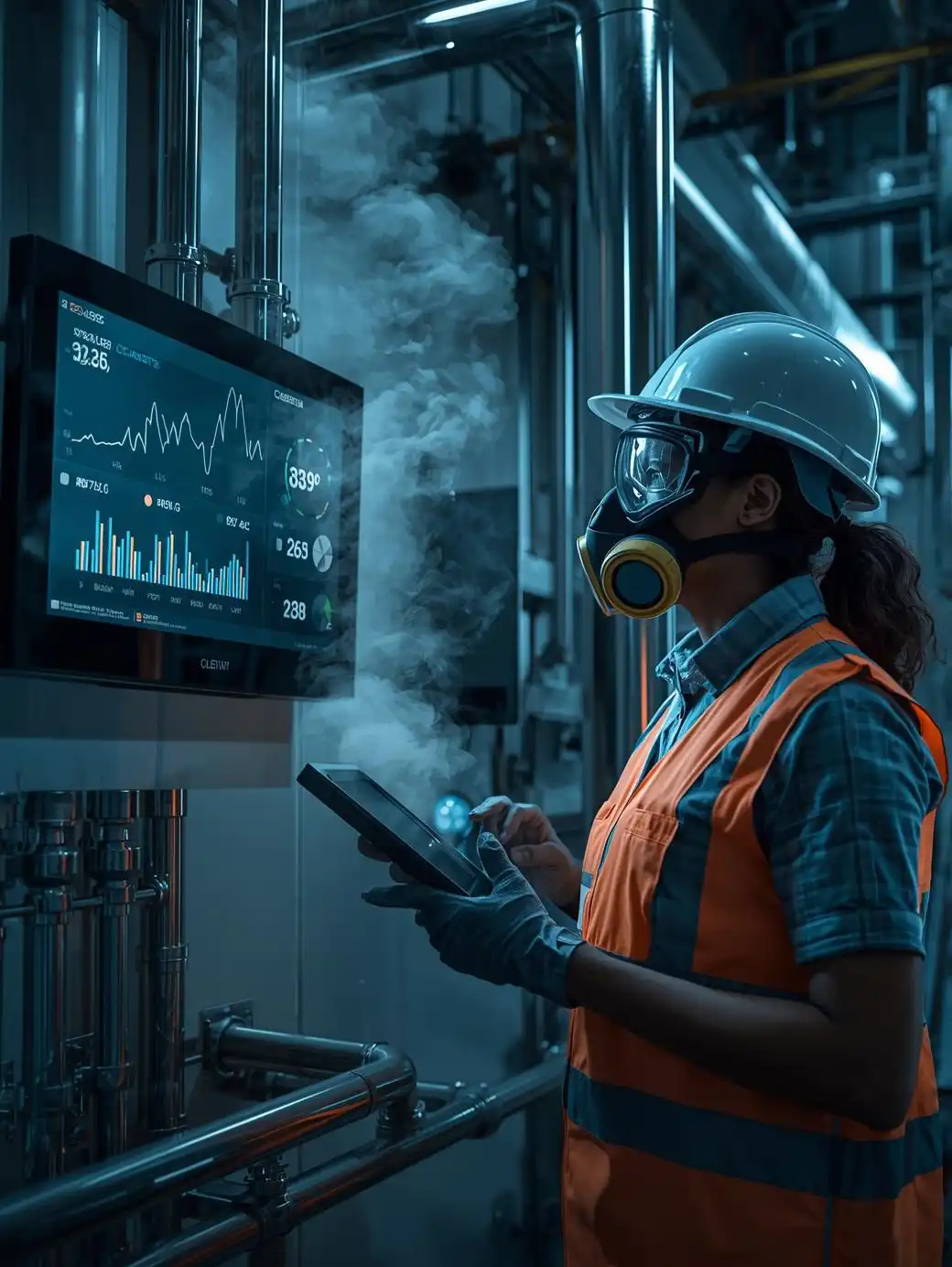
Reactive gas exposures are process-specific and frequently task-specific — peak concentrations during maintenance, start-up, and upset conditions are often 10–50× higher than routine operation levels. Task-based short-term sampling is critical for understanding the full exposure profile, not just the 8-hour TWA.
AGT Labs designs inorganic chemical testing programs around the highest-risk tasks — not just routine shift monitoring — to capture the exposures that matter most for worker health and OSHA compliance. Facilities monitoring acid gases such as HCl, HF, and H2SO4 should also review our acid mist testing capabilities, which cover NIOSH 7903 and 7908 ion chromatography methods for these analytes.
Where Reactive Gas Exposures Occur by Industry
Petroleum Refining & Petrochemical
H₂S, SO₂, and CO personal monitoring for hydroprocessing, fluid catalytic cracking, sulfur recovery, and coking operations. SO₂ is AIHA IHLAP-accredited; H₂S and CO are performed in-house as specialty methods. AGT Labs serves multiple Houston-area refineries with routine and emergency inorganic chemical testing programs.
Water & Wastewater Treatment
Chlorine gas (Cl₂) is used for primary disinfection of drinking water and wastewater — analyzed via NIOSH 6011 (AIHA-accredited). H₂S is generated by anaerobic digestion in sewer systems, digesters, and wet wells — creating acute confined space hazards in manholes and lift stations (specialty in-house). Chlorine dioxide (ClO₂) is used as an alternative disinfectant in advanced water treatment facilities.
Pulp, Paper & Bleaching
Sulfur dioxide and hydrogen sulfide are generated in Kraft pulping (black liquor combustion, recovery boilers). Chlorine and chlorine dioxide are used in pulp bleaching sequences. ClO₂ has largely replaced elemental Cl₂ in modern bleach plants, but both gases are present during transitions and equipment maintenance activities.
Chemical Manufacturing
Chemical synthesis and reaction operations generate a wide range of toxic gases depending on feedstock and reactions — Cl₂, SO₂, HCN, phosgene, and NH₃ are all produced in various chemical manufacturing processes. Phosgene is used in isocyanate and polycarbonate synthesis. HCN is generated in electroplating with cyanide chemistry and in combustion of nitrogen-containing materials.
Welding, Cutting & Combustion
Nitrogen dioxide (NO₂) is generated by all high-temperature combustion processes — arc welding (especially MIG/MAG in confined spaces), plasma cutting, and diesel engine exhaust. Carbon monoxide is produced by incomplete combustion in forklift operations, welding, and indoor generator use. Ozone is produced by UV arc radiation in welding and plasma cutting processes — highest in stainless steel TIG welding.
Food Processing & Refrigeration
Industrial ammonia (NH₃) refrigeration systems are the dominant hazard in food cold chain facilities — ice cream plants, meat processing, seafood storage, and produce distribution centers. NIOSH 6015 for NH₃ is AIHA IHLAP-accredited. Large NH₃ charge volumes and aging pipe systems create significant leak potential. OSHA PSM thresholds (10,000 lb NH₃) trigger formal process safety management programs with documented monitoring requirements. Refineries and chemical plants monitoring for hydrogen sulfide and SO2 frequently require concurrent VOC and BTEX testing to capture hydrocarbon vapor exposures occurring alongside reactive gas releases.
Federal & DoD Facilities
BRAC remediation, military fuel storage operations, ammunition plant decommissioning, navy shipyard work, and federal building decommissioning require accredited reactive gas data. Our AIHA IHLAP accreditation (LAP-101470) and ISO/IEC 17025:2017 quality system support federal projects with our accredited methods (SO₂, Cl₂, NH₃, O₃) and specialty in-house methods (H₂S, NO₂, CO, HCN, ClO₂, phosgene) under TSCA, CERCLA, and DoD environmental data quality requirements.
What You Receive — Reactive Gas Monitoring Report
Every AGT Labs inorganic gas report is issued on AIHA IHLAP-accredited letterhead and includes everything an IH professional or OSHA inspector needs to evaluate the compliance status of your facility. Accredited and specialty results are clearly labeled.
| Report Component | Details | Standard |
|---|---|---|
| Measured Concentration | Results in both ppm and mg/m³ for each target gas. TWA and STEL where applicable. Field blank concentration subtracted. | All samples |
| Accreditation Scope Flag | Each result is labeled either "AIHA IHLAP-accredited (LAP-101470)" — for SO₂, Cl₂, NH₃, O₃ — or "Specialty in-house, NOT in AIHA scope" for H₂S, NO₂, CO, HCN, ClO₂, phosgene. | All samples |
| Regulatory Comparison | Direct comparison table: measured result vs. OSHA PEL, ACGIH TLV, NIOSH REL, and IDLH. Percent of limit calculated for each standard. | All samples |
| OSHA / ACGIH Disparity Flag | When the OSHA PEL is significantly less protective than the ACGIH TLV, the report explicitly flags this and notes that OSHA PEL compliance does not confirm worker health protection. | Where applicable |
| Method QA/QC Data | Method blank results, spike recovery, duplicate precision, pump calibration flows (pre and post), and sampling volume documentation. | All samples |
| Sampling Narrative | Summary of sampled tasks, process conditions, collection media, pump flow rates, and sample duration. Converts raw field notes to structured documentation. | All samples |
| Control Recommendations | Where results exceed or approach limits, the report includes preliminary engineering control and administrative control recommendations specific to the gas and process involved. | On exceedances |
Turnaround Times & Reactive Gas Sampling Media
Sampling Kits — Gas-Specific Media
- Sodium carbonate filters (NIOSH 6004) — sulfur dioxide (SO₂) · accredited
- Na₂CO₃ / sulfamic acid tubes (NIOSH 6011) — chlorine (Cl₂) · accredited
- Sulfuric acid tubes (NIOSH 6015) — ammonia (NH₃) · accredited
- Nitrite-impregnated filters / impingers (OSHA Method 214) — ozone (O₃) · accredited
- Silver nitrate tubes (NIOSH 6013) — hydrogen sulfide (H₂S) · specialty
- Sodium iodide tubes (NIOSH 6014) — nitrogen dioxide (NO₂) · specialty
- 13X molecular sieve tubes (NIOSH 6604) — carbon monoxide (CO) · specialty
- KOH tubes (NIOSH 6010) — hydrogen cyanide (HCN) · specialty
- Impingers + absorbing solutions — ClO₂ (OSHA ID-202) and phosgene (OSHA 61) — call first
- Calibrated personal pumps (loaner) + COC documentation
From Field Sampling to Certified Reactive Gas Report
Identify Target Gases
Send AGT Labs your SDS sheets and process description. We confirm the correct method (accredited or specialty) and sampling media for each gas and prepare your kit — wrong media produces zero recovery.
Deploy Gas-Specific Media
Clip sorbent tube or impinger to worker lapel or area stand. Record exact start/stop time, pump flow rate (pre/post calibration), temperature, humidity, and tasks performed on COC.
Seal & Ship Per Hold Times
Seal all tubes immediately. Refrigerate where required. Ship ClO₂, O₃, and phosgene within 24 hours. All other reactive gas samples: 14-day hold time refrigerated. Include field blank tubes for QA/QC.
IC / UV-Vis / GC Analysis
In-house extraction, dissolution, or desorption followed by ion chromatography, UV-Vis spectrophotometry, or GC-TCD depending on the target gas. All analysis performed at our Houston TX lab.
Accredited or Specialty Report
Results vs. OSHA PEL, ACGIH TLV, NIOSH REL, and IDLH. Each result clearly labeled "AIHA-accredited" or "Specialty in-house". QA/QC data included. Control recommendations on exceedances. Lab accreditation number on all reports.
Inorganic Chemical Testing — FAQ
What NIOSH method is used for hydrogen sulfide (H₂S)?
What is the OSHA PEL for chlorine gas?
What is the OSHA PEL for SO₂ and why is the ACGIH TLV so different?
What is the OSHA PEL for nitrogen dioxide and why does NO₂ cause delayed injury?
What is the IDLH for hydrogen sulfide and what does olfactory paralysis mean?
What sampling media is needed for ozone (O₃) monitoring?
What is the OSHA PEL for carbon monoxide and why is CO so dangerous?
What industries most commonly need inorganic chemical testing?
Is AGT Labs accredited for inorganic chemical and reactive gas testing?
How does AGT Labs lab testing complement direct-reading gas detectors?
What are the typical detection limits for the gas methods?
How long are reactive gas samples stable in shipping?
Does AGT Labs perform reactive gas testing for federal projects and DoD facilities?
Reactive Gas Testing Lab Serving Houston's Industrial Corridor
AGT Labs is located at 10200 East Freeway, Suite 101, Houston TX 77029 — within the Houston Ship Channel industrial corridor. All inorganic chemical analysis is performed in-house using IC, UV-Vis, and GC-TCD instrumentation. No send-outs. Samples received before 2:00 PM CST logged same day.
Accredited
In-House
IC · UV-Vis · GC
10200 E. Freeway
Need an Accredited IH Lab for Inorganic Chemical & Reactive Gas Testing?
AIHA IHLAP (LAP-101470) · ISO/IEC 17025:2017 · 4 AIHA-accredited methods (SO₂, Cl₂, NH₃, O₃) · 6 specialty in-house methods (H₂S, NO₂, CO, HCN, ClO₂, phosgene) · IC · UV-Vis · GC-TCD · 10200 East Freeway, Houston TX 77029