
Industrial Lead Testing Lab
As a premier industrial lead testing lab, we provide AIHA LAP accredited lead analysis across all three exposure pathways — airborne lead personal monitoring (NIOSH 7303 ICP-MS), lead paint chip and bulk analysis (EPA 3050B), and lead dust wipe / surface testing (EPA 40 CFR 745). OSHA 1910.1025 and 1926.62 compliance reporting.
Lead has no safe level of exposure — and OSHA's 1910.1025 standard is one of the most enforcement-active substance-specific standards in general industry
No Safe Level — Lead Is a Cumulative Neurotoxin
Lead accumulates in bone over decades and continues releasing into blood throughout a worker's life. The CDC and WHO state there is no known safe blood lead level. Chronic low-level occupational exposure causes hypertension, cognitive decline, kidney damage, and reproductive effects — mitigated only by proper industrial lead testing.
OSHA 1910.1025 Is Heavily Enforced
Lead is consistently one of OSHA's top-cited standards in general industry. 1910.1025 imposes documented monitoring requirements, medical surveillance (blood lead testing), biological exposure indices, written compliance programs, and personal protective equipment — all triggered when air monitoring from an industrial lead testing lab shows exposures at or above the 30 µg/m³ action level.
Trigger Tasks Require Monitoring — No Exemptions
OSHA 1910.1025 Appendix B identifies eight "trigger tasks" that require initial air monitoring — abrasive blasting, manual scraping, welding on painted substrates, and others. Employers cannot assume exposures are below the action level for trigger tasks without documented industrial lead testing data.
Three Exposure Pathways Require Three Test Types
Lead exposure occurs via inhalation (airborne lead), ingestion (lead dust on surfaces, hand-to-mouth contact), and incidental ingestion of paint chips. A complete industrial lead testing assessment requires all three sample types: air monitoring (µg/m³), surface wipe sampling (µg/ft²), and bulk paint chip analysis (% by weight).
OSHA 1910.1025 (General Industry) & 1926.62 (Construction) — Lead Standard Framework
OSHA's lead standards require documented industrial lead testing whenever workers perform lead-related tasks, regardless of assumed exposure. Exceeding the action level (30 µg/m³) triggers medical surveillance, quarterly monitoring, and a written lead compliance program. Exceeding the PEL (50 µg/m³) requires engineering controls, respiratory protection, hygiene facilities, and biological monitoring.
When Industrial Lead Testing Is Required — And What the Results Trigger
OSHA 1910.1025 requires initial industrial lead testing for all employees who may be exposed to lead at or above the action level. For trigger tasks (Appendix B), initial monitoring must be conducted regardless of assumptions. Monitoring frequency is then driven by results relative to the action level and PEL.
AGT Labs provides the monitoring data — personal 8-hour TWA results in µg/m³, compared to both the action level (30 µg/m³) and PEL (50 µg/m³), with clear compliance determination from our industrial lead testing lab on every report.
- Initial monitoring — required before trigger task commencement or when lead exposure suspected
- Below AL (30 µg/m³): no further monitoring required; record kept
- At or above AL, below PEL: quarterly monitoring + medical surveillance program
- At or above PEL (50 µg/m³): full 1910.1025 compliance program — engineering controls, respirators, hygiene, biological monitoring
- Post-control monitoring: verify engineering control effectiveness after LEV installation
- NIOSH 7303 ICP-MS also reports cadmium, arsenic, chromium, beryllium from same filter — critical for multi-metal industrial operations

Lead Trigger Tasks — When OSHA Requires Initial Monitoring Regardless of Assumptions
OSHA 1910.1025 Appendix B identifies tasks that historically generate airborne lead at or above the action level. For any of these tasks, an employer cannot assume exposures are below the action level without documented industrial lead testing data.
Abrasive Blasting on Lead-Coated Surfaces
Dry abrasive blasting of lead-painted steel structures (bridges, tanks, industrial equipment) generates extremely high airborne lead concentrations — often 100–1,000× the OSHA PEL at the blasting nozzle position. Full OSHA 1910.1025 compliance and supplied-air respirators are typically required.
Welding, Cutting & Burning on Lead-Painted Substrates
Thermal work on lead-painted structural steel vaporizes lead paint at temperatures well above lead's boiling point, generating lead oxide fumes at very high concentrations in the worker's breathing zone. Common in bridge repair, industrial demolition, and steel structure modification.
Lead Smelting, Refining & Casting
Primary and secondary lead smelting, lead casting, and battery plate manufacturing involve molten lead that generates lead fume continuously. These operations typically require the most intensive monitoring program and are highest-risk for exceeding both the action level and PEL simultaneously.
Power Tool Cleaning of Lead-Painted Surfaces
Grinding, chipping, needle-gunning, or wire brushing of lead-painted surfaces with power tools without local exhaust ventilation generates respirable lead dust at concentrations typically above the action level. Common in tank maintenance, ship repair, and industrial facility renovation.
Manual Demolition of Lead-Painted Structures
Demolition of buildings, structures, or equipment with legacy lead-based paint through manual methods (sledgehammer, pry bar, jackhammer) disturbs paint and generates lead dust and chips. Construction activities under 1926.62 with assumed exposures above the AL require initial monitoring.
Heat Gun Application & Hand-Scraping of Lead Paint
Heat gun application above 1,100°F vaporizes lead from paint — generating lead fume at concentrations that may exceed the action level depending on surface lead content and ventilation. Manual scraping and hand-sanding of lead paint generate lead-containing dust particles in the breathing zone.
Industrial Lead Testing Analytical Methods
ICP-MS Multi-Element Analysis
Inductively Coupled Plasma Mass Spectrometry simultaneously quantifies lead and 30+ other metals (cadmium, arsenic, chromium, beryllium, manganese, nickel) from a single MCE filter acid digest. Preferred for industrial environments where multiple toxic metals may co-exist. Lower detection limits than FAAS — critical for samples near the 30 µg/m³ action level.
Flame Atomic Absorption (FAAS)
Flame AAS is specific to lead only — it cannot simultaneously detect other metals. A well-established, cost-effective method for industrial lead testing compliance monitoring in environments where only lead exposure is of concern (e.g., lead paint abatement clearance sampling, battery room monitoring). FAAS detection limit is slightly higher than ICP-MS.
ICP-AES (Inductively Coupled Plasma)
ICP-Atomic Emission Spectroscopy offers simultaneous multi-metal analysis with detection limits intermediate between FAAS and ICP-MS. Used where multi-metal analysis is needed but ultra-trace sensitivity of ICP-MS is not required. Commonly paired with OSHA ID-121 for OSHA compliance monitoring in operations where bulk metal concentrations are expected to be moderate to high.
Lead-Based Paint Classification — The Critical Threshold for OSHA Compliance
Under OSHA 1910.1025 and 1926.62, a coating is classified as lead-based paint if it contains 0.5% lead by weight (5,000 ppm) — this threshold determines whether the OSHA lead standard applies to any work that disturbs the coating. Under EPA/HUD standards for pre-1978 housing, lead-based paint is defined at 1.0 mg/cm² by XRF or 0.5% by weight.
AGT Labs analyzes paint chip and bulk samples by EPA Method 3050B acid digestion with ICP-MS quantification, reporting both percent lead by weight and parts per million (ppm). Results from our industrial lead testing lab determine the applicable regulatory framework for renovation, abatement, demolition, or maintenance work.
- Paint chip collection — representative samples from each painted substrate type
- EPA 3050B acid digestion — total lead extraction for accurate bulk quantification
- ICP-MS analysis — highly sensitive, quantifies lead and co-contaminant metals
- Results reported as % lead by weight and ppm — direct OSHA/EPA threshold comparison
- Multi-layer paint chips analyzed as composite or layer-by-layer as required
- TCLP (EPA 1311) available — required for blast media and debris waste classification
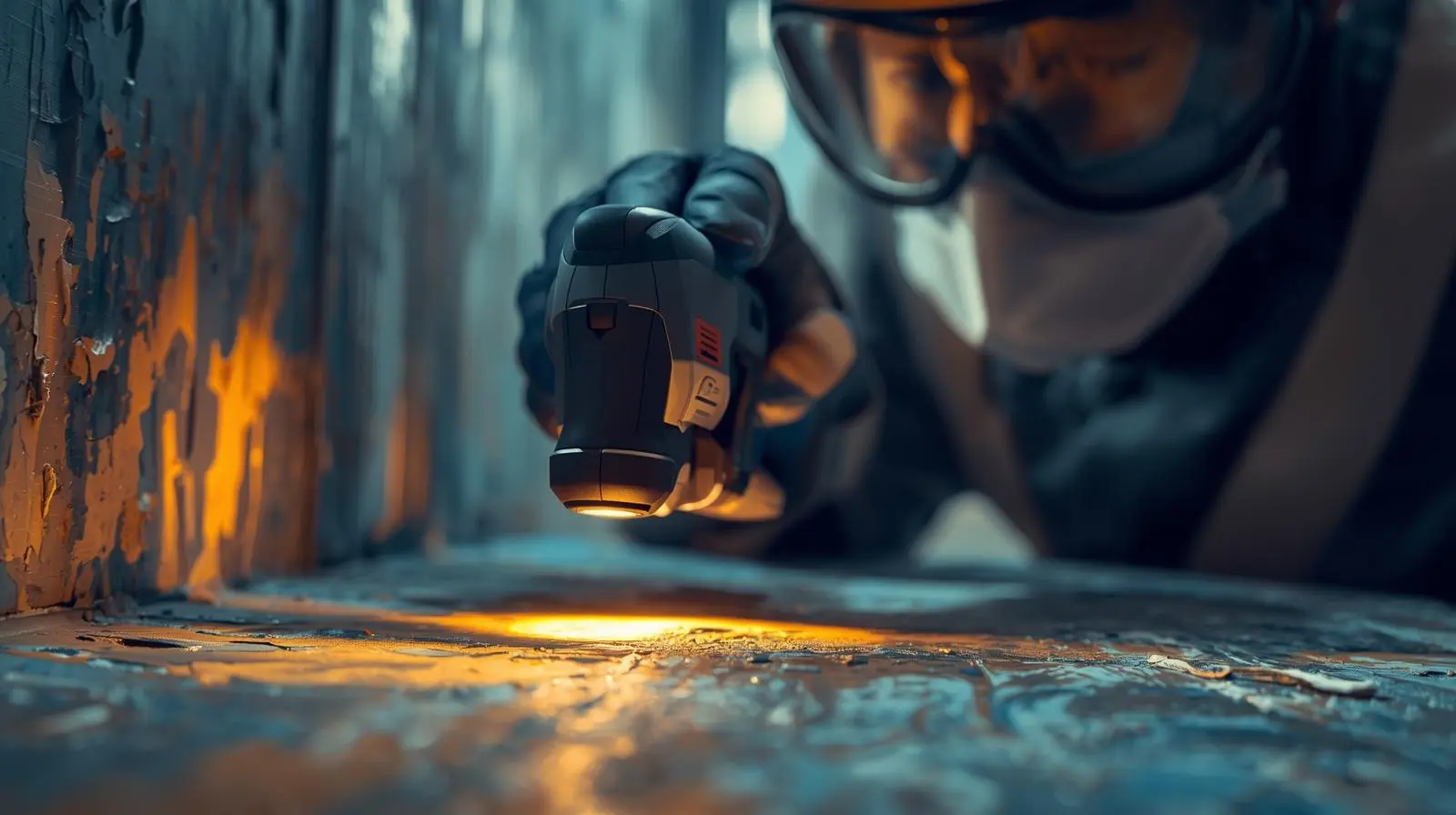
Lead Paint & Bulk Material Methods
Acid Digestion + ICP-MS — Total Lead
Paint chips or bulk materials are acid-digested with concentrated nitric acid and hydrochloric acid (microwave or hotplate) to achieve complete lead extraction. The digest is analyzed by ICP-MS for total lead concentration (ppm) and percent lead by weight. EPA 3050B is the standard method for non-volatile solid materials and is accepted by OSHA for paint classification under 1910.1025 and 1926.62.
TCLP Lead — RCRA Waste Classification
Toxicity Characteristic Leaching Procedure simulates the leaching of lead from solid waste in a landfill environment. The solid waste is extracted with acetic acid solution, the leachate is filtered, and lead is quantified by ICP-MS. If the TCLP leachate contains more than 5 mg/L lead, the waste is classified as D008 hazardous waste requiring disposal at a licensed hazardous waste facility. Required for industrial lead testing compliance prior to disposal.
XRF Screening + Confirmatory Lab Analysis
Portable X-Ray Fluorescence (XRF) analyzers provide non-destructive, field-based screening for lead in paint — results available immediately, no laboratory submission required for screening. XRF is widely used in EPA RRP Rule pre-renovation lead testing and initial survey work. However, XRF readings below 1.0 mg/cm² are considered "inconclusive" and require laboratory chip analysis for definitive classification from an industrial lead testing lab.
TCLP Lead Testing — Required for Waste Disposal Classification
Abrasive blast grit, paint chips, and construction debris from lead-painted structures must be TCLP-tested before disposal. If TCLP leachate exceeds 5 mg/L lead, the waste is D008 hazardous — requiring licensed hazardous waste disposal at significantly higher cost. Projects that skip TCLP testing risk illegal waste disposal liability under RCRA. Common TCLP scenarios include bridge repainting, industrial tank maintenance, and demolition of lead-painted steel structures. AGT Labs performs TCLP per EPA Method 1311 with ICP-MS quantification and provides waste classification determination on the report.
Surface Lead Dust — The Hidden Exposure Pathway That Air Monitoring Alone Misses
Airborne lead settles on work surfaces, floors, benches, and equipment — creating a secondary ingestion exposure route through hand-to-mouth contact. In industrial settings, surface lead dust accumulation can persist long after active lead-generating work has ceased. Workers eating, drinking, or touching their faces in areas with lead dust contamination receive significant lead doses entirely separate from what breathing-zone air monitoring captures.
OSHA 1910.1025 includes housekeeping requirements — surfaces must be maintained as free of lead dust as practicable. Wipe sampling quantifies whether housekeeping controls are achieving adequate contamination control. EPA 40 CFR 745 clearance testing is the regulatory standard for post-abatement verification in housing and child-occupied facilities, supported by our industrial lead testing lab.
- Pre-moistened, trace-metal-free wipe cloths — collect lead dust from defined surface area (100 cm² or 1 ft²)
- NIOSH 9100 acid extraction + ICP-MS — results in µg/ft²
- Samples from floors, window sills, window troughs, work surfaces, and equipment
- Post-abatement clearance testing — verify lead dust below EPA clearance levels before re-occupancy
- Industrial housekeeping verification — OSHA 1910.1025 compliance documentation
- Pre-renovation baseline — establish contamination levels before renovation begins
Lead Dust Clearance Levels — Updated EPA 2024 Standards
EPA revised lead dust hazard standards in 2024, significantly lowering floor clearance thresholds. AGT Labs reports all wipe sample results against current EPA clearance levels and OSHA housekeeping standards.
| Surface Type | Previous Clearance Level | Current EPA Standard (2024) | OSHA Reference | Applicable Regulation |
|---|---|---|---|---|
| Floor Dust | 40 µg/ft² (pre-2024) | 10 µg/ft² | Housekeeping — as low as practicable | EPA 40 CFR 745 · OSHA 1910.1025(h) |
| Window Sill | 250 µg/ft² (pre-2024) | 100 µg/ft² | Not specifically defined by OSHA | EPA 40 CFR 745 · HUD Guidelines |
| Window Trough | 400 µg/ft² (pre-2024) | 100 µg/ft² | Not specifically defined by OSHA | EPA 40 CFR 745 · HUD Guidelines |
| Industrial Work Surface | No EPA numeric clearance — OSHA requires "as free of lead as practicable" | 1910.1025(h)(1) Housekeeping | OSHA 1910.1025(h) | |
| Soil (Exterior) | 400 ppm bare soil | 200 ppm bare soil (EPA 2024) | EPA Residential Soil Standard | EPA 40 CFR 745.227 / TSCA §403 |
* EPA 2024 updated standards apply to target housing and child-occupied facilities. Industrial facilities use OSHA housekeeping standards. Consult AGT Labs for applicable standard determination based on your facility type.
Turnaround Times & Lead Sampling Kits
Lead Sampling Kits — All Three Categories
- 0.8 µm MCE filter cassettes (37mm, 3-piece) — airborne lead (NIOSH 7303/7082)
- Calibrated personal sampling pumps, 1–4 L/min (loaner)
- Pre-moistened trace-metal-free wipes — surface lead (NIOSH 9100)
- Wipe sample collection templates (100 cm² / 1 ft²) + gloves
- Sample containers for bulk paint chips with pre-tare weights
- Field data sheets — substrate type, surface area, layer description
- Chain-of-custody forms with pre-printed sample IDs
- Return shipping labels and evidence-sealed bags
From Lead Sample Collection to Certified Compliance Report
Identify Sample Types Needed
Air monitoring (OSHA compliance), bulk paint (OSHA classification), wipes (clearance/housekeeping), or TCLP (waste disposal) — or all three for a complete lead exposure assessment.
Request & Deploy Correct Media
Air: MCE filter at 1–4 L/min in breathing zone. Wipes: pre-moistened trace-metal-free wipe over defined area. Paint: chip collection into pre-labeled containers.
Document & Seal Samples
Record task, substrate, surface area sampled, pump start/stop, worker job function. Seal cassettes and evidence-bag wipe samples immediately. Refrigerate wipes.
ICP-MS / FAAS Analysis
Air filters: acid digest + ICP-MS or FAAS. Wipes: acid extract + ICP-MS (µg/ft²). Paint chips: EPA 3050B digest + ICP-MS (% weight). TCLP: acetic acid extraction + ICP-MS.
Compliance Report Delivered
Air: µg/m³ vs. OSHA AL (30) and PEL (50) with compliance determination. Wipes: µg/ft² vs. EPA clearance levels. Paint: % lead vs. OSHA/EPA classification thresholds. TCLP: mg/L vs. 5 mg/L D008 limit.
Who Relies on AGT Labs for Industrial Lead Testing
Bridge Painting & Infrastructure Maintenance
Texas DOT and highway bridge repainting projects require comprehensive lead programs: airborne lead monitoring for blasters and painters, TCLP testing of blast media for disposal classification, and wipe clearance sampling after containment removal. AGT Labs is a primary IH lab for Gulf Coast infrastructure projects requiring all three lead test types in one package.
Battery Manufacturing & Recycling
Lead-acid battery manufacturing (plate casting, grid pasting, formation charging) and secondary smelting operations generate the highest airborne lead concentrations in general industry. NIOSH 7303 ICP-MS simultaneously captures lead plus cadmium and arsenic co-exposures on a single MCE filter. AGT Labs provides industrial lead testing programs with medical surveillance integration.
Industrial Demolition & Renovation
Demolition of pre-1980 industrial facilities, manufacturing plants, and commercial buildings frequently involves lead-painted structural steel and concrete. Paint chip analysis determines OSHA lead standard applicability and EPA RRP Rule requirements. TCLP testing of generated debris determines hazardous waste disposal requirements before work begins.
Shipbuilding, Ship Repair & Marine Industry
Naval and commercial shipyards perform continuous abrasive blasting and repainting of vessel hulls, superstructures, and interior compartments using lead-containing coatings. Enclosed compartments create extremely high airborne lead concentrations — often requiring full 1910.1025 compliance programs. AGT Labs provides project-based monitoring packages for active shipyard work periods.
Commercial & Residential Abatement Contractors
Lead abatement firms performing work in pre-1978 housing and child-occupied facilities require post-abatement clearance wipe testing per EPA 40 CFR 745 before re-occupancy. AGT Labs provides rapid clearance testing TAT — results reported as µg/ft² with direct comparison to EPA updated floor (10 µg/ft²) and window sill (100 µg/ft²) clearance levels.
IH Consultants & Industrial Hygiene Programs
Multi-client lead monitoring programs across construction, heavy industry, and manufacturing. AGT Labs provides MCE cassette air sampling kits, trace-metal-free wipe kits, and bulk sample containers — all pre-labeled with COC. NIOSH 7303 ICP-MS results report lead and co-metals simultaneously, providing maximum value from each sampling event. AIHA LAP accreditation number on every report.
Industrial Lead Testing — FAQ
What is the OSHA PEL for airborne lead?
What NIOSH methods are used for airborne lead testing?
What is the EPA clearance level for lead dust on floors?
When is industrial lead testing for paint chips required?
What is TCLP lead testing and when is it required?
What lead-generating work activities require OSHA monitoring?
What is the difference between NIOSH 7082 and NIOSH 7303?
What is included in AGT Labs' lead air monitoring report?
Ready to Partner with an Industrial Lead Testing Lab?
ISO/IEC 17025 · AIHA LAP · NIOSH 7303 ICP-MS · EPA 3050B · TCLP · Wipe Clearance · Houston TX