
Crystalline Silica Testing Laboratory
As a premier crystalline silica testing lab, we provide XRD (NIOSH 7500) and FTIR (NIOSH 7602) analysis from our ISO/IEC 17025 accredited Houston facility. Personal exposure monitoring, respirable dust gravimetric analysis, and bulk material quantification — OSHA 1910.1053 and 1926.1153 compliant results accepted nationwide.
Silica exposure is invisible — only air monitoring confirms your controls work
OSHA Enforcement
OSHA 1910.1053 and 1926.1153 carry penalties up to $16,131 per violation per day. Construction employers who skip Table 1 compliance or fail to monitor face stop-work orders and criminal referrals.
Silicosis Prevention
Silicosis is incurable and progressive. RCS particles that reach the alveoli trigger permanent fibrosis. OSHA's PEL of 50 µg/m³ was set precisely because lower concentrations still cause disease over a working lifetime.
Legal & Liability Shield
Workers' comp and tort claims for occupational silicosis are increasingly successful. Documented, accredited air monitoring history from an ISO/IEC 17025 lab is your primary legal defense against exposure claims.
Baseline Assessments
Employers are required to assess the exposure of each employee who is or may reasonably be expected to be exposed to RCS at or above the action level.
What Is Crystalline Silica (RCS) Testing?
Crystalline silica is a mineral found in sand, stone, concrete, mortar, and many industrial materials. When workers cut, grind, drill, blast, or crush these materials, they generate airborne particles small enough to penetrate deep into the lung — called Respirable Crystalline Silica (RCS).
Silica testing measures the exact airborne concentration of RCS in the breathing zone of workers using personal sampling pumps, cyclones, and pre-weighed PVC filters. Our crystalline silica testing laboratory analyzes these filters via X-Ray Diffraction (XRD) or Infrared Spectroscopy (FTIR) and reports results in µg/m³ for direct comparison to the OSHA PEL (50 µg/m³) and Action Level (25 µg/m³).
- Airborne RCS monitoring via XRD (NIOSH 7500 / OSHA ID-142)
- Total and respirable dust gravimetric analysis (NIOSH 0500/0600)
- Bulk material characterization for silica content
- Quantification of specific polymorphs (Quartz, Cristobalite, Tridymite)
- Defensible data for OSHA "Table 1" compliance alternatives
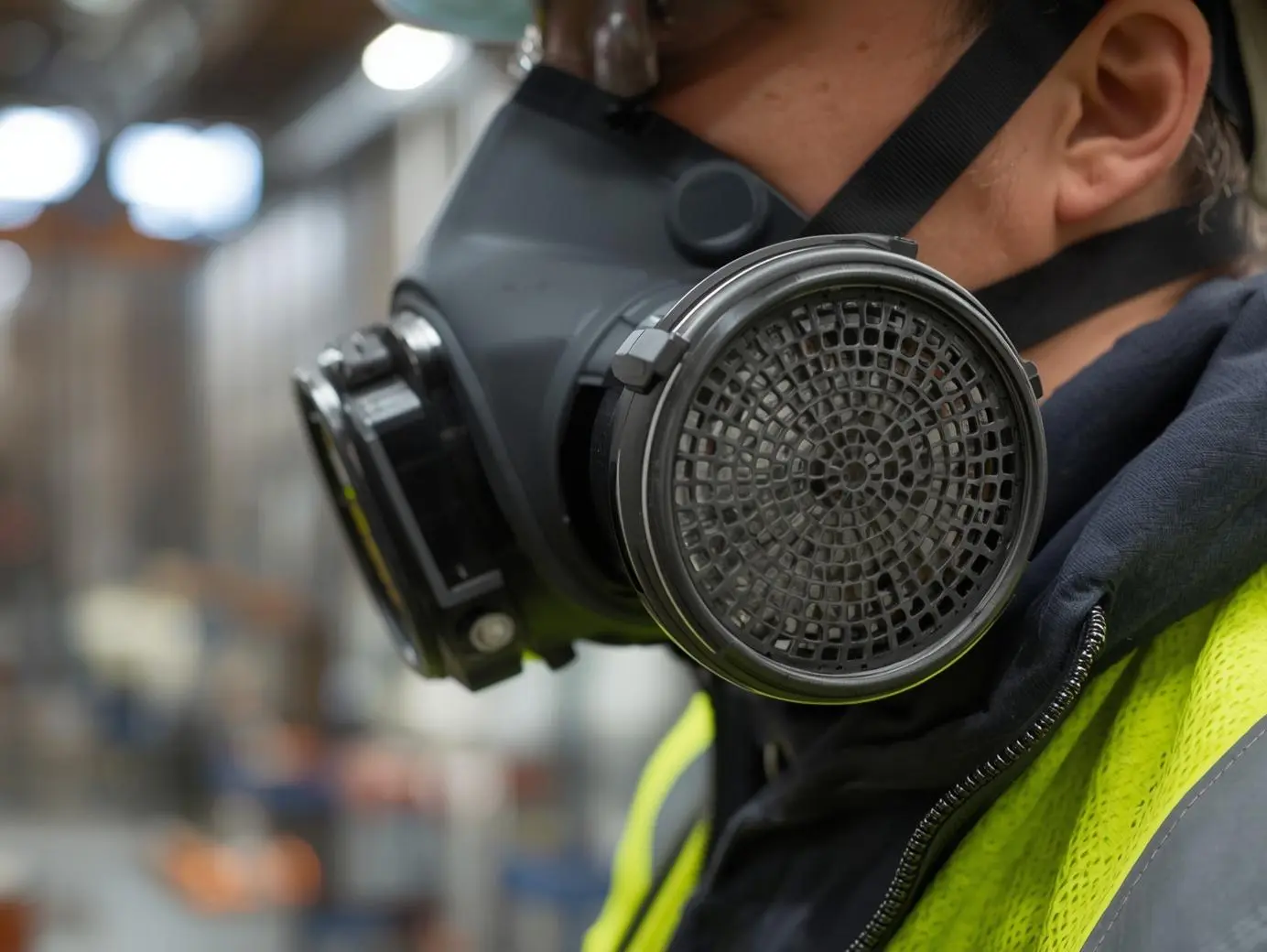
Our Silica & Dust Testing Methods
As a specialized crystalline silica testing lab, we know that choosing the correct analytical method is critical for regulatory compliance and dealing with potential sample interferences.
XRD Silica Analysis
X-Ray Diffraction (XRD) is the gold standard for crystalline silica analysis. It measures the specific crystalline structure of the particles, allowing accurate quantification of Quartz, Cristobalite, and Tridymite, even in the presence of interfering minerals.
FTIR Silica Analysis
Fourier Transform Infrared Spectroscopy (FTIR) measures the absorption of infrared light by silica bonds. It is a valid alternative to XRD but is more susceptible to interferences from other minerals (like certain silicates or amorphous silica) present in the dust.
Respirable & Total Dust
Gravimetric analysis to determine the total mass of dust collected. We highly recommend pairing Respirable Dust (NIOSH 0600) with your Silica XRD analysis to get a complete picture of the worker's exposure profile from a single filter.
Bulk Silica Quantification
Determines the exact percentage of crystalline silica in raw bulk materials — concrete, grout, sand, stone, aggregate, or industrial minerals. Required when an employer needs to characterize the silica content of materials before beginning work, or for SDS compliance documentation.
Quick Method Selector — Which silica test do you need?
Three Regulated Silica Polymorphs We Identify
Not all silica is the same. Polymorph identity matters for regulatory treatment, health risk assessment, and which analytical method reliably detects each form. XRD (NIOSH 7500) identifies all three — FTIR (NIOSH 7602) detects quartz only.
Every Method, Every Standard, Every Deliverable
No surprises in your silica testing report. Here's exactly what each analysis returns — methods, media, and deliverables side by side.
| Analysis Type | Method / Standard | Sample Media | Report Deliverable | Rush? |
|---|---|---|---|---|
| Crystalline Silica — XRD | NIOSH 7500 / OSHA ID-142 | 37mm PVC filter (5.0 µm) + cyclone | µg/sample quartz + cristobalite + tridymite · TWA · PEL comparison | Yes |
| Crystalline Silica — FTIR | NIOSH 7602 | 37mm PVC filter (5.0 µm) + cyclone | µg/sample quartz · TWA · PEL comparison | Limited |
| Respirable Dust Gravimetric | NIOSH 0600 | Pre-weighed PVC filter + cyclone | mg/m³ total respirable dust · OSHA PEL comparison | Yes |
| Total Dust Gravimetric (PNOR) | NIOSH 0500 | Pre-weighed PVC filter (no cyclone) | mg/m³ particulate not otherwise regulated | Yes |
| Dual: Dust + XRD Silica | NIOSH 0600 + NIOSH 7500 | Single pre-weighed PVC filter + cyclone | mg/m³ respirable dust + µg/m³ silica per polymorph · both PEL comparisons | Yes |
| Bulk Silica Content | XRD / NIOSH 7500 (Mod) | Bulk material (powder, chunk) | % crystalline silica by weight · polymorph breakdown | Call |
Turnaround Times & Free Sampling Media
Every rush option and kit detail — clearly laid out before you submit your first sample.
| Turnaround Option | Timeline | Surcharge |
|---|---|---|
| Standard Analysis | 7+ Business Days | No Surcharge |
| 4-Day Rush | 4 Business Days | +25% |
| 3-Day Rush | 3 Business Days | +50% |
| 2-Day Rush | 2 Business Days | +75% |
| 1-Day Rush | 1 Business Day | +100% |
Sampling Media & Equipment
- Pre-weighed 37mm PVC filters (5.0 µm pore size)
- Matched weight filter pairs for gravimetric QA
- Dorr-Oliver nylon cyclones (1.7 L/min)
- SKC aluminum cyclones (2.5 L/min)
- Calibrated personal air sampling pumps — loaner program
- Field blank filters (10% of batch, pre-labeled)
- Pre-paid UPS return shipping label
- Industrial Hygiene Chain of Custody form
Silica Sampling Field Requirements
Silica testing is unforgiving of poor field protocol. Using the wrong flow rate for your specific cyclone will invalidate the particle size cut-point, rendering the data useless for OSHA compliance. Full reference: IH Sampling & Analysis Guide.
From Sample Collection to Final Report
Request Kit & Pumps
Contact us to request pre-weighed PVC filters, cyclones, and loaner pumps. We ship nationwide.
Collect Air Samples
Deploy pumps on workers using exact flow rates required by your specific cyclone type.
Ship to Lab
Keep cassettes upright. Complete COC with flow rates and total volumes. Ship to our Houston lab.
Gravimetric & XRD
We weigh the filters for total respirable dust, then perform XRD analysis for specific silica polymorphs.
Compliance Report
Receive your detailed report comparing detected concentrations against OSHA PELs via our secure portal.
OSHA Silica Regulations Explained
The 2016 OSHA Silica Rule drastically lowered permissible exposure limits. Here is how our testing helps you comply.
Who Relies on Our Crystalline Silica Testing Lab
Construction & Concrete Work
GCs, subcontractors, and concrete cutting specialists — silica monitoring for OSHA 1926.1153 Table 1 alternatives, saw cutting, coring, grinding, and jackhammering operations on Texas and Gulf Coast projects.
Oil & Gas / Hydraulic Fracturing
Frac sand handling, blending, and pumping operations generate some of the highest silica exposures measured in any industry. OSHA 1910.1053 baseline and periodic monitoring for well-site supervisors, blender operators, and sand transfer crews.
Foundries & Metal Casting
Foundry operations using silica sand molds generate cristobalite and tridymite — polymorphs that FTIR misses. XRD (NIOSH 7500) with full polymorph reporting is essential for OSHA 1910.1053 compliance in iron, steel, and aluminum foundry environments.
Abrasive Blasting Operations
Sand blasting, shot blasting, and surface prep contractors — Texas OSHA-regulated environments where exposures can exceed the PEL by 10–50× without proper controls. Task-specific and personal monitoring for compliance and engineering control validation.
Industrial Hygiene Consultants
Environmental and IH consulting firms across Texas, Gulf Coast, and nationwide — bulk sample and air monitoring analysis with accredited XRD results, complete with TWA calculations and OSHA PEL comparisons formatted for client reports and citations defense.
Ceramics, Glass & Mining
Ceramics and glass manufacturing (cristobalite and tridymite risk), stone quarrying, and surface mining — MSHA and OSHA 1910.1053 compliance monitoring. Bulk silica content characterization for raw materials and SDS documentation.
Silica Testing — Frequently Asked Questions
What is the OSHA PEL for respirable crystalline silica?
What methods does your crystalline silica testing lab use?
Do you provide cyclones and sampling pumps?
What is the required air volume for silica sampling?
When is silica air testing legally required?
Can you analyze both respirable dust and silica from the same filter?
What turnaround times do you offer for silica testing?
What is the difference between Quartz, Cristobalite, and Tridymite?
Ready to Partner with a Certified Crystalline Silica Testing Lab?
AIHA LAP accredited · XRD & FTIR Methods · Pump Loaner Program · Rush TAT available · Houston TX